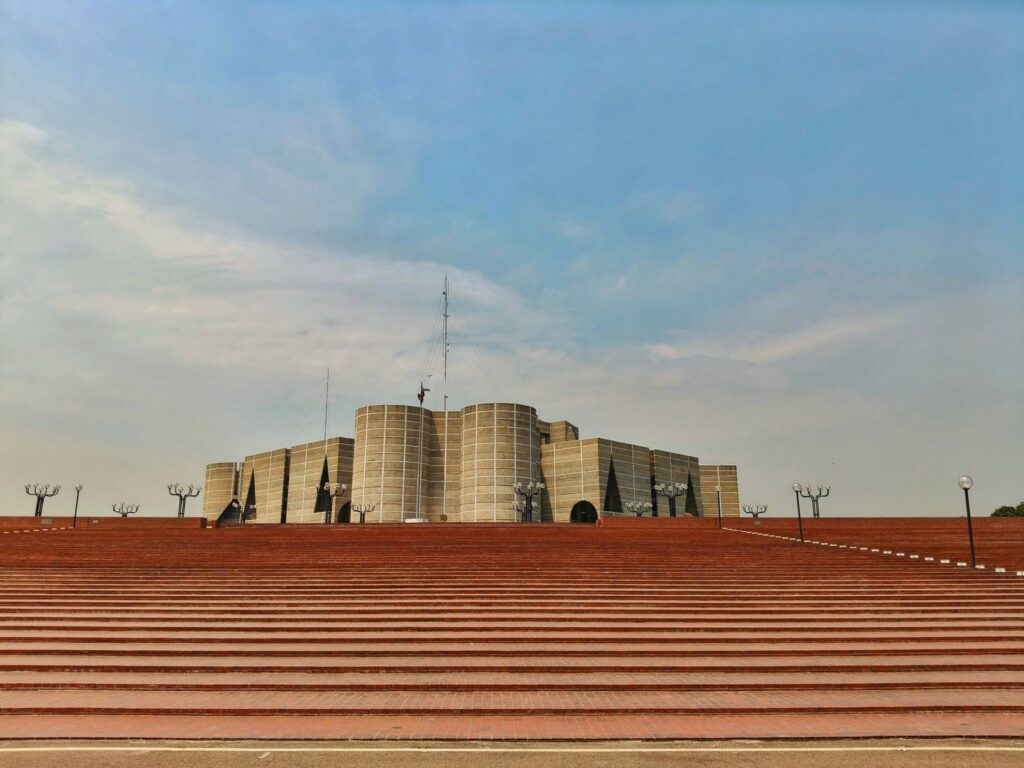
The Béninese Senate held its inaugural session this Thursday in Porto-Novo, officially ushering the nation into a bicameral parliamentary system. This newly established legislative chamber, formally created through a constitutional revision, now operates alongside the National Assembly, fundamentally reshaping Bénin’s institutional framework. Its implementation represents one of the most extensively debated political initiatives of President Patrice Talon’s second term.
This establishment occurs amidst a political climate still marked by tensions following recent elections and the reorganization of the partisan landscape. Proponents argue that the bicameral system will introduce a crucial second review for legislative texts, moderate decisions made by the National Assembly, and enrich public discourse. Critics, however, question the budgetary implications and the democratic calibration of adding an upper house in a country with fewer than thirteen million inhabitants.
A re-envisioned institutional structure
Previously, Bénin operated under a monocameral model, a legacy of the 1990 National Conference, which was widely regarded as a cornerstone of West African democratic renewal. The transition to bicameralism departs from this tradition, aligning Cotonou more closely with models seen in several neighboring countries where a second chamber typically represents local authorities, notable figures, or intermediary bodies. The new Senate is tasked with reviewing draft laws and legislative proposals in a second reading, aiming to foster normative stability.
The constitutional revision championed by the presidential majority outlines a composition that blends indirectly elected members with designated personalities, whose operational modalities will now be put to the test. The method of designation, term duration, and the interplay with the National Assembly are among the most closely scrutinized aspects by observers of Béninese political life. Furthermore, the precise powers of the new chamber concerning budgetary matters, constitutional affairs, and oversight of governmental actions remain key points of interest.
A political litmus test for the Talon administration
The launch of the Senate also serves as a critical test for President Patrice Talon’s institutional legacy, as his second term concludes in 2026. The head of state has made institutional reform a central pillar of his agenda, alongside major economic projects outlined in the Government Action Program. While the new chamber offers the executive an additional platform to solidify political balances, it could also become a vital forum for voices that have struggled to be heard within the National Assembly.
Opposition parties, long marginalized by stricter electoral participation rules, are cautiously observing the operationalization of this second chamber. The gradual return of political formations like Les Démocrates to the national assembly had already reshuffled the parliamentary debate in 2023. The Senate’s entry onto the scene could further intensify this recomposition, depending on the profiles of the designated senators and the degree of autonomy they will exercise in relation to the presidential majority.
Economic and diplomatic implications
From a budgetary perspective, establishing a second chamber necessitates additional operating expenditures, a point the government will need to justify to both international donors and the public. Bénin, which boasts one of West Africa’s most robust growth trajectories, aims to preserve its financial standing and attractiveness to investors. The consistency between institutional reform and fiscal discipline will be closely monitored by international partners, notably the International Monetary Fund and the World Bank.
On the diplomatic front, Bénin’s democratic consolidation remains a significant asset in a regional environment currently experiencing political upheavals across the Sahel. Cotonou intends to maintain its position as a reliable partner for the European Union, France, and the United States, while simultaneously expanding its collaborations with Gulf countries and Asia. The clarity and effectiveness of the new parliamentary structure will heavily influence perceptions of the country’s institutional stability.
It remains to be seen how the Béninese second chamber will integrate into the legislative calendar in the coming months, particularly as the 2026 presidential election approaches.