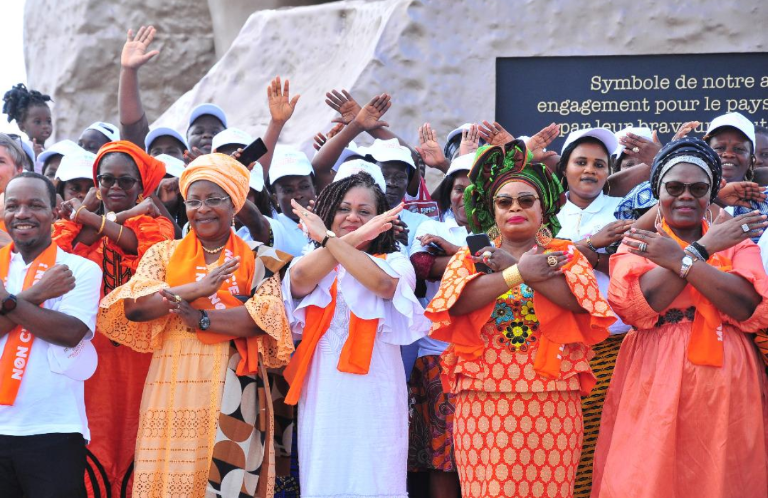
How Benin’s legal shift could reshape the fight against gender violence
In a decisive move that could have far-reaching consequences for women and girls across the country, Benin’s government has taken a critical step toward ratifying the African Union’s landmark convention on eliminating violence against women. The decision, approved during a November 2026 cabinet meeting chaired by Prime Minister Romuald Wadagni, sends a clear message: the nation is prioritizing concrete legal protections over empty promises. But will this translate into real change for citizens facing daily threats?
From political promise to continental obligation
The African Union Convention on Eliminating Violence Against Women and Girls, adopted in Addis Ababa in February 2025, represents more than just another international agreement. For Benin, ratifying this binding instrument would mean aligning with a continent-wide framework designed to address the full spectrum of gender-based violence—from physical assault to digital harassment. The convention’s scope extends beyond traditional definitions, covering psychological abuse, economic exploitation, and online threats that increasingly target women in both public and private spheres.
Critically, the agreement rejects cultural relativism as a justification for violence. No tradition, custom, or religious practice can legitimize harm against women and girls. This principle alone could challenge deep-seated societal norms that have long perpetuated gender inequality in Benin, where domestic violence and workplace discrimination remain stubbornly persistent despite existing laws.
The digital dimension: a new frontier in violence prevention
The rise of online abuse presents a particularly thorny challenge for Benin’s lawmakers. Social media platforms, messaging apps, and even professional networks have become hunting grounds for cyberstalking, revenge porn, and coordinated harassment campaigns. Under the AU convention, Benin would be obligated to develop legal frameworks capable of addressing these modern threats—far beyond the capabilities of current Beninese legislation. The question now looms: can Benin’s justice system adapt fast enough to protect women in a rapidly digitizing society?
Victim protection takes center stage in Benin’s reform agenda
Legal reinforcement meets social transformation
While the ratification process unfolds, Benin’s government emphasizes that legal changes alone won’t end violence. Speaking after the cabinet decision, Family and Social Action Minister Véronique Tognifodé stressed that prevention and rehabilitation must accompany criminalization. ‘This convention gives us the tools,’ she noted, ‘but tools are useless without skilled hands to wield them.’ Her comments reflect growing recognition that Benin’s social services—particularly shelters and counseling centers—are woefully under-resourced for the scale of the crisis.
Education as the ultimate deterrent
Perhaps the convention’s most innovative provision requires member states to implement educational programs targeting harmful gender norms. From school curricula to workplace training, Benin would need to confront the root causes of violence: the stereotypes that normalize male dominance and female subordination. Success here could mean fewer cases of domestic abuse and sexual harassment in future generations—but failure would leave current victims without recourse and future ones at continued risk.
What ratification would change for Beninese families
Stronger laws, but will enforcement follow?
If ratified, the convention would empower Benin’s courts to prosecute crimes previously dismissed as ‘family matters.’ Marital rape, for example, is not explicitly criminalized in current Beninese law, leaving survivors without legal protection. The AU convention would force legislative reforms, requiring judges to treat such cases with the same gravity as assault against strangers. Yet legal change alone rarely stops violence—witnesses must come forward, police must investigate thoroughly, and prosecutors must pursue cases aggressively. Without systemic reform throughout the justice chain, the convention’s benefits could remain theoretical.
The economic cost of inaction
Beyond human suffering, gender-based violence exacts a heavy economic toll on Benin. The World Bank estimates that violence against women costs African economies up to 3% of GDP annually through lost productivity, healthcare expenses, and justice system burdens. For Benin, where women represent 52% of the labor force, the financial argument for ratification is compelling. Businesses lose talent when women fear unsafe workplaces; healthcare systems strain under the burden of treating injuries and trauma. Ratifying the convention could signal to investors that Benin is serious about creating a stable, equitable society—but empty legal reforms would do little to change investors’ perceptions.
The road ahead: from assembly vote to societal shift
Parliament’s make-or-break decision
Now, Benin’s National Assembly must approve the convention’s ratification. Debates are expected to focus on whether the country is ready for such sweeping legal obligations. Skeptics argue that cultural sensitivities could hinder implementation, while supporters counter that Benin has already fallen behind regional peers like Rwanda and Malawi, which ratified similar conventions years ago. What’s certain is that parliamentary approval would trigger a 12-month countdown for Benin to submit its initial implementation report to the AU—leaving little time for half-measures.
A national reckoning on gender equality
As Benin approaches November 25th’s International Day for the Elimination of Violence Against Women, the convention debate forces uncomfortable questions to the surface. How many more women will endure abuse before legal reforms take effect? Can Benin’s patriarchal structures withstand the pressure for change? Most critically, will the government provide the resources needed to turn words into action? The answers may well determine whether this African Union convention becomes a turning point—or just another document gathering dust in government archives.
One thing is certain: Benin stands at a crossroads. Ratification would commit the nation to standards that could transform countless lives—or expose the limits of its political will when faced with entrenched societal resistance.