How Brussels’ financial pledge signals shifting diplomatic dynamics in the Sahel
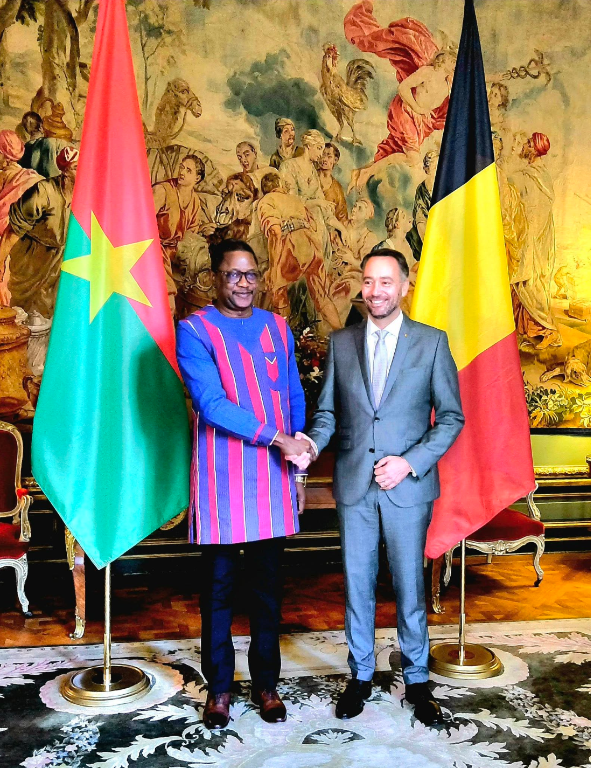
In a move that underscores the complex interplay between political posturing and economic pragmatism, Belgium has reaffirmed a €40 million cooperation package for Burkina Faso beyond 2027. The announcement came during a November 4-5, 2026 working visit by Burkina Faso’s foreign minister, Karamoko Jean-Marie Traoré, to Brussels—raising critical questions about the durability of Ouagadougou’s ‘anti-Western’ rhetoric in the face of real-world financial imperatives.
The pledge, handled through Belgium’s international cooperation agency Enabel, arrives at a pivotal moment. Burkina Faso’s military-led government, under President Ibrahim Traoré, has spent nearly two years distancing itself from traditional Western allies, expelling French forces and forging closer ties with Moscow. Yet this financial lifeline from Belgium—a fellow European Union member—suggests that sovereignty declarations may coexist with unyielding economic realities.
Frozen funds or future funding? Dissecting the €40 million commitment
The €40 million pledge for the post-2027 period follows a 2023-2027 cooperation program valued at €34.5 million. While officials in Ouagadougou frame the Belgian funds as vital support amid escalating security threats and collapsing public services, Brussels has stressed that the funds remain a future commitment—not an immediate disbursement. This nuance is critical in a nation where humanitarian appeals are now outpacing development priorities.
According to Traoré’s meetings with Belgian counterpart Maxime Prévot, the cooperation will focus on sustainable development, education, and public health—sectors hit hardest by Burkina Faso’s eight-year jihadist insurgency. Yet for citizens in towns like Dédougou and Kaya, where schools and clinics have been shuttered or repurposed as displacement shelters, the delayed arrival of funds risks magnifying the gap between diplomatic promises and lived experience.
Diplomatic double-speak: Can Ouagadougou walk the sovereignty tightrope?
President Traoré’s government has framed its pivot toward non-Western partners—particularly Russia and Turkey—as a bold assertion of self-determination. Critics, however, point to the irony of accepting Western development aid while publicly denouncing Western influence. This paradox places Burkina Faso at the center of a wider Sahel debate: Can a country truly achieve economic independence while continuing to depend on the very systems it rejects?
The Belgian funds may therefore serve as both a lifeline and a liability. For the Traoré administration, they provide breathing space to fund critical services without conceding to political demands from Brussels. For Belgium, the move preserves strategic influence in a Sahel region where Russian Wagner Group presence is expanding rapidly. The €40 million thus becomes a silent acknowledgment that financial cooperation can outlast political ruptures—so long as each side gains something.
Key sectors targeted by Belgium’s cooperation package
- Agricultural resilience programs: Boosting food security amid desertification and militant blockades of supply routes
- Vocational training initiatives: Equipping displaced youth with marketable skills to counter youth unemployment
- Healthcare infrastructure: Rehabilitating district clinics in areas where state presence has collapsed
- Decentralization support: Funding local governance projects to restore citizen trust in authorities
Brussels’ balancing act: Engagement without appeasement
Belgium’s decision to maintain cooperation with Burkina Faso reflects a broader EU strategy of selective engagement. While individual member states have reduced development aid to military-run states in the Sahel, Brussels has sought to preserve indirect influence through sectoral support that doesn’t directly empower ruling juntas.
The November meetings between Traoré and EU High Representative Kaja Kallas further confirmed this approach. Discussions reportedly centered on regional security coordination and Burkina Faso’s evolving foreign policy—not on ideological alignment. The signal is clear: Brussels is willing to fund outcomes (education, healthcare, food security) even if it cannot agree on methods (governance, defense partnerships, or media freedom).
The paradox of pragmatism: Can Burkina Faso have both sovereignty and survival?
The €40 million announcement does not signal a diplomatic U-turn. Instead, it reveals a pragmatic truth: Burkina Faso’s leaders are navigating a high-wire act between revolutionary rhetoric and administrative necessity. For a state that has expropriated French assets and canceled military accords with Western powers, accepting Belgian development funds is a calculated risk—a compromise dressed as continuity.
Yet the gamble carries no guarantees. Should the Traoré government’s anti-Western posture harden further, or should relations with Moscow deepen, the €40 million could shrink or vanish. Conversely, if Ouagadougou pursues genuine reforms and anti-corruption measures, Brussels may accelerate disbursements, turning Belgium from a reluctant donor into a partner in post-conflict reconstruction.
The coming months will test whether Burkina Faso’s ‘sovereignty-first’ doctrine can co-exist with the daily survival needs of its population. For now, the €40 million stands as both a promise and a warning: the ties between Europe and the Sahel remain frayed, but not yet severed.