Benin harnesses drones and AI in groundbreaking malaria fight
In a significant leap forward, Benin has inaugurated an innovative anti-malaria campaign on June 30, 2026, using artificial intelligence, spatial mapping, and drone technology to eradicate mosquito breeding grounds. The initiative, backed by a $2.3 million grant from Japan and UNICEF support, marks a shift from reactive to proactive disease control in six key municipalities.
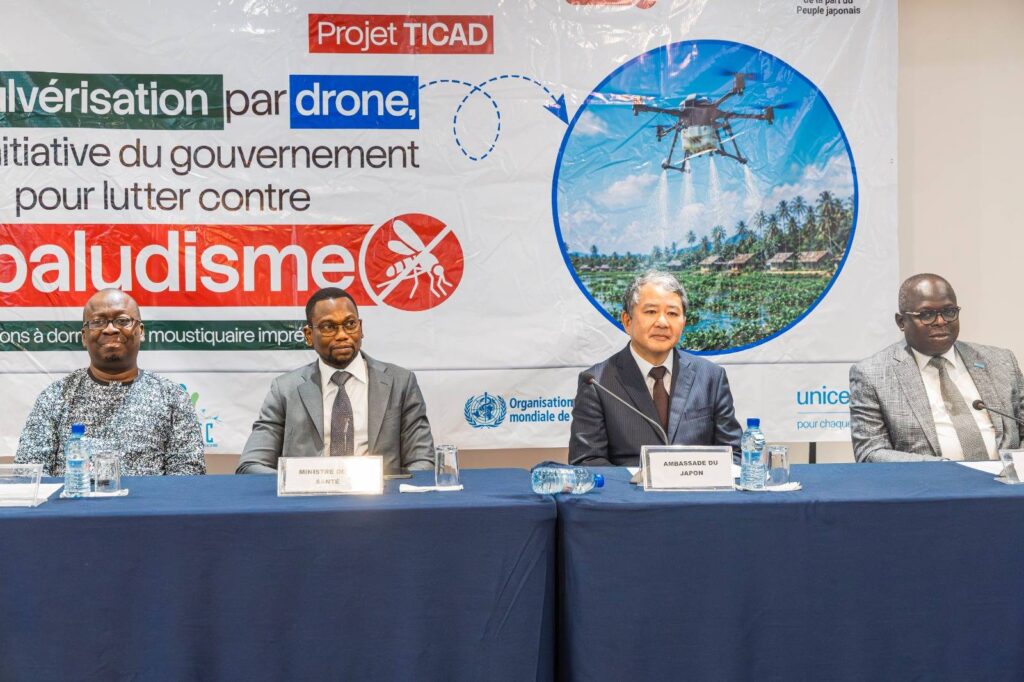
The launch event in Cotonou brought together government officials, including Health Minister Professor Benjamin Hounkpatin, Japanese Ambassador S.E.M. Uezono Hideki, and UNICEF Deputy Representative Aude Rigot. Together, they unveiled a high-precision system designed to neutralize malaria hotspots before they escalate into public health crises.
Cutting-edge technology meets community action
The three-pillar strategy combines:
- Spatial mapping and AI: Advanced algorithms analyze terrain, weather, and mosquito activity to pinpoint high-risk zones with meter-level accuracy.
- Drone precision spraying: Drones equipped with WHO-approved larvicides target breeding sites in even the most remote areas, including marshes and flooded fields.
- Community engagement: Local youth teams trained by UNICEF partners conduct ground monitoring, environmental awareness campaigns, and preventative cleanup to sustain long-term results.
« This approach transforms malaria management from a reactive battle into a surgical strike against the vector itself, » explained Professor Hounkpatin. « The larvicides meet strict WHO safety standards, ensuring protection for both humans and ecosystems. »
Six municipalities lead the charge
The pilot phase targets diverse regions to test the system’s adaptability:
- Copargo and Djougou (rural inland areas)
- Tchaourou and Abomey-Calavi (mixed urban-rural zones)
- Ouidah and Cotonou (coastal and densely populated cities)
The $2.3 million investment aligns with Benin’s « Benin 2060 Alafia » vision and Japan’s TICAD9 commitments to bolster African health resilience. Japanese Ambassador Hideki Uezono emphasized the project’s role in global health security, noting its potential to serve as a model for neighboring nations.
Economic relief for households and small businesses
For families like that of Amavi, a fabric vendor in Abomey-Calavi, malaria’s financial toll is devastating. « Last rainy season, my two youngest children were hospitalized twice, » she shared. « Between treatments and lost market days, I spent over $100—more than a month’s income. »
Artisans, farmers, and informal traders across the pilot zones face similar losses when malaria strikes. By reducing disease transmission at the source, the drone program aims to:
- Lower healthcare costs for vulnerable households
- Minimize workdays lost to illness
- Protect the informal economy, which sustains most Beninese livelihoods
Youth as catalysts for lasting change
UNICEF’s community mobilization component empowers young people to become frontline health advocates. Trained in larvicide monitoring, environmental hygiene, and public education, these teams ensure interventions extend beyond government-led efforts. « The fusion of innovation and grassroots action is what will guarantee sustainable impact, » stated UNICEF Deputy Representative Aude Rigot.
Blueprint for Africa’s malaria-free future
Benin’s pilot program could redefine public health in West Africa if successful. By integrating drone technology, AI-driven analytics, and community-driven prevention, the country is laying the groundwork for a malaria-free future. As the drones take flight, they carry more than larvicides—they carry the hope of healthier lives and stronger economies for Beninese families. »