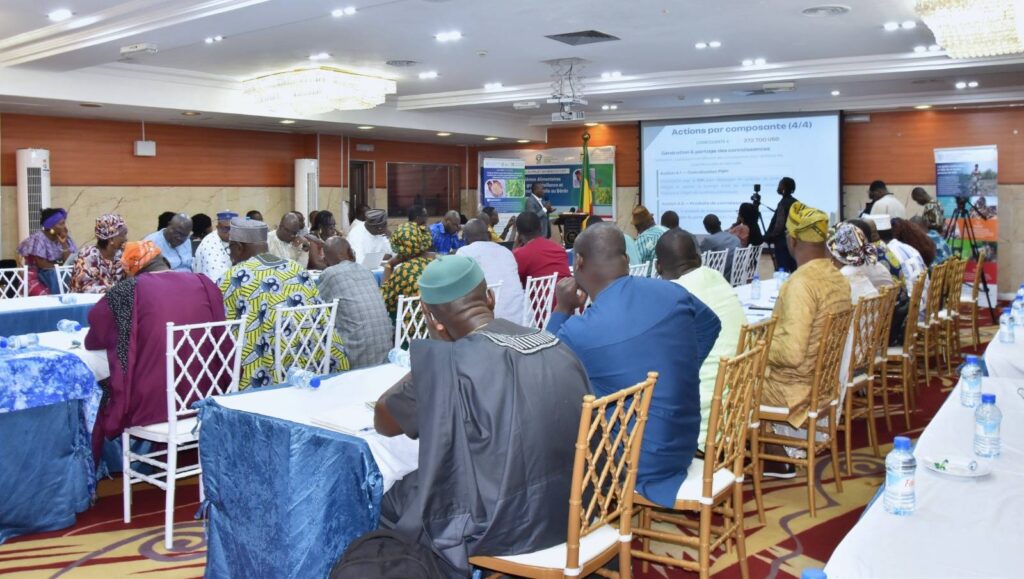
The backbone of Bénin’s economy is under severe strain as degraded soils threaten both food security and livelihoods. To counter this silent crisis, the government, with support from international partners, has launched the Food Systems initiative—a bold $20 million+ program designed to restore farmlands and transform the nation’s maize and rice sectors by 2030.
Barren soils: the hidden threat to Bénin’s economy
Agriculture fuels Bénin’s economy, accounting for 70% of jobs, 26% of GDP, and 80% of export earnings. Yet this vital sector is faltering due to rapidly declining soil fertility, which has pushed agricultural output into decline. Speaking at the project’s launch in Cotonou, Minister of Agriculture, Adin Yeton Bloukounon Goubalan, warned of the dire consequences:
A single year of poor soil health can erase decades of progress, trapping farmers in cycles of poverty and food insecurity.
The numbers paint an alarming picture: over 5 million Bénin citizens—nearly 40% of the population—live on lands at risk of degradation. Worse still, 38% of the country’s total land area is now classified as degraded. This has slashed crop yields by more than half, leaving rural communities struggling to access basic resources like clean water and nutritious food while deepening poverty.
Food Systems: a blueprint for agricultural transformation
The Food Systems initiative isn’t just another quick-fix program. Developed by the Bénin government with backing from the UN Food and Agriculture Organization (FAO) and the Global Environment Facility, it targets the root causes of the crisis—not just the symptoms. The project’s core mission is to overhaul outdated agricultural policies, upgrade production techniques, and strengthen market access for farmers.
Its primary focus? Two staple crops that feed millions: maize and rice. The goal is to shift these critical food chains from low-output, high-environmental-impact systems to sustainable, high-efficiency models that deliver economic and social benefits across the board.
A $20 million investment with high stakes
To turn this vision into reality, the project has secured a total budget of $20.7 million, funded through a tripartite partnership: $5.9 million from the Global Environment Facility and $14.8 million from the Bénin government as national co-financing. Implementation will unfold across five strategic communes: Karimama, Malanville, Glazoué, Kétou, and Les Aguégués, with work set to continue through 2030.
The expected outcomes are transformative:
- Restoration of 20,000 hectares of degraded land.
- Training in sustainable farming practices across 114,900 hectares.
- Direct benefits for 36,000 farmers, with ripple effects reaching 356,000 people in targeted regions.
Challenges and collaboration: the path to success
While the initiative holds immense promise, its leaders remain acutely aware of the operational hurdles ahead. Minister Goubalan emphasized the need for rigorous testing of soil restoration technologies before scaling up, stressing that “the wrong intervention could do more harm than good.”
Paul-Henri Zoéwindé Bouda, FAO Representative in Bénin, echoed this sentiment, highlighting that technology alone won’t solve the crisis:
Sustainable change requires buy-in from every level—government agencies, local leaders, and the farmers themselves. Without collective ownership, even the best-laid plans will fall short.
Building a resilient future for Bénin
By addressing soil degradation at its core, the Food Systems project is laying the groundwork for a more food-secure Bénin. If targets are met by 2030, the country could not only stabilize its maize and rice supplies but also set a replicable model for ecological transition across West Africa.