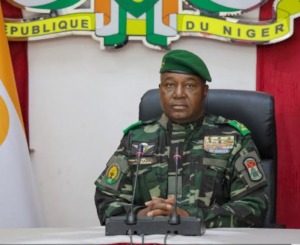
A year and a half after the military takeover on July 26, 2023, which saw the removal of President Mohamed Bazoum, the CNSP military junta is intensifying its control over Niger. A recent report from Amnesty International details a worrying trend of forced arrests, unlawful detentions, and a systematic crackdown on both the media and political opposition. The document chronicles significant violations of civil and political rights occurring between July 2023 and January 2025, highlighting how the shrinking of civic space is deepening societal divisions.
Although the CNSP initially justified the coup by citing security concerns and poor governance, promising to uphold the rule of law, those commitments appear to have been abandoned. This shift comes as Niger, alongside Mali and Burkina Faso, has pivoted away from traditional regional and international partners. After forming the Alliance of Sahel States (AES) and exiting ECOWAS, these nations recently announced their withdrawal from the International Organisation of La Francophonie (OIF), which had also called for the release of the deposed president.
The erosion of the rule of law
Despite early assurances from General Abdourahamane Tiani regarding the protection of fundamental freedoms, the reality on the ground has shifted drastically. Marceau Sivieude, a regional director for Amnesty International, notes that human rights are being disregarded in both legislation and practice. The 2010 Constitution remains suspended, and the National Human Rights Commission has been sidelined, leaving the CNSP with absolute executive and legislative authority.
Legal tools are increasingly being used to silence dissent. The 2019 cybercrime law was reinstated in July 2024, allowing for the prosecution of individuals for “disturbing public order” or defamation—vague terms often used against critics. Furthermore, a 2024 ordinance has expanded the definition of terrorism, introducing a registry that can lead to the freezing of assets and even the loss of Niger nationality. Already, over 20 individuals, including former ministers from the Bazoum administration, have been targeted by these measures.
Hamid Ngadé, a former presidential advisor, expressed the gravity of the situation, stating that the threat of becoming stateless is real in a country where the rule of law no longer exists. This environment has effectively dismantled political pluralism, as political parties remain suspended.
Suppression of civil society and independent media
The junta’s repressive reach extends deep into civil society. Intelligence services have been implicated in enforced disappearances and arbitrary arrests. A prominent example is Moussa Tchangari, a well-known civil society leader, who was arrested in late 2024 and faces serious charges, including endangering state security, which could lead to a decade in prison.
The rhetoric from the authorities has created a sharp divide, labeling supporters as “patriots” and critics as “stateless.” This atmosphere of intimidation has forced many activists into silence. “The fear of speaking out or organizing any activity perceived as critical is palpable in Niamey,” shared one local association leader.
A media landscape under surveillance
The press in Niger is facing unprecedented pressure. The Maison de la Presse was suspended and replaced by a government-aligned committee, while international broadcasters like RFI, France 24, and the BBC have faced bans. Local journalists and bloggers are also being targeted; Ousmane Toudou remains in custody, and Samira Sabou was subjected to an enforced disappearance before being charged under cybercrime laws.
Self-censorship has become a survival tactic for many media professionals. As one journalist noted to Amnesty International, every word must now be carefully weighed, as there is no longer a protective framework for the press. With a recent national report suggesting a five-year transition period that could allow current military leaders to run for office, the path back to democratic governance and the rule of law in Niger remains uncertain.