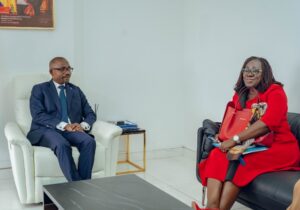
The Chairperson of the African Union Commission arrived in Bamako on Sunday for an official visit aimed at strengthening dialogue and cooperation between the pan-African body and Mali. Mahmoud Ali Youssouf conveyed the AU’s unwavering commitment to supporting Malian authorities as the country navigates complex security challenges. This backing comes despite Mali’s suspension from AU bodies since the 2021 coup, a measure imposed to restore constitutional order but not intended to isolate the nation.
The AU has maintained diplomatic engagement through its Special Representative for Mali and the Sahel and the African Union Mission in the Sahel and Mali (MISAHEL), emphasizing that Mali’s stability remains a continental security priority.

From words to action
Mahmoud Ali Youssouf’s visit underscores the AU’s full solidarity with Bamako in the face of relentless armed attacks plaguing the nation. However, independent expert and founder of Africa Jom Center, Alioune Tine, urges the AU to move beyond symbolic gestures and take tangible steps.
Tine emphasizes the urgent need for the AU Chairperson to actively rally member states with the capacity to provide military and logistical support. He highlights the critical importance of mobilizing African Union troops to bolster Mali’s counter-terrorism efforts, stating, “What Mali needs most is concrete solidarity—not just declarations. The AU must persuade capable nations to send troops and resources to help stabilize the country.”
Challenges facing AU intervention
Despite the Malian government’s decision to abandon the 2015 Algiers Agreement, the African Union continues to prioritize diplomatic solutions and regional cooperation in addressing the crisis. Yet, the growing alliance between northern separatists and the Group for the Support of Islam and Muslims (JNIM) has raised concerns about the conflict’s escalation.
The AU firmly rejects the legitimacy of the JNIM–FLA coalition’s (Tuareg separatists) offensives and their demands, viewing this partnership as a dangerous evolution of the conflict. While the AU remains steadfast in advocating for Mali’s territorial integrity, structural and political constraints within the organization pose significant hurdles.
According to Aly Tounkara, a security and strategic studies analyst at the Sahel Center, the AU’s ability to provide meaningful military or intelligence support is limited by internal divisions among member states. “Harmonizing policies among AU members is already difficult. Expecting a unified stance on Mali, especially given external dependencies, is unrealistic,” Tounkara notes.
He further highlights the AU’s reliance on extra-Sahelian donors, which complicates its operational independence and effectiveness. “These financial and political dependencies undermine the AU’s ability to implement impactful actions in Mali. Without overcoming these challenges, the AU’s role risks remaining symbolic rather than transformative.”
The African Union faces a delicate balance between diplomatic support, territorial integrity advocacy, and internal constraints. Whether this visit sparks a shift toward deeper engagement—or remains a symbolic gesture—will depend on the AU’s ability to address its own limitations while addressing Mali’s pressing needs.