Key developments
- July 12, 2026: Ousmane Sonko, serving as President of the National Assembly, publicly accused President Bassirou Diomaye Faye of deviating from Pastef’s core commitments during an address in Touba.
- Public debt concerns: Sonko highlighted a national debt he described as “nearly unpayable” and noted the absence of a program with the International Monetary Fund, revealing a newly discovered hidden debt of almost $11 billion.
- Parliamentary threat: The leader of the Pastef party declared his intention to bring down the government “as many times as necessary” through motions of no confidence.
- July 14, 2026: The National Assembly’s bureau convened to discuss the ramifications of the unfolding institutional crisis.
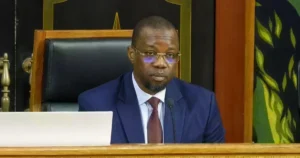
Senegal’s political landscape has been dramatically reshaped this past weekend. On July 12, from the city of Touba, Ousmane Sonko launched a direct accusation against President Bassirou Diomaye Faye, alleging a betrayal of the very promises that had propelled them jointly into power. The former Prime Minister, now the influential President of the National Assembly and head of the Pastef party, criticized the head of state for prioritizing the establishment of his own political movement over effectively managing a national debt deemed “nearly unpayable.”
“The President no longer puts the Senegalese people first,” Sonko asserted, pointing to the lack of an active program with the International Monetary Fund as evidence of the executive’s economic shortcomings. This attack carries particular weight, originating from the key architect behind President Faye’s electoral triumph in 2024.
An immediate threat of censure
Ousmane Sonko’s statements went beyond mere criticism; they included an explicit threat. Leveraging Pastef’s parliamentary majority, secured during the recent legislative elections, the President of the National Assembly announced his readiness to initiate motions of censure to unseat the government “as many times as necessary.” This declaration leaves no doubt about Sonko’s firm intent to utilize his institutional authority against his former political ally.
This escalating tension comes just as the National Assembly’s bureau gathers on July 14 to deliberate on the implications of this crisis. The specter of governmental instability now looms over Senegal, a nation long celebrated as a beacon of democracy in West Africa.
Presidential coalition’s response
The Diomaye Président coalition swiftly issued a rebuttal. In a communiqué released on July 13, it dismissed Sonko’s remarks as “scandalous” and “crypto-personal,” emphasizing that President Faye is “actively seeking solutions to improve the living conditions” of the Senegalese populace. The use of the term “crypto-personal” suggests that the presidential circle perceives Sonko’s offensive as driven by personal political ambitions rather than a substantive debate on governance.
This sharp contrast stands in stark opposition to the image of unity the two leaders projected during their 2024 presidential campaign. Faye, who ran as Pastef’s candidate after Sonko was declared ineligible, was widely presented as the executive arm of a partnership where Sonko embodied the ideological vision.
The roots of the rift
The divergence between the two figures is not a recent development. On May 22, 2026, Bassirou Diomaye Faye removed Ousmane Sonko from his position as Prime Minister, a decision that formally dissolved their alliance. Sonko subsequently secured the presidency of the National Assembly, a role that grants him significant power to challenge the executive branch.
Reports indicate that Sonko disclosed the existence of a secret agreement forged while they were in prison, wherein Faye allegedly committed to seeking re-election in 2029. Furthermore, the discovery of an undisclosed debt amounting to nearly $11 billion reportedly exacerbated tensions between the two men, with each seemingly attributing responsibility for this dire fiscal situation to the other.
On July 9, the Constitutional Council invalidated a constitutional reform championed by Sonko, which aimed to curtail presidential powers. This decision followed a direct referral from President Faye himself and was interpreted by Sonko’s supporters as a presidential maneuver to safeguard his prerogatives.
Allegations of intimidation and economic betrayals
Sonko’s grievances extend beyond institutional matters. He has accused Bassirou Diomaye Faye of manipulating and intimidating general directors affiliated with Pastef, pressuring them to distance themselves from him. Sonko claims these officials face threats of dismissal if they maintain their loyalty to the former Prime Minister.
Economically, Sonko has condemned what he views as a betrayal of Pastef’s sovereignist agenda. He criticizes the executive for allegedly abandoning the renegotiation of crucial contracts with multinational corporations, particularly within the phosphate sector, a cornerstone of the Senegalese economy. “We pledged to regain control over our natural resources,” Sonko reportedly stated, “and yet, nothing has changed today.”
Senegal’s broader context
Senegal, a nation of 18 million people, has long been held up as an exemplar of democratic stability in West Africa. Since gaining independence in 1960, the country has avoided coups d’état, a stark contrast to many of its Sahelian neighbors. The election of Bassirou Diomaye Faye in 2024 had ignited widespread hope for a significant departure from the practices of the previous administration led by Macky Sall.
However, the current crisis serves as a potent reminder of the fragility inherent in political transitions. Pastef, a left-leaning pan-Africanist party, built its success on promises of renewed economic sovereignty and a break from international financial institutions. Ironically, the absence of an IMF program, which Sonko now cites as a failing, was a key campaign commitment of the movement.
The Senegalese economy is primarily supported by agriculture (groundnuts), fishing, phosphates, and, more recently, the discovery of offshore oil and gas deposits. The public debt, allegedly underestimated by nearly $11 billion according to Sonko’s disclosures, significantly constrains the government’s fiscal maneuverability.
International perspective on the fracture
The political turmoil in Senegal has garnered considerable international attention. On July 12, a major news outlet aired a report titled “Friends turned foes: The split reshaping Senegal,” detailing the growing chasm between Faye and Sonko. Various international media platforms have dedicated extensive coverage to this escalation, underscoring that Senegal’s stability, often presented as a regional model, is now facing a critical test.
For France, which maintains deep historical and economic ties with Dakar, this crisis is being closely monitored. Senegal is a vital partner for Paris in West Africa, and any political destabilization in the Sahelian region, already vulnerable due to coups in Mali, Burkina Faso, and Niger, raises concerns among European capitals.
Next steps
The coming days are poised to be pivotal. The National Assembly’s bureau meeting on July 14 could offer an initial indication of Sonko’s readiness to translate his threats into action. Should a motion of no confidence be formally introduced, the government would need to secure the Assembly’s confidence to remain in power. Given Pastef’s majority, largely aligned with Sonko, the outcome of such a vote appears uncertain.
President Bassirou Diomaye Faye, for his part, must decide between a strategy of conciliation or a direct confrontation with his former mentor. The dissolution of the National Assembly remains a constitutional option, though it would undoubtedly intensify the institutional crisis. The situation remains fluid, with no immediate signs of a potential compromise emerging between the two factions.