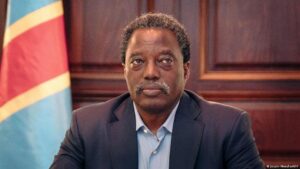
The Democratic Republic of Congo (DRC), a nation rich in critical minerals that power global supply chains, has taken a decisive stance on illegal militarization in its mining sector. President Félix Tshisekedi has issued a firm directive to government authorities, demanding the immediate cessation of all unauthorized military and police presence at mining operations nationwide.
During the 94th Council of Ministers meeting held on Friday, July 10, 2026, at the City of the African Union in Kinshasa, the Head of State emphasized the strategic importance of the mining industry to the country’s economic development. He underscored the urgent need to enhance governance, transparency, and credibility in the sector to strengthen the DRC’s position in international markets.
Addressing persistent security challenges in mining zones
Reports of recurring and persistent military and police presence at various mining sites across the country have prompted President Tshisekedi to act. As the guarantor of national stability, he reiterated the strict prohibition of any unauthorized occupation or interference in mining operations by defense and security forces, except in legally authorized missions or under explicit orders from competent authorities within their mandate.
The President warned that such practices foster negative perceptions of natural resource governance, undermine control mechanisms, and facilitate illicit activities. These actions also compromise efforts to ensure responsible, transparent, and internationally compliant mining operations.
“This situation perpetuates damaging perceptions of our natural resource governance, weakens oversight mechanisms, encourages illicit networks, and undermines the government’s commitment to responsible mining aligned with international standards,” the President stated, as read in the official meeting recap by the government spokesperson.
Consequences of illegal militarization
The President highlighted severe repercussions of unauthorized military involvement in mining activities, including:
- Disruption of peaceful enjoyment of mining rights by legitimate operators;
- Increased insecurity in mining zones;
- Intimidation, extortion, and harassment of state services, miners, and local communities;
- Disruptions in supply chains and mineral traceability;
- Facilitation of fraud, smuggling, and illicit enrichment networks.
In response, President Tshisekedi instructed the Vice Prime Minister and Minister of Interior, the Vice Prime Minister and Minister of National Defense and Veterans Affairs, the Chief of General Staff of the Armed Forces of the DRC (FARDC), and the National Police Commissioner (PNC) to take urgent measures to permanently end all forms of illegal militarization at mining sites nationwide.
“The President has mandated these authorities to take immediate action to definitively halt any unauthorized military presence on mining sites across the country,” the meeting recap noted.
Key actions to restore order and compliance
The government is tasked with implementing the following measures without delay:
- Immediate withdrawal of all military and uniformed personnel illegally present at mining sites;
- Cessation of any interference by defense and security forces in mining activities;
- Securing mining sites in compliance with legal frameworks;
- Dismantling fraud networks and illegal mining operations protected or supported by uniformed personnel;
- Imposing exemplary sanctions on all individuals found irregularly operating within mining sites.
Additionally, the government is expected to strengthen oversight mechanisms, certification processes, traceability, and supply chain monitoring to ensure compliance with national and international standards. This will safeguard the rights of legally established operators and local communities alike.
A long-standing issue
The problem of illegal military presence in mining zones is not new in the DRC. For years, authorities have faced criticism due to abuses such as intimidation, extortion, influence peddling, and illicit mining activities benefiting powerful networks. In 2022, the government ordered the withdrawal of military and police personnel from artisanal mining sites following widespread reports of irregularities. At the time, authorities justified the decision by citing the widespread disorder in artisanal mining zones, where uniformed personnel—sometimes without official duties—occupied sites or facilitated illicit operations, including those benefiting foreign operators.
The DRC’s mining sector, vital to its economy and global supply chains, remains a focal point of governance reforms. President Tshisekedi’s latest directives aim to reinforce transparency, accountability, and the rule of law, ensuring that the country’s vast mineral wealth benefits its people and legitimate stakeholders.