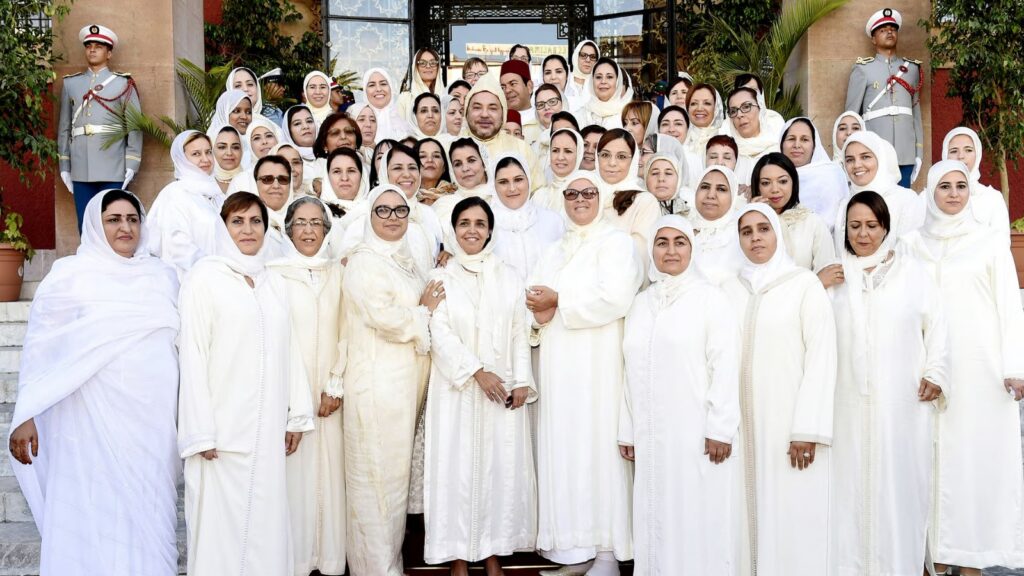
The journey of women’s political participation in Morocco has been marked by persistent reforms, grassroots activism, and an ongoing struggle for genuine parity. As the country gears up for the legislative elections scheduled in September 2026, the debate surrounding women’s role in decision-making spheres has resurfaced with renewed urgency. While the legal framework has seen significant progress, ground realities and entrenched partisan practices continue to pose challenges to the full realization of constitutional principles.
1. Historical overview: from exclusion to affirmative action
For decades following independence, women’s presence in Morocco’s Parliament remained minimal, if not entirely absent. It wasn’t until 1993 that the first two women secured seats in the Chamber of Representatives. Recognizing the sluggish pace of this natural progression, Morocco took a decisive turn in the early 2000s by introducing affirmative action mechanisms.
Key milestones:
- 2002: Adoption of the national list system, reserving 30 seats for women in the Chamber of Representatives—a landmark step toward more equitable representation.
- 2011: The new Constitution enshrined gender equality in Article 19, mandating the state to promote parity. The number of reserved seats for women increased to 60.
- 2021: Transition to regional lists, expanding women’s territorial representation and raising their seat count to 90 in the Chamber of Representatives.
These advancements have empowered Moroccan women to accumulate invaluable expertise and demonstrate their capabilities in politics, labor unions, civil society, and human rights advocacy. Yet, despite legislative gains, an invisible ceiling persists at local and national levels, particularly in leadership roles within electoral lists.
2. The 2026 elections: civil society raises the alarm
In this transitional phase, the Coalition 190 Against Violence and the Coalition for Dignity and Women’s Rights issued a joint appeal in June 2026. Their analysis of preliminary candidate nominations for the September elections reveals a troubling trend: women remain sidelined as lead candidates, while men dominate these critical positions.
This disparity is especially concerning given that top-listed candidates statistically have the highest chances of securing a legislative seat. By relegating women to secondary roles, political parties raise a fundamental question: How committed are they, in practice, to the ideals of equality and parity?
3. A democratic backslide: the misuse of quota systems
Beyond the numerical underrepresentation of women, another insidious issue threatens the integrity of these elections across all parties. Some partisan elites are exploiting reserved seats and quotas by placing their wives or daughters at the forefront of electoral lists.
This practice of familial favoritism directly contradicts the spirit of progressive legislation. By converting affirmative action into dynastic privileges, it strips reforms of their intended purpose. Women who have spent years advocating within political and civil structures are denied fair access to representation. Such electoral nepotism fuels public distrust in institutions and reduces women’s political participation to a matter of inherited privilege rather than merit and competence.
4. A call for national dialogue: beyond electoral mobilization
In response to these systemic issues, the coalitions urge the immediate launch of a responsible and inclusive national debate. This dialogue must involve political actors, constitutional bodies, feminist organizations, and media outlets to dissect the cultural and structural barriers hindering women’s leadership in politics.
The manifesto proposes concrete measures to reverse the trend:
- Stronger partisan commitment: Political parties must adhere to the spirit of electoral laws, ensuring women lead at least one-third of all lists as part of a genuine parity strategy.
- Transparent and ethical selection criteria: Candidate nominations should prioritize competence, merit, and long-standing militant engagement, eliminating familial privilege or nepotism to ensure equal opportunities.
- Rigorous oversight by authorities: Electoral oversight institutions must enforce the original intent of the law, ensuring reserved seats empower all women—not just narrow familial circles.
Conclusion: time for action
Moroccan women are far more than voters or symbolic figures on election day. They are full-fledged citizens and indispensable partners in shaping public policies and the nation’s future. The maturity of Morocco’s democracy will be measured by its ability to transform women’s political participation from an exception or familial favor into a natural, fair, meritocratic, and enduring democratic practice.