How Washington’s warnings are redrawing travel plans and economic futures in the Sahel
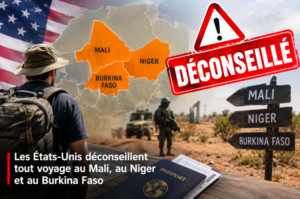
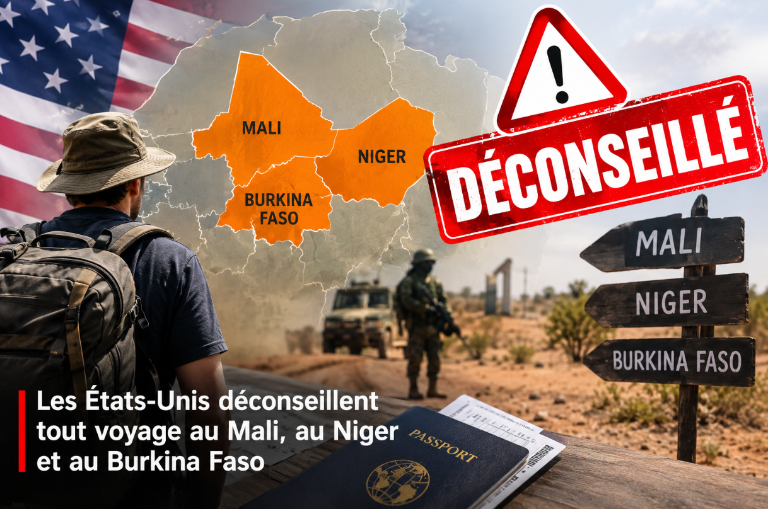
When the United States slaps its highest warning label on a country, it is not a suggestion—it is a travel prohibition. In early 2026 the US State Department reaffirmed Level 4 “Do Not Travel” advisories for Mali, Niger and Burkina Faso, citing terrorism, kidnapping, violent crime and health risks that threaten both visitors and the local populations. The decision is already reshaping holiday calendars, business contracts and supply chains for thousands of citizens and companies who once saw these nations as thrilling or strategic destinations.
Mali: where Al-Qaeda and so-called Islamic State dictate the roads
Washington’s June 2026 bulletin for Bamako and beyond is blunt: stay away. The warning points to armed groups linked to Al-Qaeda and ISIS striking military convoys, mining key highways and targeting public spaces—hotels, restaurants, even humanitarian convoys. No region, not even the capital, is considered immune. US embassy staff are restricted to the city’s perimeter because any excursion outside Bamako could quickly turn into a life-or-death gamble. For foreign visitors the risks multiply: delayed or denied consular assistance in a country where hospitals and police stations have themselves become targets.
Daily realities that make a trip impossible
- Road ambushes: Highway RN16 and RN17 near Mopti and Gao are notorious for IEDs and hit-and-run attacks.
- Kidnapping industry: Western hostages have fetched ransoms above $1 million in past years, and groups still advertise “high-value packages” on encrypted channels.
- Medical vacuum: Pharmacies are sparse outside Bamako; evacuation to Morocco or France takes 24–48 hours under armed escort.
Niger: the borderlands that have become a no-go zone
Niamey’s boulevards and markets still buzz, but the July 2026 advisory makes clear that crossing into the Tillabéri or Tahoua regions is effectively forbidden. Fighters aligned with Islamic State’s Sahel Province patrol the Mali-Niger border; they ambush civilian trucks, tax roadside businesses and assassinate village chiefs. Meanwhile, Niamey’s airport remains open—but only for repatriation flights that leave on Tuesdays and Fridays, reflecting the limited rescue capacity on the ground. International NGOs have already rerouted food-aid convoys to maritime ports and airlifted staff out of Maradi and Diffa.
What changes when every border is a red line
- Supply chain disruptions: Uranium shipments from Arlit to Benin’s port of Cotonou now travel 2 000 km by air instead of 600 km by road.
- Banking freeze: Western Union branches in Agadez and Zinder have suspended cash transfers, forcing migrant workers to route funds through Dubai or Istanbul.
- Tourism collapse: Niger’s once-thriving desert-circuit revenues dropped 85 % in 2025 and are projected to fall another 40 % in 2026.
Burkina Faso: jihadist shock waves hit mining towns and aid trucks
Ouagadougou’s cafés and tech start-ups have kept the city alive, but the May 2026 warning shows how fast violence can metastasise. Attackers have struck Inata gold mine—killing 59 workers—and launched simultaneous raids on hotels in Bobo-Dioulasso and Kaya. Mines that once powered half of Burkina Faso’s exports now operate with skeleton crews under military escort. Humanitarian flights into Dori and Djibo are capped at 50 passengers per week, and half of those slots are reserved for UN medical evacuations.
Costs that ripple far beyond the blast radius
- Gold-price spike: International refiners now pay a 7 % premium for “conflict-free” ore because artisanal supply from northern Burkina Faso has evaporated.
- NGO retreat: Médecins Sans Frontières suspended its Kaya maternity unit in March 2026 after repeated raids; prenatal visits in the Sahel region fell 65 % year-over-year.
- Insurance blacklist: Lloyd’s of London and AXA now refuse kidnapping-and-ransom policies for any firm operating north of Ouagadougou.
Beyond the three capitals: when safety becomes a luxury
The US warnings are far from isolated. Across West and Central Africa, flashing Level 3 and Level 4 icons now mark entire corridors. Nigeria’s Borno and Yobe states share Level 4 status with Mali’s Gao region, while Chad’s Lake Chad area remains on the highest alert. Each downgrade triggers flight rebookings, policy cancellations and cancelled investment pledges that were inked before 2026.
For businesses the calculation is simple arithmetic: a cargo plane costs twice as much as a truck convoy, yet the truck route can vanish overnight after a single coordinated assault. For families, the choice is equally stark—postpone a wedding in Bamako or watch the entire celebration canceled when relatives are denied visas.
Staying ahead of the next red flag
Washington’s advisories are updated every 90 days, but local flashpoints can explode between bulletins. Travelers and investors who insist on watching the horizon are advised to:
- Monitor SMS updates: Niger’s government sends real-time threat alerts to registered SIM cards.
- Book dual-exit tickets: Choose itineraries that include a return leg from a neighboring country (Dakar, Lomé or Cotonou) in case Niamey or Ouagadougou airports close.
- Pack a satellite SOS device: GSM networks fail when towers are torched; a Garmin inReach Mini can send GPS coordinates even when cell towers are down.
In 2026 the Sahel is no longer a blank spot on the map—it is a cautionary tale written in blood and broken supply chains. The three countries Washington has blacklisted are not simply risky; they are, for now, unreachable without extraordinary—and often unaffordable—measures that most families and firms cannot justify.