Burkina Faso’s embattled military leadership has launched a high-stakes diplomatic gambit, publicly admitting its failure to curb the country’s spiraling security collapse. In a dramatic pivot away from Moscow, officials convened emergency talks in Ankara this October, pleading for urgent defense and security assistance from Türki̇ye. The move underscores the stark gap between Ouagadougou’s aspirational military strategy and the brutal realities ravaging its civilian population and economic stability.
From Russian promises to regional desperation
After abruptly severing decades-long partnerships to embrace a Russian security alliance—marked by the arrival of military advisors and arms shipments—Burkina Faso’s transitional government bet heavily on a rapid territorial recovery. Instead, the crisis has deepened: terrorist factions continue to overrun key regions, entire towns remain under siege, and civilians face unrelenting violence that shows no sign of abating. The once-vaunted Russian model has proven ill-equipped to address the Sahel’s complex security dynamics, leaving Ouagadougou scrambling for alternatives.
Ankara as the last hope on the horizon
The emergency delegation led by Ambassador Hermann Yirigouin Toé arrived in Türki̇ye with a clear message: Burkina Faso is out of options. With requests for “concrete international solidarity” and a pointed focus on Ankara’s battle-tested defense technologies, particularly combat drones, the diplomatic mission reflected a tone of desperation rather than strategic reassessment. No longer a partner of equals, Burkina Faso now seeks Türki̇ye’s intervention to plug critical gaps in its flailing military apparatus—gaps that have left borders undefended and communities exposed.
Sovereignty vs. survival in a collapsing security state
By turning to Türki̇ye—renowned for pragmatic foreign policy and a formidable arms industry—the Burkinabè junta has exposed glaring contradictions in its own foreign policy. Once confident in its ability to restore order without external support, Ouagadougou now concedes that ideological posturing cannot substitute for operational capability. The urgent outreach to Ankara signals a painful reckoning: Burkina Faso’s citizens are paying the price for a strategy that prioritized political alignment over practical security solutions, forcing a reluctant admission that regional powerhouses hold the key to halting further decline.
The human toll behind the geopolitical shuffle
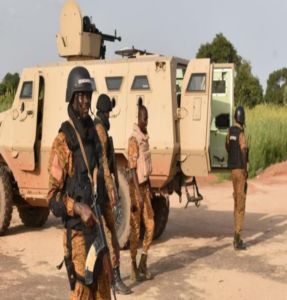
Behind the closed doors of diplomatic negotiations, the consequences are dire. Displaced families languish in overcrowded camps, farmers abandon fertile lands due to persistent raids, and markets shut down as insecurity paralyzes trade routes. With no end in sight to the violence, the junta’s inability to stabilize the country is exacerbating mass displacement and deepening economic strain. Every day without decisive action risks transforming Burkina Faso’s crisis into a prolonged humanitarian catastrophe.
Can Türki̇ye fill the void?
While Ankara has demonstrated military proficiency in conflict zones across Africa, the real test will be whether its support can translate into tangible protection for Burkinabè civilians. Success hinges not only on the deployment of advanced weaponry but also on long-term training, intelligence-sharing, and coordination with local forces. Without these elements, Burkina Faso risks repeating the same cycle of unmet promises and escalating instability that defined its experiment with Moscow. For a nation on the brink, time is the most critical—and scarcest—resource.