Relations between the United States and Morocco have entered a new phase, with Washington increasingly aligning itself with Rabat’s positions on two flashpoints: the Sahara occidental and the Spanish enclaves of Ceuta and Melilla. This shift is reshaping alliances in the western Mediterranean and placing Spain in uncharted diplomatic waters.
Since late July, a flurry of signals from Washington has underscored a strategic pivot toward Morocco. From endorsing Rabat’s autonomy plan for the Sahara occidental to exploring deeper economic and security cooperation—including discussions around Ceuta and Melilla—the two nations appear to be forging a partnership with far-reaching implications.
The timing of this development coincides with a severe migration crisis in Ceuta, where tens of thousands of people surged into the Spanish enclave within 24 hours, overwhelming local authorities and drawing sharp criticism from the European Union. While the origins of the influx remain debated, analysts suggest Morocco may have capitalized on the situation to assert its long-standing claims over the territories.
Morocco’s autonomy plan gains US backing
In December 2020, the Trump administration formally recognized Morocco’s sovereignty over the Sahara occidental in exchange for the normalization of Rabat’s ties with Israel. This landmark decision broke decades of international deadlock over the territory, where the Polisario Front has fought for independence since the 1970s.
Now, Rabat is working to solidify this US support ahead of critical negotiations. The inauguration of the Donald J. Trump Highway, running from Tiznit to Dakhla in the Sahara occidental, serves as a visible reminder of Washington’s endorsement. Analysts describe this as part of a broader strategy to ensure continued American backing for Morocco’s autonomy proposal, particularly as diplomatic efforts intensify.
« The goal is clear: secure US support until a resolution favorable to Morocco’s stance is achieved, » notes an expert closely tracking the dossier. For Rabat, maintaining Washington’s alignment is essential to shaping a future settlement on its terms.
Economic ties bolster bilateral momentum
The partnership between Washington and Rabat extends beyond politics. In late July, the US ambassador to Morocco traveled to Laâyoune, the regional capital in the Sahara occidental, to finalize an agreement for a US-funded project: a facility to produce hydrogen and ammonia. The move reflects a shared focus on investments that benefit American companies while advancing Morocco’s economic ambitions.
This convergence of interests spans multiple domains: political support, economic incentives, security cooperation, and strategic alignment on Israel. Together, these elements form the backbone of a relationship that is rapidly deepening.
Congressional moves target Polisario
Another development raising eyebrows is a bipartisan proposal in the US Congress to classify the Polisario Front as a foreign terrorist organization. The initiative, which also seeks to investigate alleged links between the group and Iran, underscores the shifting geopolitical winds in Washington.
The timing is no coincidence. With US officials increasingly wary of Iranian influence across the Middle East and North Africa, Rabat has seized the opportunity to frame its conflict with the Polisario through an anti-Iran lens. Experts, however, caution that there is little credible evidence linking the movement to Tehran or its proxies.
« The strategy is straightforward: associate the Sahara occidental conflict with broader US priorities in the region, » explains a regional analyst. By doing so, Morocco aims to secure Washington’s backing in a way that aligns with American strategic goals.
Ceuta and Melilla: a new battleground
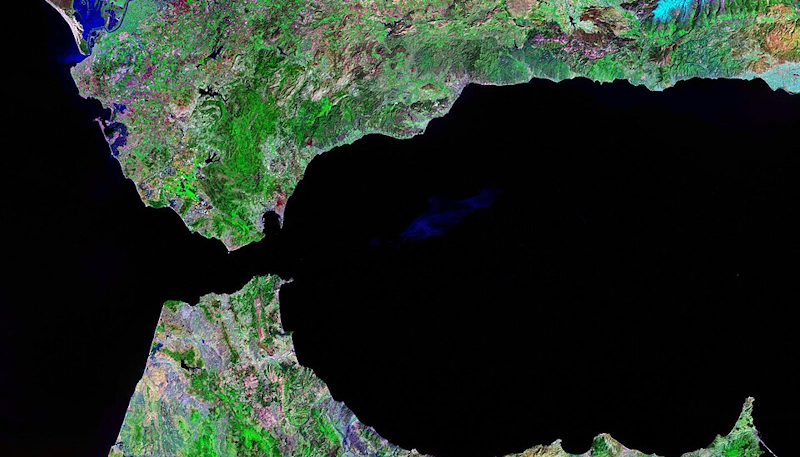
The most consequential shift may be Washington’s evolving stance on Ceuta and Melilla. Traditionally viewed as Spanish territories, these enclaves are now the subject of increasingly vocal American statements that analysts interpret as a subtle tilt toward Morocco’s claims.
« US officials have made it clear they no longer consider Ceuta and Melilla unequivocally Spanish, » says a policy observer. This implicit support for Rabat’s position could strain relations between Washington and Madrid, where the enclaves’ status has long been non-negotiable.
Madrid grapples with a shifting landscape
The migration surge in Ceuta has left Spain scrambling to respond. Prime Minister Pedro Sánchez’s subsequent visit to Algeria—Polisario’s key regional ally—to strengthen energy ties was closely watched in Rabat. Yet analysts argue this move does not signal a fundamental shift in Spain’s position on the Sahara occidental, where Madrid continues to back Morocco’s autonomy plan.
Instead, the Ceuta crisis appears rooted in the unresolved territorial dispute between Spain and Morocco. The influx of migrants, while largely spontaneous, was exploited by Rabat to underscore its long-standing claims over the enclaves.
Uncertainty for Spain’s strategic alliances
For Spain, the implications are profound. The country has long relied on its alliance with the US and NATO to safeguard its security. Should Washington’s position on Ceuta and Melilla shift further, it could destabilize the regional order and force Madrid to rethink its strategic assumptions.
While an immediate crisis is not anticipated, the current trajectory could lay the groundwork for future negotiations over the enclaves’ status. « The question of Ceuta and Melilla may resurface on the political agenda in the coming years, » warns a regional expert.
A triangular power struggle emerges
Behind the diplomatic maneuvering lies a realignment of power in North Africa. Morocco is leveraging its partnership with Washington to secure support for its positions on the Sahara occidental and the Spanish enclaves. The US, in turn, is prioritizing its strategic and economic interests, while Spain faces a less predictable transatlantic ally.
For Rabat, this moment presents a rare opportunity to advance its territorial claims. For Madrid, it represents an unprecedented strategic challenge. The Sahara occidental and Ceuta—once separate issues—are now converging in a high-stakes diplomatic battle over American influence in the Maghreb and the future of alliances in the western Mediterranean.