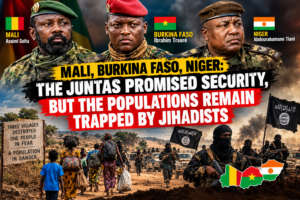
The Trump administration is weighing a significant expansion of its military footprint in Africa, with Mali emerging as a potential new battleground. Internal deliberations are underway regarding targeted strikes against the Jama’at Nusrat al-Islam wal-Muslimin (JNIM), an Al-Qaïda-linked faction operating across the Sahel region. This move would mark the first American intervention in Mali, nearly a decade after France withdrew its forces following a prolonged counterterrorism campaign.
While no final decision has been reached, the proposal has sparked debate within Washington’s corridors of power. Sebastian Gorka, a prominent counterterrorism advisor to the National Security Council, has emerged as a vocal advocate for military action. However, skepticism persists among other officials, who question whether such strikes would yield lasting results or merely escalate regional instability.
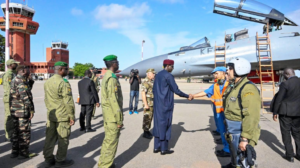
If authorized, these operations would make Mali the eighth country targeted by U.S. strikes during Donald Trump’s second term—highlighting a broader shift in American foreign policy toward increased direct engagement in African conflicts. The administration has also signaled its intent to bolster security cooperation with North and West African nations, urging them to invest in U.S.-made military hardware and training to combat jihadist groups.
The JNIM has grown into one of the most formidable armed organizations in West Africa, with its influence spreading from Mali into neighboring coastal states. Analysts warn that the group’s growing strength is directly tied to the deteriorating security landscape in the Sahel, where decades of instability have allowed extremist factions to thrive.
Security experts question the effectiveness of military solutions
Critics of the proposed strikes argue that history offers little optimism. Corinne Dufka, a seasoned Sahel analyst, cautions that targeted assassinations of JNIM leaders could backfire, potentially radicalizing local populations and undermining long-term de-escalation efforts. «Eliminating key figures may disrupt the group’s command structure, but it could also push its members further into extremism, making them harder to reintegrate.
Others point to the limited success of past interventions. France’s decade-long Operation Barkhane, which concluded in 2022, failed to curb jihadist expansion. Similarly, recent Russian security partnerships in countries like Burkina Faso, Guinea, and Central African Republic have yielded mixed results, with some officials dismissing Moscow’s counterterrorism efforts as ineffective.
There are also concerns that weakening the JNIM could inadvertently benefit rival factions, particularly the Islamic State in the Greater Sahel (ISGS). The two groups have clashed repeatedly, and a U.S. campaign against the JNIM might create a power vacuum that ISGS is quick to exploit. Additionally, the presence of Russian military contractors in Mali adds another layer of complexity, raising the risk of unintended escalation between Washington and Moscow in the region.