As the war in Ukraine rages on, the ripple effects of drone strikes are reshaping the energy landscape far beyond the battlefield. In a single night, a major Russian oil refinery in Novokouïbychevsk was engulfed in flames, while a Ukrainian railway station became the target of a devastating attack that left families shattered. These incidents are not isolated—they are part of a deliberate strategy that is now reshaping economies, straining global energy supplies, and exposing the fragility of civilian life in both nations.
From railways to refineries: a war that targets the lifeblood of nations
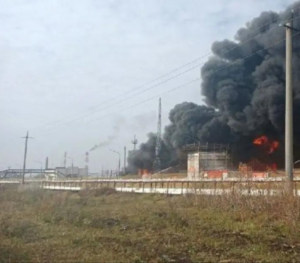
The night of October 29-30 marked another escalation in a conflict where no target is off-limits. Ukrainian drones struck the Novokouïbychevsk refinery in Russia’s Samara region, igniting a blaze so intense that thick black smoke billowed into the sky for miles. This was no accidental fire—it was a calculated blow to an industrial giant capable of processing millions of tons of crude oil annually. The facility, owned by Rosneft, plays a pivotal role in producing aviation fuel and other essential petroleum products, making it a linchpin of Russia’s energy infrastructure.
Meanwhile, just hours earlier, Russian drones rained terror on a train station in Dnipro, Ukraine. The strike targeted civilians boarding commuter and passenger trains, leaving at least 14 dead—including an 11-year-old child—and dozens injured. Videos captured the aftermath: shattered glass, twisted metal, and emergency responders sifting through the wreckage, their faces etched with grief. The attack was a stark reminder that in this war, no civilian space is truly safe.
The governor of Samara, Viatcheslav Fedorichtchev, confirmed the drone strike but declined to provide specifics on the damage. However, the visual evidence speaks volumes: videos and images from social media show a raging inferno at the refinery, with emergency crews struggling to contain the flames. While the full extent of the destruction remains unclear, one thing is certain—the attack has sent shockwaves through Russia’s energy sector and global markets alike.
The domino effect: how energy disruptions fuel economic instability
The Novokouïbychevsk refinery isn’t just another industrial facility—it’s a critical node in Russia’s oil production network. With a capacity to process millions of tons of crude annually, its disruption will have cascading consequences:
- Fuel shortages: Aviation and transportation sectors, already grappling with sanctions, face renewed pressure as refinery output dwindles.
- Rising prices: Global oil markets have reacted swiftly, with futures contracts climbing as traders anticipate tighter supply.
- Economic strain: Russia’s reliance on oil exports means every barrel lost translates to lost revenue, further straining a war economy already under immense pressure.
- Environmental fallout: The fire’s thick smoke and potential chemical leaks pose long-term risks to air and water quality in the region.
In Ukraine, the story is equally bleak. Railways have long been the backbone of the country’s resilience, ferrying goods, soldiers, and civilians alike. Russian strikes on these networks have crippled supply chains, delayed evacuations, and exposed millions to darkness during blackouts. The Dnipro attack underscores a brutal truth: when infrastructure fails, so does the fabric of daily life.
Escalation without end: the cycle of retaliation and its human cost
The simultaneous strikes in Ukraine and Russia are not coincidental—they are a deliberate tactic in a war where military victories are measured not just in territory, but in economic disruption. Ukraine’s long-range drone program has evolved from a tactical experiment to a strategic tool, allowing Kyiv to strike deep into Russian territory. For Moscow, targeting Ukrainian rail networks is a way to erode public morale and cripple the country’s defenses.
Yet behind the geopolitical maneuvering, ordinary people bear the brunt. In Dnipro, families are mourning children who will never come home. In Samara, workers at the refinery may soon face layoffs as production stalls. The human toll is mounting, and with it, the urgency for a resolution grows.
What’s next? The fragile balance of power and the stakes for global energy
As both sides double down on their strategies, the question remains: how far will this escalation go? Western allies have urged Kyiv to temper its strikes on Russian energy infrastructure, fearing a backlash that could destabilize global oil markets. But with the Novokouïbychevsk attack proving that drones can bypass even the most fortified defenses, the calculus is shifting.
For now, the war shows no signs of abating. Each new strike—whether at a railway station or a refinery—pushes the conflict further from diplomacy and deeper into a cycle of retaliation. The real winners? Not the generals, nor the politicians, but the global energy markets, already jittery from years of volatility. The losers? The civilians caught in the crossfire, their lives upended by a war that refuses to end.
Key takeaways
- Ukraine’s drone strikes are reshaping Russia’s energy sector, with refineries like Novokouïbychevsk becoming key targets.
- Civilian infrastructure in both countries—railways, roads, and industrial zones—is increasingly vulnerable to long-range attacks.
- Economic fallout from disrupted oil production and fuel shortages could reverberate globally, driving up prices and fueling inflation.
- The human cost is irreplaceable: families shattered, communities displaced, and futures uncertain.
The world watches as the flames of Novokouïbychevsk and the wreckage of Dnipro serve as grim reminders of a war that refuses to stay on the battlefield.