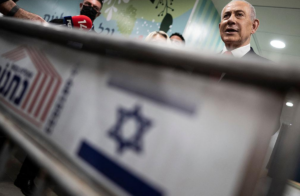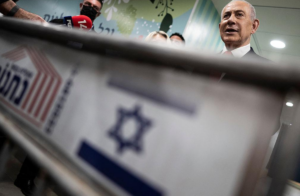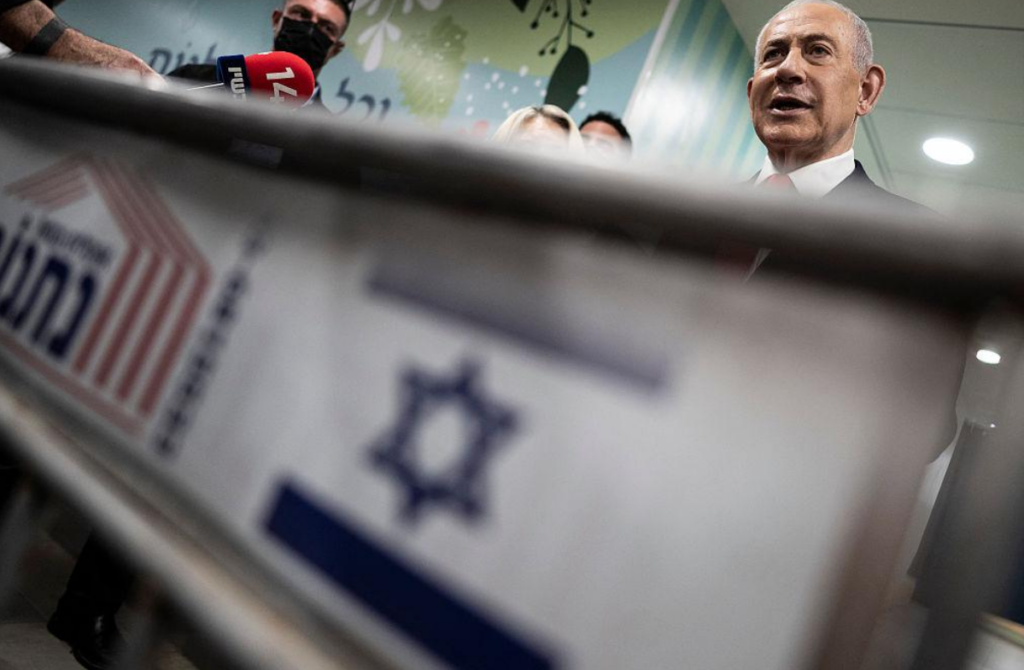
Benjamin Netanyahu’s coalition narrowly won the most seats in Israel’s October 27, 2026 elections, yet fell short of the 61-seat majority needed to govern. With his bloc securing just 53 Knesset seats, the prime minister faces a fragmented parliament where opposition parties hold 48 seats and Arab-majority factions command 19 seats. This electoral outcome has triggered a political stalemate with potential ripple effects across the Middle East, from Gaza and Lebanon to Iran and beyond.
What a narrow victory means for Israeli leadership
While Netanyahu’s Likud party remains the largest with 27 seats, the loss of 15 seats compared to the previous Knesset underscores a dramatic erosion of his parliamentary base. Neither his Likud-led coalition nor the opposition bloc led by former IDF chief Gadi Eisenkot reached the absolute majority threshold. This power vacuum has introduced new uncertainties into Israel’s political system, exacerbated by years of internal strife, ongoing conflict, and public distrust in government policies.
The Arab political parties, including the Joint List and Ra’am, have emerged as kingmakers with their 19-seat tally—the highest representation in the Knesset since the 1940s. Their potential support could help opposition parties form a majority, but deep-seated ideological divides and resistance from Zionist factions complicate coalition prospects. Other possible outcomes include a national unity government, a minority coalition supported by external backing, or another round of elections if negotiations fail.
Gaza remains flashpoint amid political instability
The humanitarian and security crisis in Gaza presents one of the most urgent challenges for Israel’s next government. Reconstruction efforts, border security, and the long-term viability of Palestinian governance will continue to dominate policy discussions.
If Netanyahu retains power with traditional allies, Israel is likely to maintain a hardline stance on security and territorial issues. His coalition partners—particularly nationalist and religious factions—demand strict policies toward Gaza and the West Bank. Conversely, a shift in government could pave the way for diplomatic adjustments, including renewed engagement with international partners. Yet, given the deep divisions within the opposition on issues like Hamas, Palestinian statehood, and security guarantees, any policy change is expected to be incremental at best.
For Palestinians, the election result offers no immediate relief. It highlights how Gaza and the West Bank’s future will be shaped not by public sentiment alone, but by the fragile alliances required to form a new government.
Iran and the shadow of regional conflict loom large
The election results also carry significant implications for Israel’s strategic posture toward Iran—a dominant concern in the Middle East. The Islamic Republic’s nuclear program, ballistic missile capabilities, and support for militant groups continue to destabilize the region. A weakened government in Tel Aviv may struggle to develop a unified response, though security matters traditionally enjoy bipartisan consensus in Israel.
Lebanon’s Hezbollah remains another critical flashpoint. Any escalation risks catastrophic humanitarian and economic consequences, further destabilizing an already volatile border region.
In Syria, Israel will keep a close watch on shifting power dynamics that could alter the security landscape along its northern frontier. Although these elections are domestic in nature, their consequences may ripple across multiple conflict zones in the region.
Global and Arab partners weigh Israel’s next move
The formation of Israel’s next government will be closely monitored by international allies, especially the United States. While the U.S.-Israel alliance remains strong on defense, intelligence, and geopolitical strategy, differences over Gaza, military operations, and regional de-escalation efforts could strain ties. Washington may face challenges in maintaining alignment with a divided Israeli leadership.
Arab states, including Saudi Arabia, Egypt, Jordan, and the UAE, are also watching with caution. For Riyadh, normalization with Israel remains a strategic priority—but one that is tightly linked to the Palestinian issue and overall regional stability. A government unable to present a clear policy direction could slow diplomatic progress. Conversely, a coalition more open to dialogue might create new opportunities, though it would not guarantee immediate breakthroughs.
Israel’s divided society faces uncertain future
The election outcome reflects a deeply fractured society grappling with questions of governance, national identity, and security. The rise of Arab political representation, the decline of Netanyahu’s coalition, and the absence of a clear majority have created a political impasse with no clear resolution in sight.
Three potential pathways emerge:
- A renewed Netanyahu-led coalition through new alliances with previously reluctant partners.
- A coalition formed by the opposition with or without Arab party support.
- A return to the polls if negotiations collapse under the weight of irreconcilable differences.
The stakes are high—not just for Israel, but for the wider Middle East. The composition of the next government will influence the trajectory of Gaza’s recovery, Palestinian self-determination, Iran’s regional influence, and the pace of normalization with Arab states. While Netanyahu may have won the most seats, the electorate did not grant him the power to govern alone. In a region where even minor shifts in Jerusalem’s policy can send shockwaves across borders, this fractured victory may be the prelude to a new chapter of geopolitical uncertainty.