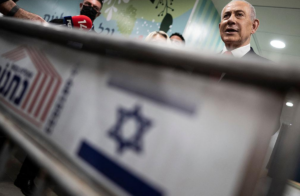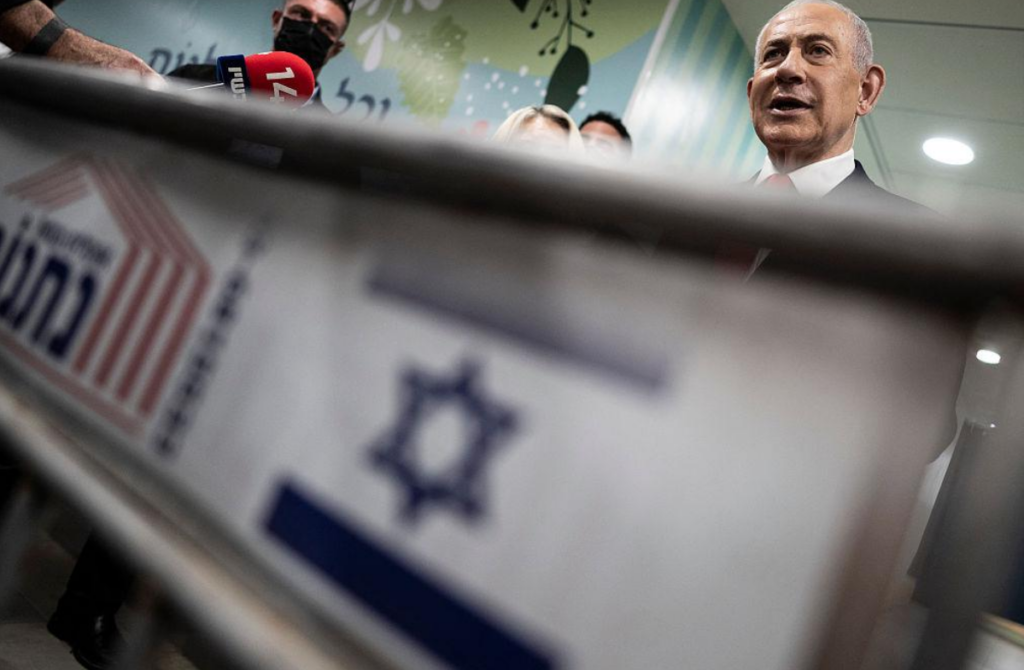
With just 53 seats in the 120-seat Knesset, Benjamin Netanyahu’s election victory in October 2026 falls short of the majority needed to govern, leaving Israel in uncharted political waters. The fragmented parliament—where opposition blocs hold 48 seats and Arab parties secure a record 19—sets the stage for a high-stakes power struggle that could reshape security and diplomatic dynamics from Gaza to Tehran.
Israel’s political deadlock: a victory that fails to secure the premiership
The October 2026 elections delivered a razor-thin win for Netanyahu’s Likud, which secured 27 seats, but the broader right-wing coalition fell 8 seats short of the 61-vote majority required to form a government. The opposition, led by former military chief Gadi Eisenkot, now commands 48 seats, while Arab parties have clinched their highest representation yet with 19 seats.
This fragmentation erodes Netanyahu’s parliamentary clout, down from a previous coalition of 68 seats, signaling a fundamental shift in Israel’s political landscape after years of internal strife and contentious governance. The path forward is fraught with uncertainty: potential scenarios include a unity government, a minority coalition, or even a costly return to the polls if coalition talks collapse.
The pivotal role of Arab parties adds another layer of complexity. While their support could propel the opposition to power, deep-seated reluctance among Zionist factions to collaborate with them complicates any alliance. The impasse underscores a broader question: can Israel’s next government navigate these divisions without triggering another electoral crisis?
Gaza: the immediate crisis shaping Israel’s next moves
The humanitarian and political fallout from Gaza remains the most urgent challenge facing Israel’s incoming government. Reconstruction efforts, security imperatives, and the fate of Palestinian governance hinge on the next administration’s approach—and Netanyahu’s ability to enforce continuity or pivot toward dialogue.
His traditional allies—nationalist and religious parties—favor a hardline stance on Palestinian territories and security demands, suggesting limited scope for policy shifts if his coalition endures. An opposition-led government, however, might pursue diplomatic overtures, though entrenched divisions over Hamas, security, and statehood make sweeping changes unlikely. For Palestinians, the election outcome offers no immediate relief; instead, it underscores how Gaza’s future will be dictated by the fragile alliances that eventually form Israel’s next cabinet.
Regional tensions: Iran, Lebanon, and Syria loom large
Beyond domestic politics, Israel’s next government will inherit a volatile neighborhood. Iran’s nuclear ambitions, ballistic capabilities, and support for regional proxies remain a top security concern, with Tehran’s influence stretching from Syria to Lebanon. A weakened Israeli government—hamstrung by parliamentary divisions—may struggle to craft a coherent response, though defense matters often transcend party lines.
Lebanon’s Hezbollah poses another flashpoint. A military escalation could trigger devastating humanitarian and economic consequences, while Syria’s shifting power dynamics continue to test Israel’s border security. Even as Israel’s elections are a domestic affair, their ripple effects could ripple across these flashpoints, altering the regional balance of power.
Global powers and Arab states weigh in on Israel’s uncertain future
The Biden administration’s relationship with Israel, already tested by disagreements over Gaza and military operations, will now hinge on the next government’s composition. A Netanyahu-led coalition may face scrutiny over its hardline policies, while an opposition-backed administration could open avenues for renewed dialogue—though not necessarily progress toward a regional accord.
Arab capitals, including Riyadh, Cairo, Amman, and Abu Dhabi, are watching closely. For Saudi Arabia, normalization with Israel remains a strategic goal, but it is inextricably tied to Palestinian statehood and regional stability. A government unable to articulate a clear vision risks stalling diplomatic momentum, while a coalition open to negotiations might unlock new opportunities—albeit cautiously.
What’s next for Israel and the Middle East?
The 2026 elections have exposed Israel’s deep societal fractures, from security and governance to religion and national identity. With no clear majority in sight, three potential paths emerge:
- A Netanyahu-led coalition: A fragile alliance with nationalist or religious partners could provide short-term stability but may struggle to pass critical legislation or address pressing crises.
- An opposition government: A coalition united by opposition to Netanyahu might forge an alternative agenda, though internal disagreements could render it equally unstable.
- Another election: If negotiations fail, Israel could face a costly repeat of the electoral process, further straining public trust in its political institutions.
The stakes extend far beyond Israel’s borders. The next government’s policies will influence Gaza’s reconstruction, Palestinian-Israeli relations, Iran’s regional posture, and the fragile normalization efforts with Arab states. Ultimately, Netanyahu’s victory is a hollow one—underscoring how Israel’s political divisions could prolong uncertainty for a region already on the brink.