The Vice-President of Benin, Mariam Chabi Talata, made a bold statement in Moscow last October by positioning the country’s economic strategy as a safeguard against rising global trade instability. While other African delegations weighed alliances, Benin’s diplomatic offensive under her leadership ensured that bilateral talks translated into tangible benefits for local industries and communities.
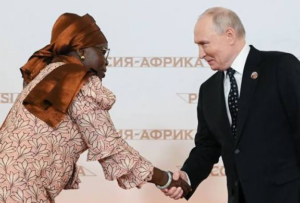
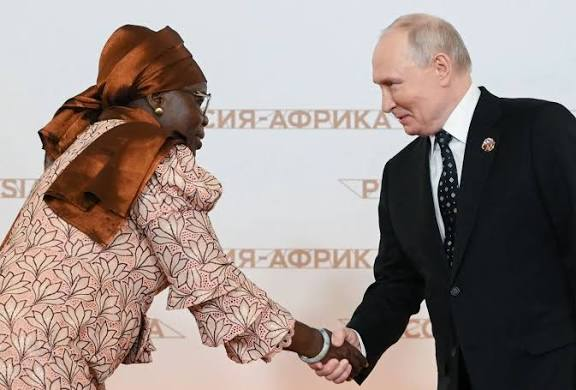
Her high-level engagements at the 2026 Russia-Africa Summit—including a bilateral audience with President Vladimir Poutine—were not merely diplomatic formalities. They represented a decisive step toward securing investment flows, trade agreements, and technological partnerships designed to shield Benin’s fragile but growing economy from volatile global markets.
The long-standing partnership between Benin and Russia: from ideological ties to economic pragmatism
Benin’s diplomatic ties with Moscow trace back to 1962, just one year after independence from colonial rule. Built during the Soviet era, these relations flourished in the 1970s and 1980s under the People’s Republic of Benin, embedding deep connections in education, healthcare, and defense. Thousands of Beninese professionals trained in Soviet universities, forming a generation that still anchors relations between the two countries today.
Yet the 2026 summit marked a turning point. Instead of relying solely on historical ties, Benin’s delegation—led by Mariam Chabi Talata—pushed for a modern partnership focused on economic resilience. The message was clear: past solidarity must now serve future prosperity, with tangible outcomes for local businesses and citizens.
Redefining Africa-Russia cooperation: from rhetoric to real economic impact
This edition of the Russia-Africa Summit followed earlier forums in Sochi (2019) and Saint Petersburg (2023). While past summits focused on political declarations, the 2026 edition prioritized measurable progress. Benin played a key role in redirecting discussions toward practical results: sustainable investment, technology transfer, and joint ventures that align with the country’s economic ambitions.
The stakes are high. In a world where overreliance on traditional partners like Europe and China exposes African nations to trade shocks and policy shifts, Benin’s approach is a strategic hedge. By advocating for balanced agreements that prioritize local value creation, Mariam Chabi Talata ensured that Benin’s voice was heard in shaping the next triennial action plan (2027–2029).
From diplomatic visits to structural transformation: what Benin gained in Moscow
Mariam Chabi Talata’s participation in the Economic and Humanitarian Forum, alongside African heads of state and Russian officials, underscored a crucial principle: foreign partnerships must drive internal transformation. The Beninese Vice-President emphasized that cooperation should not be a one-way street but a catalyst for industrialization, job creation, and social progress.
As negotiations concluded with a new joint declaration and an updated action program, it became evident that Benin had secured more than promises. The agreements inked in Moscow are expected to facilitate:
- Increased Russian investment in Benin’s agricultural and energy sectors
- Collaboration in technical and vocational training to address youth unemployment
- Joint infrastructure projects to improve trade corridors and connectivity
- Strengthened partnerships in digital innovation and public health
These developments are not just diplomatic wins—they represent lifelines for a nation striving to stabilize its economy in an unpredictable global landscape.
Why Benin’s Russia strategy matters for African economic sovereignty
The success of the Moscow summit for Benin sends a powerful signal across the continent: diversification is not optional, it is essential. While other African nations grapple with external debt, trade imbalances, and political pressure, Benin’s proactive diplomacy demonstrates how strategic alliances can mitigate risks and unlock opportunities.
By positioning itself as a bridge between Africa and Eurasia, Benin is positioning its economy not as a passive recipient of aid, but as an active participant in shaping a multipolar global economy. The leadership shown by Mariam Chabi Talata in Moscow is likely to set a precedent for how smaller nations can negotiate from a position of strength.
As global trade realigns and geopolitical tensions rise, Benin’s bold steps in Moscow may well be the first chapter in a new era of economic resilience for West Africa.