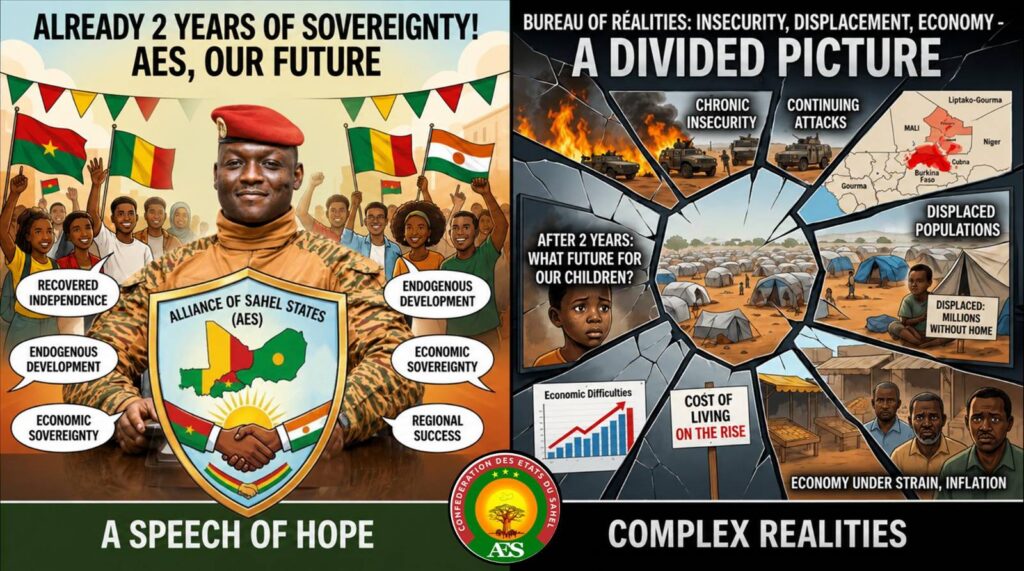
The Alliance of Sahel States (AES) marks two years since its establishment, with its leaders in Ouagadougou, Bamako and Niamey presenting the confederation as a landmark political and strategic achievement built on sovereignty, solidarity and regional cooperation. While this narrative resonates with a segment of the public, it has yet to dispel the doubts of those demanding tangible progress.
The AES leadership asserts that significant strides have been made in diplomacy, defense and institutional development. Yet, on the ground, the challenges that prompted the alliance’s formation remain largely unresolved. The promise of sovereignty, now the central tenet of the AES agenda, extends beyond mere diplomatic realignment—it hinges on a state’s capacity to safeguard its people, uphold institutions, sustain economic stability and empower its youth.
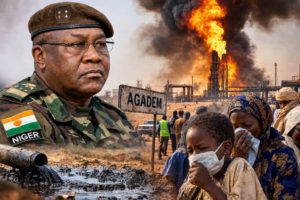
Despite repeated claims of military success, armed groups continue to operate across vast areas in Burkina Faso, Mali and Niger. Civilians face persistent threats, frequent displacements and deepening humanitarian crises. Security, once touted as a cornerstone of the AES strategy, remains elusive for many communities.
Economically, the anticipated benefits of deeper regional integration have yet to materialize. Trade flows remain sluggish, fiscal constraints persist and household purchasing power continues to decline. Critics argue that the promised dividends of the confederation remain largely aspirational, with little concrete impact on daily life.
The relentless emphasis on political independence, while symbolically powerful, does not directly address the pressing needs of the population. Citizens evaluate leadership not by declarations of autonomy, but by tangible improvements in security, healthcare, education, employment and infrastructure. These are the true benchmarks of effective governance.
Moreover, the dominant focus on sovereignty risks overshadowing critical governance concerns such as transparency, accountability and institutional performance. A regional union’s long-term legitimacy depends not only on its geopolitical positioning, but on the strength of its governance frameworks, the efficacy of its policies and the responsible stewardship of public resources.
Two years into its existence, the AES undeniably represents a transformative shift in West Africa’s political landscape. However, its historical significance will ultimately be determined not by official proclamations, but by the measurable impact it delivers to the people of Burkina Faso, Mali and Niger. The true test of its success lies in the tangible solutions it provides to the enduring security, economic and social challenges facing the region. The verdict will come from the ground—and not from the podium.