How Benin is transforming its fruit export industry with innovation and precision
The Beninese government, under the leadership of President Romuald Wadagni, is spearheading a groundbreaking initiative to revolutionize the country’s fruit export sector. By integrating advanced seed technology and state-of-the-art logistics, Benin is positioning itself as a formidable player in the global fruit market. The cornerstone of this transformation lies in two major projects: the industrial-scale vitroplant facility in Glo-Djigbé and the high-tech fruit quay at Cotonou International Airport.
A new economic vision for Benin’s agricultural sector
For generations, agriculture has been the backbone of Benin’s economy, yet the sector has long grappled with inefficiencies. Historically, the country relied on exporting raw, unstandardized produce, which led to significant post-harvest losses and missed opportunities in high-value markets. The current administration has taken a decisive turn, shifting from mere production to a holistic approach that prioritizes end-to-end value chain mastery.
The strategy zeroes in on three high-demand fruits: pineapple, cashew nuts, and mango. These crops are in strong global demand, but stringent quality standards mean only the most meticulously cultivated produce can compete. The economic ripple effects are substantial: boosted export revenues, stabilized incomes for local farmers, and the creation of skilled employment opportunities within new technological and logistical infrastructures. Spearheaded by the Projet d’Appui à la Compétivité des Filières Agricoles et à la Diversification des Exportations (PACOFIDE), Benin is transitioning from subsistence farming to a competitive agro-industry.
Glo-Djigbé: the seed revolution’s epicenter
At the heart of this agricultural transformation is the Special Economic Zone (SEZ) of Glo-Djigbé, home to an industrial-scale vitroplant production unit nearing completion. With an annual capacity of 13.5 million vitroplants, this facility is set to redefine Benin’s seed industry.
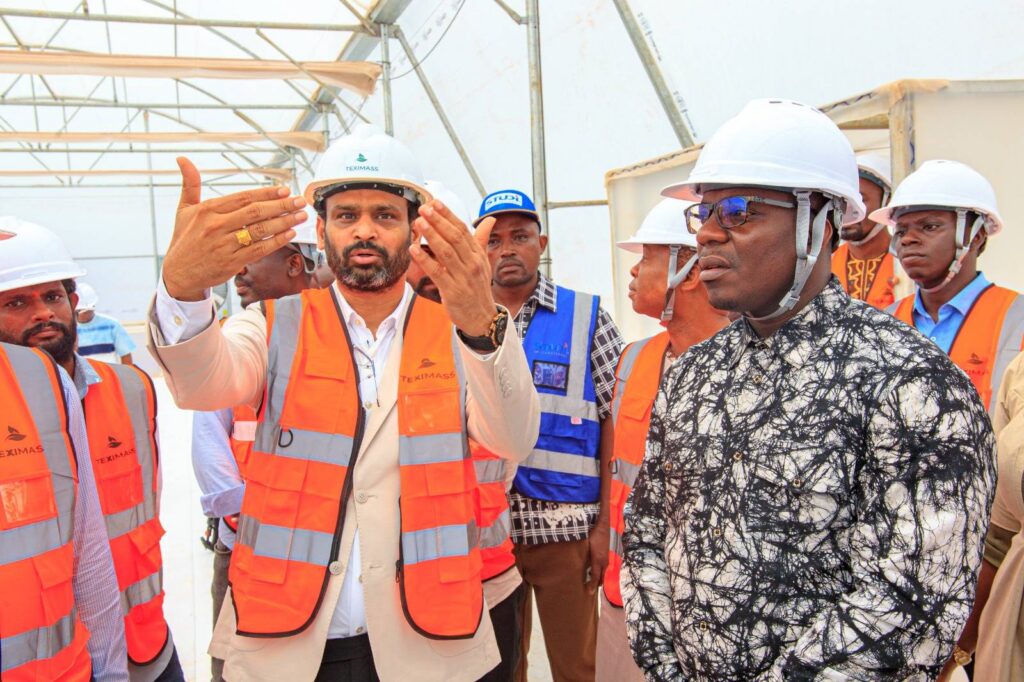
Minister of Agriculture, Livestock, and Fisheries Adin Yeton Bloukounon Goubalan emphasized the critical role of seed technology during a recent inspection: “In every agricultural powerhouse, high-quality seed production is the foundation of sectoral transformation. No nation can achieve agricultural success without controlling its seed industry.”
The economic benefits of this facility are twofold:
- For farmers: Access to disease-resistant, high-yield plants that meet international standards. This eliminates the unpredictability of traditional seeds, ensuring consistent quality and higher profits.
- For trade balance: By increasing yields per hectare without expanding cultivated land, Benin cuts production costs and strengthens its competitive edge against regional rivals.
To ensure a seamless technological transition, the government is developing a 1,000-hectare elite demonstration field on the former Glo-Djigbé airport site. This open-air laboratory will validate the performance of new pineapple vitroplants before they are distributed to farmers, maximizing return on investment.
The Cotonou fruit quay: the missing link in export logistics
Even the highest-quality produce faces ruin without robust logistics. Recognizing this, the PACOFIDE initiative includes the construction of a modern fruit quay at Cotonou International Airport. This logistical marvel is equipped with cold storage chambers, refrigerated warehouses, freezers, and dedicated customs and import-export zones, capable of handling up to 736 pallets of fruit simultaneously.
The financial and operational advantages are immediate. By maintaining the cold chain from farm to flight, Benin drastically reduces post-harvest losses. Fruits like sugar loaf pineapple and fresh produce will reach European and Asian markets with unmatched freshness, enabling exporters to command premium prices.
Political commitment drives progress
The ministerial inspection on July 3 confirmed that both projects are on track, with the government’s vision of economic sovereignty taking tangible shape. Minister Goubalan underscored the strategic importance of seed technology: “Seeds are the primary factor of production. By mastering seed technology, we enhance our competitiveness and reduce reliance on foreign inputs. Benin is taking control of its agricultural destiny.”
This integrated approach—combining scientific research, seed innovation, and logistical excellence—addresses a long-standing structural gap in Benin’s agricultural sector. It also reassures private investors and international partners, positioning Benin as a reliable and structured player in the global fruit trade.
A resilient, export-driven agricultural future
By linking the high-tech seed production hub in Glo-Djigbé with the efficient fruit quay in Cotonou, the Beninese government is laying the groundwork for a resilient, export-focused agricultural economy. This is not merely about increasing volumes; it’s about structurally transforming the national economy. By controlling its seed supply and cold chain logistics, Benin ensures that the wealth generated from its land remains firmly within its borders. The green revolution is underway, armed with technology and ambition to claim its place on the world stage.