Togo’s president visits Koundjoaré frontline amid rising terror threats
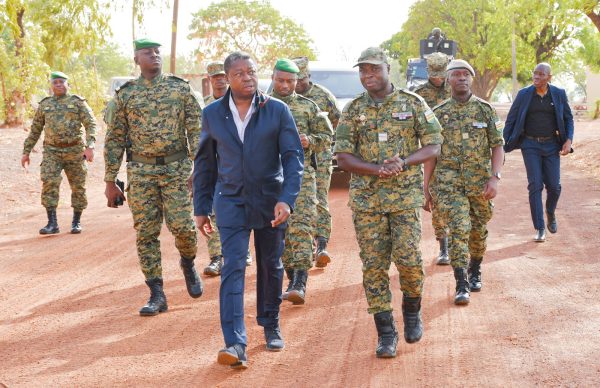
In a high-stakes move, Faure Gnassingbé, Togo’s President and Supreme Commander of the Armed Forces, made a strategic visit to the Koundjoaré operation frontline in the northern Savanes Region on May 7, 2026. This visit underscored the gravity of the security situation, as violent extremism looms dangerously close to Togo’s borders. The president’s presence on the ground sent a powerful message of solidarity to troops battling relentless insurgent threats in a grueling war of attrition.
The Savanes Region, where the operation is concentrated, is a critical battleground for Togo’s territorial integrity. The landscape is unforgiving—dusty plains give way to oppressive heat, and every rock or bush could conceal danger. The enemy operates without uniforms or clear identities, blending into the terrain, making surveillance and defense an immense challenge.
Understanding the threat at the Operational Command Center
Faure Gnassingbé’s visit began with a closed-door briefing at the Operational Command Post (PCO), where military leaders presented a detailed assessment of the evolving security threat. Satellite imagery and intelligence reports painted a grim picture: asymmetric warfare, improvised explosive devices (IEDs), and infiltration attempts by armed groups from the Sahel. Securing the vast, porous border remains a daunting task.
The president engaged deeply with commanders, probing the operational and logistical hurdles faced by frontline troops. He emphasized the need for adaptability—enhancing security measures, boosting unit responsiveness, and refining tactics to minimize vulnerabilities. Every decision, he stressed, directly impacts the lives of those on the ground.
Tchamonga: A firsthand look at the frontline reality
The most symbolic part of the visit took place at the Tchamonga Advanced Operational Post (POA), a key outpost in the heart of the conflict zone. Here, Faure Gnassingbé examined a tactical sand table—a miniature battlefield used to simulate enemy positions and plan patrols. The exercise provided a stark visualization of the challenges troops face daily.
Meeting with soldiers whose faces bore the marks of sleepless nights and harsh conditions, the president acknowledged their unwavering commitment. Many have already made the ultimate sacrifice for national security. He urged them to remain vigilant against an unpredictable enemy while reaffirming the military’s full support. Additionally, he highlighted ongoing efforts to strengthen equipment and operational capabilities, a move aimed at bolstering troop morale.
Beyond the battlefield: A holistic security strategy
While the Koundjoaré operation serves as the military backbone of Togo’s defense, the government recognizes that security cannot be achieved by force alone. A comprehensive, multi-faceted approach is essential to counter violent extremism effectively. This strategy rests on three pillars:
- Military action: The Koundjoaré operation acts as a shield, neutralizing threats and protecting civilians.
- Social resilience: The Savanes Emergency Program (PURS) focuses on delivering essential services—clean water, electricity, schools, and roads—to vulnerable communities, reducing their susceptibility to radicalization.
- Prevention and community engagement: The Interministerial Committee for Preventing Violent Extremism (CIPLEV) collaborates with traditional leaders and youth to detect early signs of radicalization and foster social cohesion.
Regional cooperation: A united front against terrorism
The president’s visit also highlighted Togo’s commitment to regional security collaboration. Close coordination with neighboring countries like Benin and Burkina Faso is seen as vital in combating transnational terrorist threats. In a West Africa grappling with shifting geopolitical dynamics and security fragilities, stabilizing the northern border is not just a national priority—it’s a regional imperative.
The message from Tchamonga was clear: Togo remains steadfast in its resolve to confront armed groups, safeguard its territory, and uphold stability in the face of an increasingly volatile regional landscape.