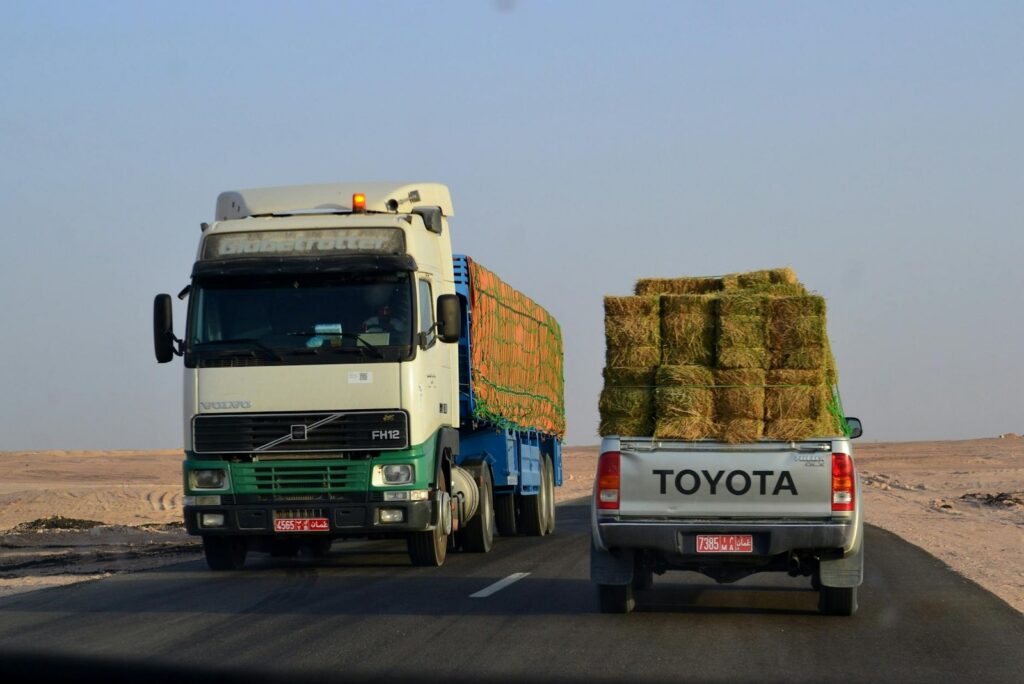
Chad is intensifying its efforts regarding crucial regional transit corridors that link its capital, N’Djamena, to Douala and Bangui. Chadian authorities have recommenced a significant logistical modernization program aimed at streamlining commercial exchanges among Cameroon, Chad, and the Central African Republic (CAR). These three nations share a profound reliance on the autonomous port of Douala. This initiative extends beyond mere road infrastructure, addressing vital aspects of economic competitiveness, food security, and the sub-regional integration within the Economic and Monetary Community of Central Africa (CEMAC).
a critical lifeline for landlocked economies
For both Chad and the Central African Republic, the Cameroonian corridor serves as an essential logistical artery. Historically, nearly 90% of Chadian imports pass through Douala, the sub-region’s primary deep-water port. The Douala-N’Djamena route, spanning approximately 1,800 kilometers, underpins the majority of Chad’s external trade. Any disruption along this vital axis – whether due to poor road conditions, informal checkpoints, or security concerns – immediately translates into increased consumer prices in the Chadian capital.
The Douala-Bangui corridor faces similar vulnerabilities, exacerbated by a decade of instability in northeastern Central Africa. Economic operators report transit times on certain sections stretching to several tens of days, vastly exceeding the theoretical ten-day period. This inefficiency erodes the competitiveness of goods and deters potential investors. While the World Bank and the African Development Bank (AfDB) have repeatedly funded strategic sections, a comprehensive resolution to the issues remains elusive.
N’Djamena’s proactive economic diplomacy
By reactivating this critical project, Chadian authorities are signaling a renewed political commitment. This approach is integral to an active economic diplomacy strategy, through which Mahamat Idriss Déby Itno seeks to bolster his country’s regional standing. N’Djamena aims to exert greater influence in negotiations with Yaoundé concerning transit fluidity, port tariffs, and the security of convoys. Several bilateral discussions have already taken place to standardize customs procedures, reduce control points, and expedite the deployment of electronic cargo tracking systems.
The Central African dimension remains a priority. Bangui, sharing N’Djamena’s dependence on the Douala port, welcomes enhanced coordination among the three capitals. Trilateral discussions are expected to facilitate shared investments and present a united front to technical and financial partners. However, the realization of political commitments faces substantial budgetary constraints, particularly as each of the three states navigates limited financial leeway.
overcoming hurdles for genuine integration
Beyond official declarations, modernizing these transit corridors necessitates structural reforms. Roadside harassment, long decried by transporters, persists as a major impediment on Cameroonian and Chadian routes. Redundant inspections, informal levies, and delays at border crossings inflate transport costs and fuel corruption. The long-discussed project for a juxtaposed border post between Kousséri and N’Djamena is still struggling to become fully operational.
Security concerns also weigh heavily. The Lake Chad region remains vulnerable to armed groups affiliated with Boko Haram, while transit in northern Central Africa is still subject to the unpredictability of non-state armed groups. Without lasting stability, logistical advancements will remain precarious. Furthermore, competition from Nigeria’s Port-Harcourt and, in the longer term, Cameroon’s deep-water port of Kribi, could reshape the regional transit landscape. Yaoundé views Kribi as a means to absorb a portion of Central African and Chadian traffic, potentially opening new corridors and necessitating a holistic reconsideration of supply chains.
Chad’s initiative is thus both essential and intricate. Its success hinges on the capacity of the three states to transform declarations of intent into viable projects, backed by international donors and accompanied by robust governance reforms.
for further reading
CMA CGM seals a €700M logistics partnership in Kenya · Kassoum Traoré appointed interim director-general of the Port of Abidjan · Gabon mobilizes 133 billion FCFA for Transgabonais renovation