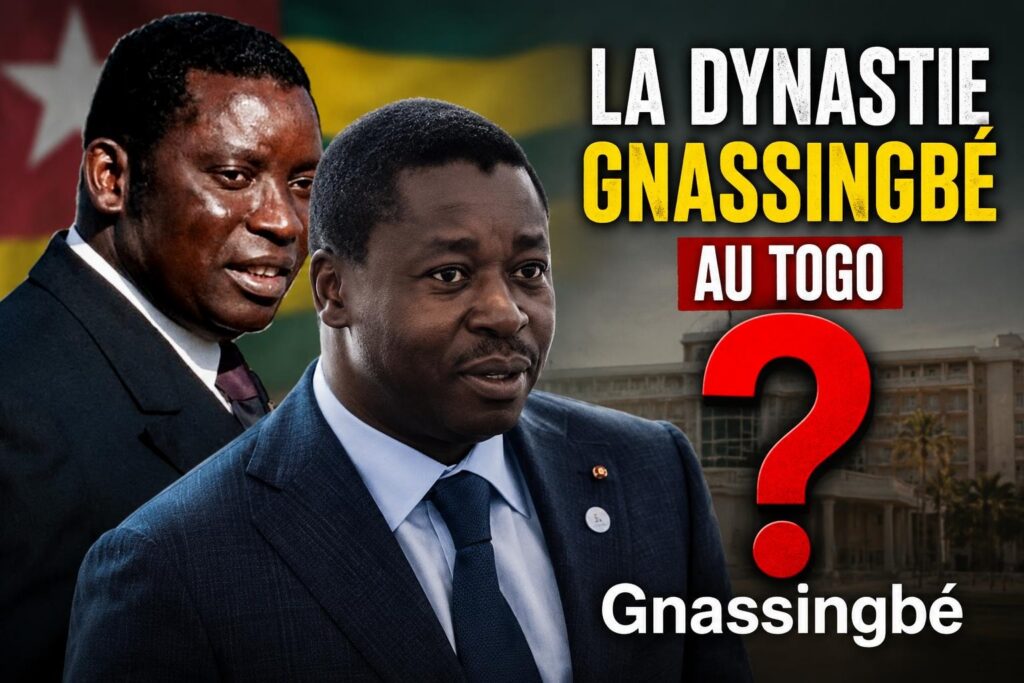
The Republic of Togo holds a grim distinction: it is home to Africa’s longest-ruling political dynasty. Following the 38-year reign of Gnassingbé Eyadéma, his son, Faure Gnassingbé, is now approaching his third decade as head of state. By systematically consolidating control over state institutions and ensuring unwavering loyalty from the military, the current president has followed a path eerily similar to that of his late father. All signs now point to one conclusion: Faure Gnassingbé has opted for a lifetime presidency and, like his predecessor, intends to die in office.
The trap of hereditary rule: clan survival over national progress
To grasp why peaceful political change has become nearly impossible in Togo, one must examine the regime’s core structure. This is not merely a political party in power—it is a dynastic and clan-based system. Since 1967, power in Togo has been treated by the narrow circle around the Gnassingbé family and its allies as a private family inheritance, a possession to be guarded at all costs.
Abandoning the presidency would pose an existential threat to the entire entourage. Stepping down would invite scrutiny over financial mismanagement, systemic corruption, and—most critically—the bloodshed that has marked the regime’s history, particularly the hundreds of lives lost during the violent 2005 transition. For the clan, holding onto power is no longer a political choice; it is a matter of survival—both physical and legal. This is the trap that forces the president to cling to power until his final days.
Constitutional engineering: the death knell for democratic transition
The recent and abrupt shift to a parliamentary system in Togo has extinguished the last embers of democratic hope. By assuming the title of President of the Council of Ministers, Faure Gnassingbé has freed himself from the constraints of presidential term limits and direct universal suffrage.
This constitutional overhaul serves as the final nail in the coffin of democratic succession:
- Eradication of direct elections: The people no longer choose their top leader, eliminating the risk of a punitive vote against the regime.
- Unlimited mandate through proxy: As long as his party, the ruling UNIR, wins elections orchestrated by the state, he will remain in power indefinitely.
This legal maneuvering reveals that Faure Gnassingbé has modeled his final years in office after his father’s strategy. Gnassingbé Eyadéma amended the Constitution in 2002 to ensure he could remain in power until his death in 2005. The son has merely refined the method: where the father relied on brute force to ignore the law, the son uses the law to legitimize it.
The Togolese Armed Forces: the praetorian shield barring any retreat
The ultimate enforcer of this dynastic fate is the Togolese Armed Forces (FAT). Established by Gnassingbé Eyadéma with a strong regional and clan-based foundation, the FAT remains the backbone of the regime. Senior military officers share the same economic and security interests as the ruling family.
In Togo, the army does not defend the nation’s institutions—it defends a dynasty against the aspirations of its own citizens.
For the generals, Faure Gnassingbé’s departure would mean losing their privileges and destabilizing their web of influence. The president, in turn, is a willing hostage to this praetorian system. He understands that his safety is tied to his grip on power and that the military would never tolerate a successor outside the family or the established order. This incestuous alliance seals his fate—and that of the nation—together.
In the end, Faure Gnassingbé has locked himself in the same golden cage his father inhabited. Trapped by a clan unwilling to surrender its privileges, shielded by a military that fears change, and shielded by laws he himself crafted, he has condemned himself to a life sentence in politics. Togolese history repeats itself: like Eyadéma before him, Faure Gnassingbé will govern until nature takes its course. Yet in refusing to offer his country a peaceful exit, he risks leaving behind an explosive legacy—one where the dynasty’s end may well be accompanied by chaos.