Economy
Cameroon’s deposits and consignments fund: a new infrastructure financing model
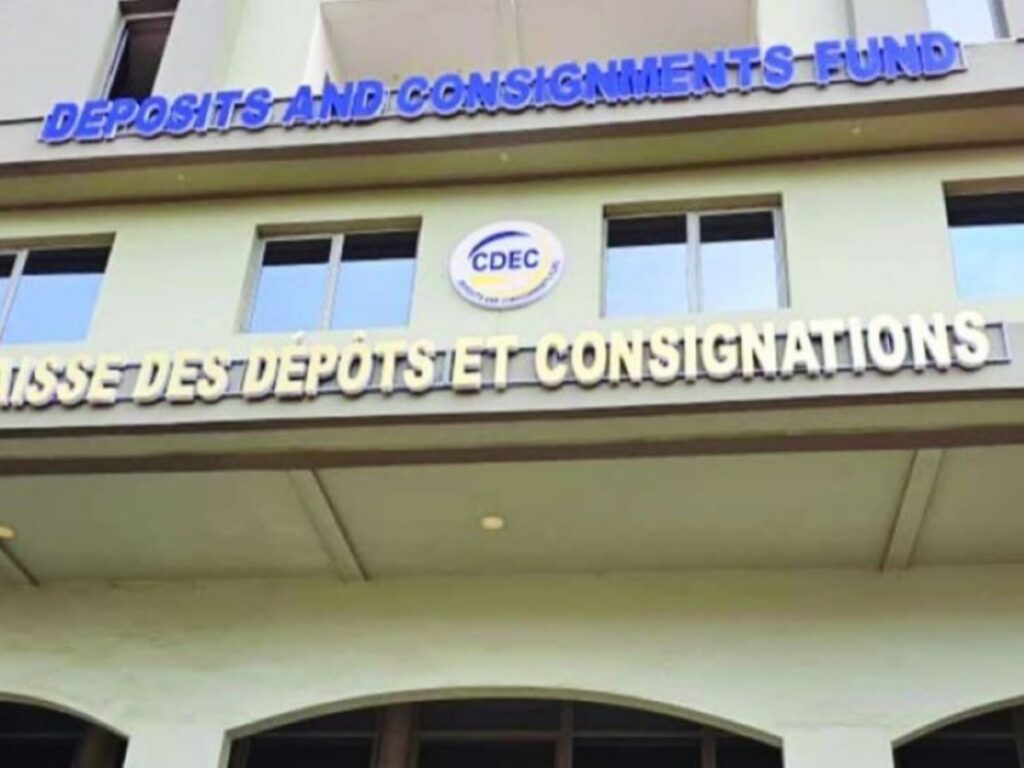
Cameroon, like many African economies, has faced tightening access to traditional external financing for years. Multilateral concessional loans and public development aid are becoming scarcer and more expensive. In this challenging context, mobilizing domestic savings—both public and private—has emerged as a strategic necessity. This is precisely where the Caisse des Dépôts et Consignations (CDEC) comes into play. Established by presidential decree on January 20, 2023—fifteen years after its 2008 legal inception—the institution is now operational and positioned as a key lever for infrastructure development.
“Cameroon, like most African economies, has faced for several years a contraction in access to traditional external financing (multilateral concessional loans, development aid, international bond markets that have become more expensive). In this context, mobilizing domestic savings—both public and private—has become a strategic imperative. This is precisely the role played by the Caisse des Dépôts et Consignations (CDEC), launched on January 20, 2023 by presidential decree, fifteen years after its legal creation through the 2008 law,” explains economist Patrick Duprix Anicet Mani.
The French model: a proven framework for transformation
The French experience demonstrates how a deposits and consignments fund can convert dormant savings into a structural development tool through three key mechanisms:
- Centralization of regulated resources
(Livret A savings accounts, notary funds, inactive accounts) within a secure public institution - Conversion of short-term deposits into long-term loans
Backed by state guarantees - Leverage effect
Each euro of centralized savings finances large-scale infrastructure (social housing, urban renewal, fiber optics, transportation)
The Cameroonian CDEC replicates this architecture. Its mission is to collect, secure, and generate long-term returns on resources that would otherwise remain idle, channeling them toward public policy support.
Current progress: measurable momentum
Available data confirms an already initiated dynamic:
Legal framework and mobilizable resource categories
The 2008 law and its 2011 implementing decree structure CDEC resources into four categories: deposits (notary funds, inactive bank accounts), administrative consignments (sureties for public contracts), judicial consignments (bail for releases, judicial settlements), and a fourth assimilated category.
Coercive collection mechanism
A Prime Minister’s decree issued on December 1, 2023 mandated banks, insurers, notaries, and court registries to transfer consigned funds within a strict deadline. Non-compliance triggers external audits and interest penalties calculated at the BEAC’s marginal lending rate plus two percentage points—an enforcement device that secures resource mobilization.
Three-year results
General Manager Richard Evina Obam announced the centralization of over 151 billion CFA francs (approximately $260 million) within three years of operations. While significant, this amount remains a fraction of the estimated potential (earlier assessments suggested over 1,000 billion CFA francs in dormant funds within the banking system).
The infrastructure transformation vehicle: a dedicated banking subsidiary
The most decisive element for infrastructure ambitions is the planned banking subsidiary, with feasibility studies launched in February 2025. This subsidiary is explicitly designed to:
- Support the State, decentralized local governments, and businesses in raising funds for infrastructure projects
- Assist SMEs in participating in public procurement
- Facilitate IPOs and business opportunity assessments
- Offer long-term products (loans, guarantees, leasing) tailored to Cameroonian actors
This function structurally aligns the CDEC with the French Caisse des Dépôts’ Banque des Territoires model, transitioning from a mere deposit holder to a long-term investor in the real economy.
Potential application areas in Cameroon
- Housing
France: Social housing loans from savings accounts
Cameroon: Financing the social housing program, including the 10,000-housing initiative - Urban infrastructure
France: ANRU urban renewal, Grand Paris Express transit
Cameroon: Urban road networks, sanitation in Yaoundé and Douala - Digital connectivity
France: Rural fiber optic expansion
Cameroon: Broadband coverage expansion beyond major cities - Local governments
France: Loans to municipalities
Cameroon: Financing decentralized territorial collectivities - Transportation
France: Highway concessions
Cameroon: Road corridors, Kribi port, rail hubs
Success conditions and critical watchpoints
Comparative analysis reveals essential prerequisites for the CDEC to avoid becoming an underutilized tool:
- Effective collection
Persistent resistance from some banks to transfer due funds—only one institution, Allianz Cameroun, had completed transfers by late 2023—highlights that resource mobilization remains an unfinished task - Governance and transparency
The institution’s credibility with depositors and consignors directly impacts the volume of voluntary deposits - Technical expertise in financial engineering
Unlike a simple depositary, infrastructure financing requires advanced skills in project debt structuring, risk assessment, and guarantee mechanisms - Coordination with other funders
(Implicit Cameroonian Bpifrance, multilateral lenders, Treasury) to prevent duplication and maximize leverage
In summary: The CDEC now has the legal, institutional, and operational foundations to become a true infrastructure development tool, modeled after the French Caisse des Dépôts. Its ability to transform dormant regulated savings—estimated in the hundreds of billions of CFA francs—into long-term infrastructure financing offers a credible endogenous response to scarce external funding. The announced creation of a dedicated banking subsidiary for infrastructure financing marks the decisive shift from a collection logic to a structuring investment approach. The success of this transition now hinges on effective coercive collection of due funds and rapid development of internal expertise in project financial engineering.