The British group Helios Towers is set to inject $150 million into Senegal’s telecommunications sector, following a meeting with President Bassirou Diomaye Diakhar Faye at the director general of the company. This funding, announced since the Palais de la République in Dakar, aims to consolidate the presence of the infrastructure manager on a market undergoing significant transformation, where network densification is now a condition for the growth of the digital economy.
A High-Stakes Bet on Network Densification
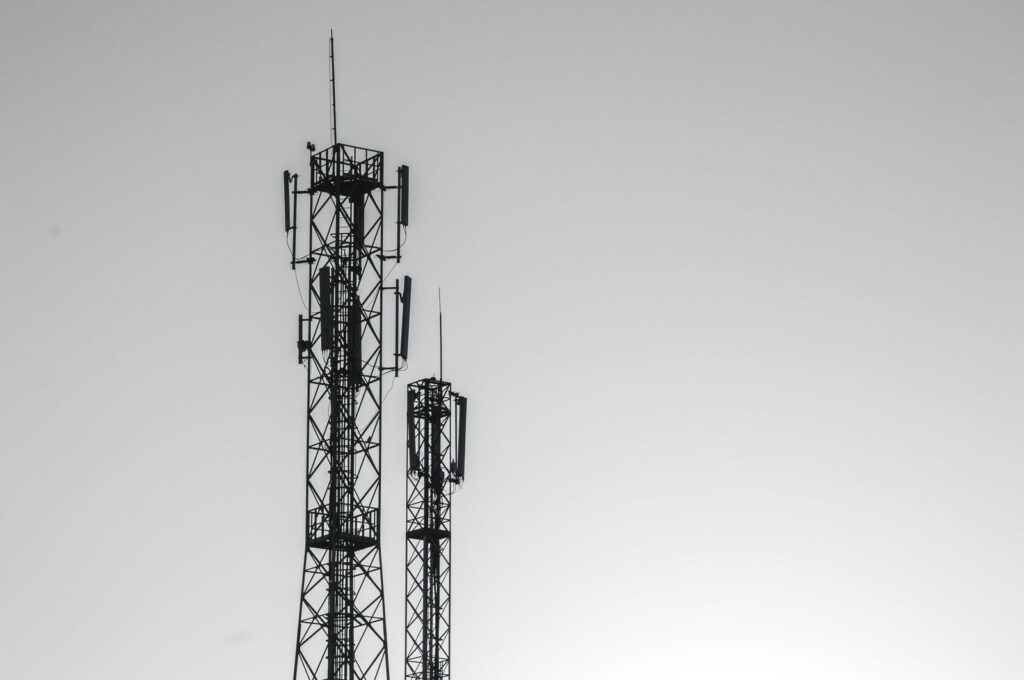
Specializing in the construction, acquisition, and exploitation of telecommunication towers, Helios Towers provides physical support to operators such as Orange, Free, or Expresso, indispensable for the deployment of 2G, 3G, 4G, and now 5G networks. The $150 million investment translates a renewed confidence in Senegal’s economic trajectory, as the new executive team emphasizes sovereignty in digitalization and infrastructure modernization.
Concretely, these funds should enable the group to expand its tower park, renovate existing sites, and strengthen their energy supply, often hybrid between electrical and solar networks. The mutualization of passive infrastructure is a major competitive lever for mobile operators, who increasingly externalize management of towers to concentrate investments on services and coverage.
Dakar Seeks Infrastructure to Credibilize Its Digital Strategy
The presidential audience intervenes at a critical moment in Senegal’s digital policy. Since its arrival at power in April 2024, the Faye-Sonko tandem has shown ambition in making digitalization a driving force of economic transformation, with the ‘New Deal Technological’ strategy and the goal of attracting foreign capital for critical infrastructure. The recent attribution of 5G licenses to Sonatel and Free has also highlighted the level of expectation regarding coverage and service quality.
In this context, Helios Towers’ investment appears complementary to public efforts. Without densified and stabilized towers, promises of 5G would remain largely theoretical outside major urban centers. The government sees these investments as a vector for job creation, tax revenues, and knowledge transfer to local construction and maintenance companies.
However, the group operates in a highly competitive environment. On the continent, it faces major players such as IHS Towers, ATC Africa or Vulatel. Senegal, an intermediate-sized market but known for its solid regulatory framework, represents for Helios a regional window to reinforce its credibility with institutional investors.
A Diplomatic and Financial Signal
Beyond the purely industrial angle, this announcement carries a diplomatic and financial dimension. It intervenes at a time when Dakar seeks to reassure international business communities, following a period marked by the renegotiation of several inherited contracts and the publication of an audit criticizing public finances. A British group investing such a significant amount constitutes a tangible sign that the climate for business remains attractive, despite turbulences.
The Authority for Regulation of Telecommunications and Posts (ARTP) will need to accompany this deployment by ensuring that infrastructure densification benefits consumers in terms of coverage and tariffs. Questions regarding equitable sharing of sites between operators and energy resilience of towers will be among the points of vigilance in the coming months.
It remains to be seen the precise deployment schedule for these $150 million, as well as the allocation between new site construction, potential acquisitions, and existing park modernization. The contract, once formalized, should provide finer indicators on the group’s real ambition in Senegal and its horizon of amortization. According to PressAfrik, the announcement was made following a presidential audience held in Dakar.
For Further Information
The CEDEAO evaluates bids for a second undersea cable · Côte d’Ivoire: Brou Aka Pascal appointed head of HACA · Camtel exceeds 13 billion FCFA in net profit in 2025