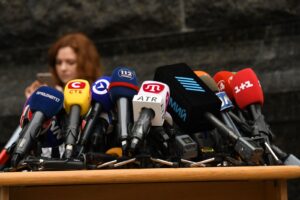
Tensions flared in the Tchad parliament. A deputy swiftly pressed the Minister of Environment to disclose the agreement immediately—a demand that has gone unmet. Former Vice-Premier and Minister of Environment Bazaïba has long warned of what she calls an international conspiracy against the Congo, citing alleged internal complicity. From April 2021 to August 2025, she held this role before transitioning to her current position as Minister of State for Social Affairs.
Following the uproar over the Kabila-Bozizé accord, Chad’s late President Idriss Déby Itno was quoted as saying: ‘If Congo refuses to give us water, we will take it one way or another.’ His words carried weight, given Tchad’s history of military interventions in the Central African Republic under the guise of rebel movements. Déby was killed in combat against a rebel faction on April 20, 2021, and his son, Mahamat Déby Itno, assumed power, partly thanks to mediation efforts led by Félix Tshisekedi—a move that even led to the renaming of a major N’Djamena thoroughfare in his honor.
In the Democratic Republic of Congo (DRC), a parliamentary watchdog group focused on water management was established on April 16, 2014. Among its early members was Eve Bazaïba, who repeatedly raised alarms about ‘a coordinated global plot against the country, with domestic accomplices.’ Despite her eventual promotion to Minister of Environment, the group has yet to produce any tangible output in over a decade.
Twelve years and three months later, Mahamat Idriss Déby extended an invitation to Félix Tshisekedi to attend the inaugural African Water Forum in N’Djamena. During his address, the Congolese President outlined five strategic priorities to address water challenges across the continent. First, he emphasized the need to integrate water management with agriculture, energy, health, urban planning, environmental protection, and infrastructure development. Second, he called for stronger governance through efficient institutions, greater accountability, and transparent infrastructure management. Third, he stressed the importance of developing technically sound and financially viable projects to attract investment. Fourth, he advocated for diversified funding sources, combining public, private, and international partnerships. Finally, he proposed leveraging water as a catalyst for industrialization, encouraging the production of pipes, pumps, meters, treatment systems, irrigation solutions, and digital tools across Africa.
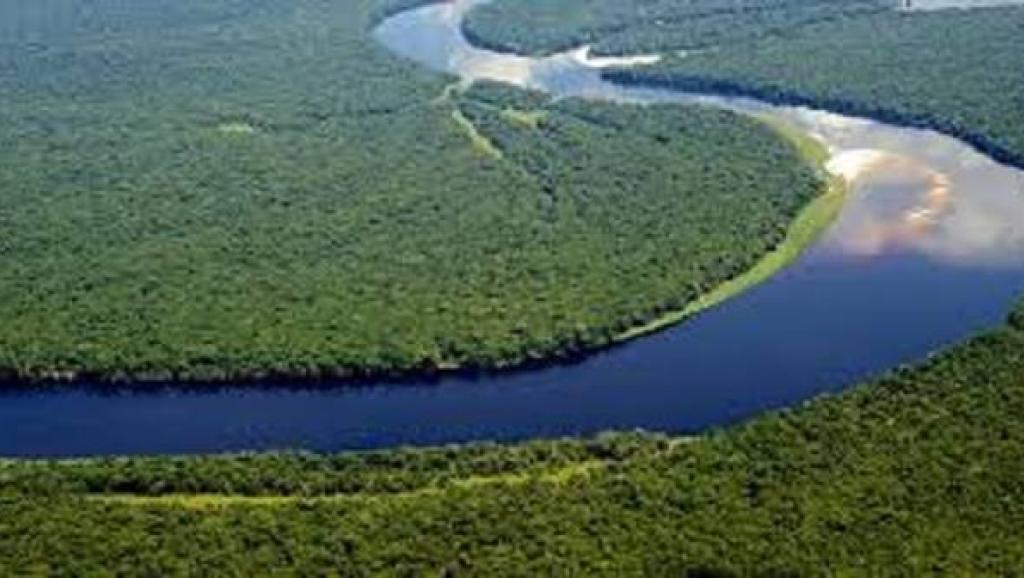
The President underscored that ‘no single nation can secure its water future alone.’ He urged a unified continental approach, urging governments to prioritize water as a political cornerstone. While his remarks hinted at the DRC’s openness to exploring water transfers from the Congo River, no explicit confirmation was provided. Experts speculate that Kinshasa may be considering this controversial measure, though time will tell whether such intentions will materialize.
By 2035, the DRC aims to achieve 60% access to safe drinking water, 50% access to sanitation and hygiene services, and ensure adequate water and sanitation infrastructure in 80% of schools and health facilities. For Mahamat Idriss Déby, the N’Djamena forum represents a turning point for Africa to reclaim control over its water destiny and foster shared prosperity. However, Tchad’s neighbors—Cameroon, Niger, and Nigeria—were notably absent from the event, despite the Lake Chad Basin Commission’s critical role in managing the region’s shrinking water resources. Once spanning 25,000 km² in 1964, the lake has dwindled to just 2,000 km² by 2024, though seasonal floods can temporarily restore it to nearly 4,500 km².
The only leaders joining Tchad and the DRC were Gabon’s Brice Clotaire Oligui Nguema, Mauritania’s Mohamed Ould Cheikh El Ghazouani, and a representative from Benin. The boycott raises questions: in 2019, former Foreign Minister Patrick Mayombe warned that external interests pushing for Ubangi River water transfers to Lake Chad were bypassing Congolese authorities. He alleged that a certain Kalele, an NGO leader based in Kisantu, had signed documents on behalf of the DRC without official authorization. Even in Bologna, Italy, meetings on Congo’s water resources were held under the Sant’Egidio movement’s auspices without Kinshasa’s involvement.
Swiss academic and former UN Special Rapporteur Jean Ziegler once described the DRC as a ‘non-profitable people’ in global economic terms—a concept he warned could justify the exploitation of its resources. Echoing these concerns, journalist and former senator Modeste Mutinga Mutuishayi, in his book ‘The Republic of the Unaware,’ lamented the country’s failure to safeguard its water wealth: ‘Water is life, and life has no price. Yet those who govern us remain oblivious to the collective suicide looming ahead.’