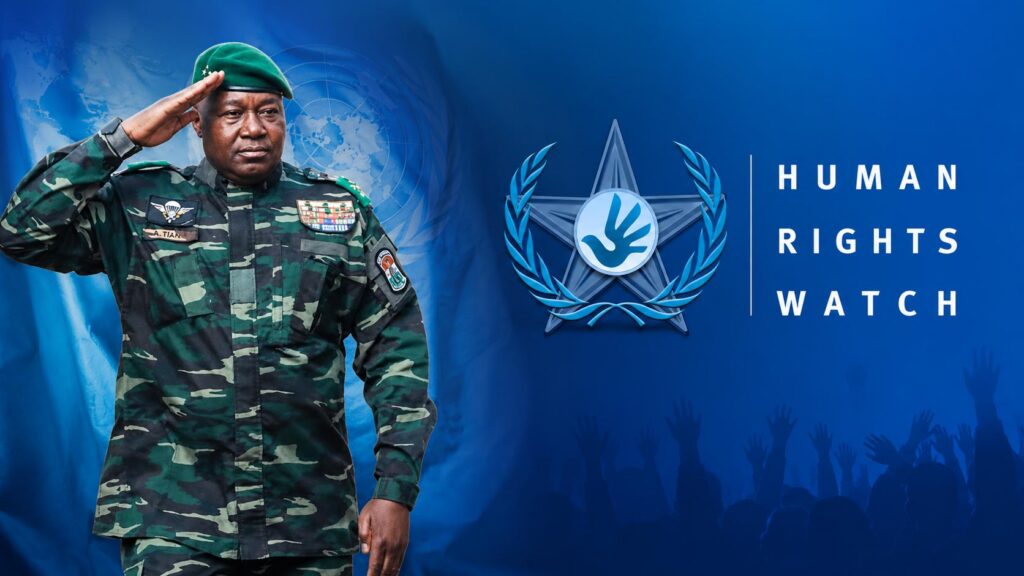
Three years after General Abdourahamane Tiani assumed power in Niger, a damning report reveals a stark deterioration in human rights. Arbitrary detentions, political strangulation, and diplomatic isolation have plunged the country into a deep institutional crisis. The findings underscore how the National Council for the Safeguarding of the Homeland (CNSP) systematically dismantled democratic institutions to consolidate authoritarian control.
On July 26, 2023, the democratically elected President Mohamed Bazoum was forcibly removed from office by a military junta led by General Tiani. Since then, the situation has worsened. The regime has systematically suppressed civic freedoms, shut down legal recourse, and silenced opposition voices under the pretext of security imperatives and national sovereignty.
Arbitrary detentions and instrumentalized justice
The continued detention of former President Mohamed Bazoum and his wife stands as a stark symbol of the country’s political impasse. Despite international pressure and calls from the UN Working Group for their immediate release, the military leadership remains unyielding. The crackdown extends to civil society, exemplified by the arrest of Moussa Tiangari, a prominent human rights defender, in December 2024. Authorities extended the legal detention period in terrorism cases from 12 months to four years—a move widely condemned as a retroactive manipulation of judicial rules.
Press freedom and dissent targeted
Public liberties in Niger have suffered severe setbacks. The regime has:
- Dissolved all political parties and suspended independent unions and NGOs
- Enforced strict media censorship, using an amended cybercrime law to suppress dissent—six journalists were arrested in Niamey last October for merely announcing a press conference
- Targeted exiled opponents, including stripping citizenship under controversial grounds, as seen with Mariama Djibrine, a regional opposition leader
Societal shift and global isolation
In a further sign of regression, the regime amended the Penal Code in March to criminalize same-sex relations and LGBT support, imposing sentences of five to 20 years. This has already led to arrests and disrupted critical public health initiatives. Meanwhile, Niger has intensified its international isolation by withdrawing from the ECOWAS bloc and the International Criminal Court (ICC) in June. Analysts warn that this retreat leaves citizens without legal recourse amid rising insecurity, particularly in Tillabéri, where civilian casualties persist in military operations.
Human rights organizations are urging the international community and Niger’s partners to move beyond passive diplomacy. They call for decisive action to secure the release of political prisoners and restore a credible path toward civilian governance.