Senegal’s president sets bold agenda for Ousmane Sonko’s government
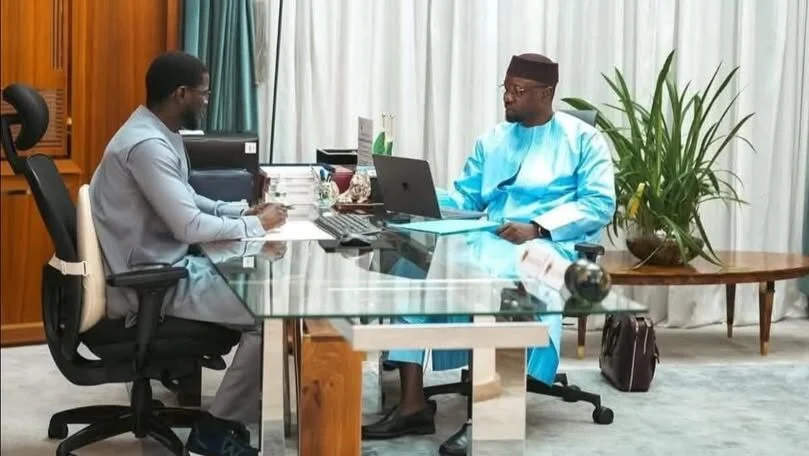
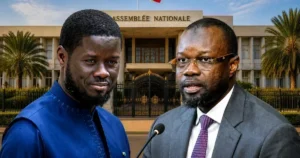
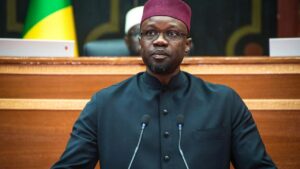
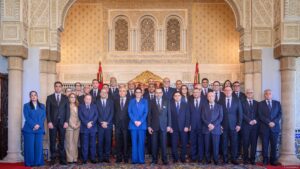
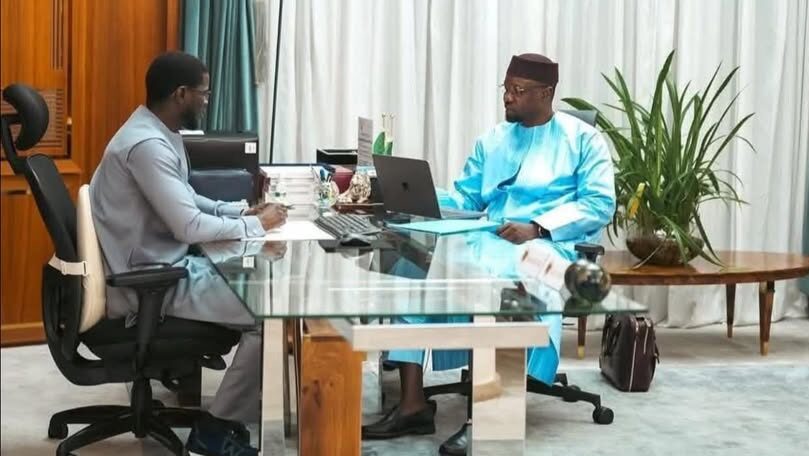
During a Council of Ministers meeting this Wednesday, President Bassirou Diomaye Faye delivered a series of decisive directives to Prime Minister Ousmane Sonko and his cabinet. The session outlined a clear roadmap centered on national dialogue, public performance tracking, civil registry modernization, and water access improvements. The Head of State made it clear: the executive must deliver measurable results.
National dialogue reshaped: from public forums to targeted consultations
The President began by addressing the upcoming National Dialogue Day on May 28, acknowledging the current religious context. To ensure broader inclusivity while maintaining focus, he announced a shift from large public gatherings to individual audiences with key national figures. Starting tomorrow, former Prime Ministers and cabinet members—particularly those overseeing finance and internal security—will be received. Additional consultations will follow with other influential leaders and representatives of civil society. This approach aims to strengthen consensus on national priorities and deepen participation in shaping Senegal’s economic, social, security, and political trajectory.
Government performance under the microscope
The President emphasized rigorous oversight of government action, a message directed squarely at Prime Minister Sonko and his team. He underscored the need for systematic evaluation of public policies as part of the National Transformation Agenda. To reinforce accountability, he announced a reform of the Council of Ministers schedule: meetings will now convene biweekly for a defined period, fostering a culture of impact assessment and results-driven governance.
He went further, instructing each minister to evaluate the directors-general and heads of agencies under their authority. This directive extends to territorial administrations, where the Interior Minister must assess regional chiefs, and diplomats, with the Foreign Affairs Minister tasked with monitoring embassy and consulate heads. The President also called for a framework to evaluate mayors and departmental council presidents, ensuring performance metrics reach all levels of governance.
Civil registry overhaul and budgetary priorities
The civil registry system emerged as a critical focus. Acknowledging persistent deficiencies, the President mandated the Territorial Administration Minister to present an Emergency Plan for Strengthening Civil Registry Management by the end of June 2026. Key reforms include full digitalization, document reliability, and secure archiving of registers. Additionally, national consultations will be held by August 2026 to strengthen sector governance.
On the budgetary front, the President praised the completion of the third ministerial sphere in Diamniadio, a move aimed at reducing public expenditure. He also urged swift action on the 2026–2028 Multi-Year Budget and Economic Programming Document, streamlined public procurement processes, and thorough preparation for budget conferences.
Water access: urgent action required
Highlighting persistent water shortages in Touba, Kaffrine, Louga, and Keur Massar, the President called for immediate measures to improve access. In collaboration with SONES, OFOR, and SEN’EAU, the Hydraulics Minister was tasked with implementing urgent solutions to address the crisis.
Support for Senegal’s football team ahead of the 2026 World Cup
With the FIFA World Cup just weeks away, President Faye extended a message of unwavering support to the Lions of Senegal. Addressing the Nation, he expressed solidarity and encouraged the Ministry of Sports and the Senegalese Football Federation to take all necessary steps to ensure a successful participation in the tournament.