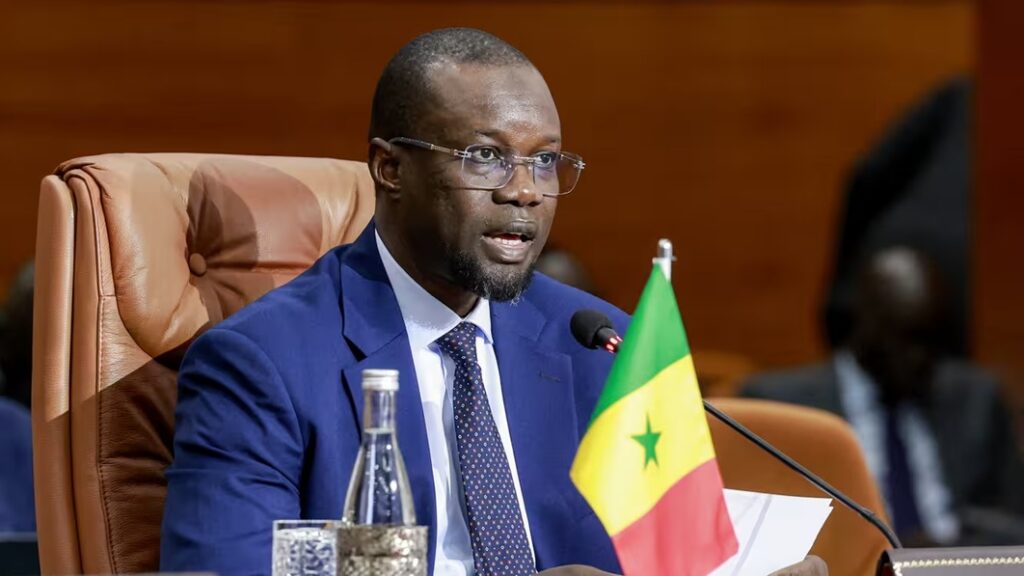
On the morning of May 22, Senegalese Prime Minister Ousmane Sonko stood before lawmakers at the National Assembly to deliver a forceful defense of his government’s policies during the fifth session of urgent parliamentary questions since the current administration took office.
The session took a sharp turn when Sonko was questioned about the recently enacted legislation that significantly increases prison sentences for individuals involved in same-sex relations. Over the past three months, authorities have detained more than a hundred people under the new law, prompting a wave of concern from African intellectuals who publicly urged a temporary halt to enforcement through an open letter published on May 18.
Sonko made it clear that the government has no intention of suspending the controversial measure. Instead, he emphasized the need to fully and impartially enforce the law to curb what he described as the « spread of homosexuality. » He also underscored that enforcement will not spare anyone, regardless of background, pointing to recent arrests of several high-profile figures within his own political circle.
As international criticism mounted over the law’s harsh penalties, Sonko pushed back strongly against Western condemnation. He singled out France, accusing certain European capitals of engaging in empty posturing and attempting to dictate moral standards to Africa. In a defiant tone, he declared that while Western nations may choose their own social paths, Senegal will not accept moral lectures, flatly stating, « If they have chosen these practices, that is their concern, but we have no lessons to take from them — absolutely none. »
He went further, warning that if the current legal framework proves insufficient, the government is prepared to strengthen it even further, signaling a firm resolve to maintain and potentially escalate enforcement.