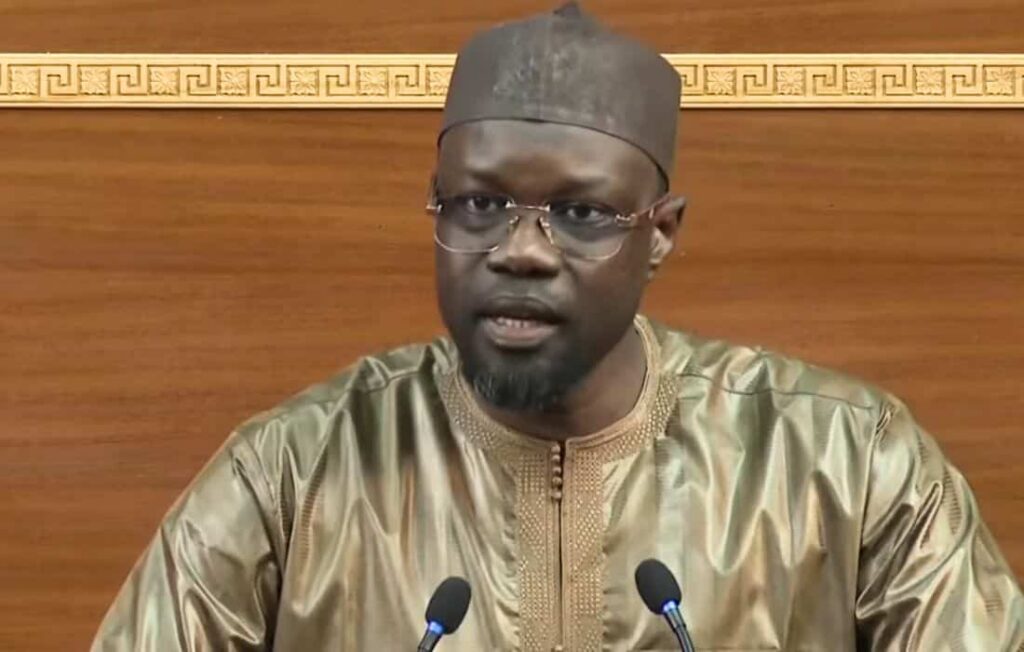
The Prime Minister of Sénégal, Ousmane Sonko, recently condemned what he termed the « diktat » of the West, accusing Western nations of attempting to « impose homosexuality » on the rest of the world. Speaking before the National Assembly, he framed the issue as a « tyranny of the West », deepening a political divide between national sovereignty and human rights. This declaration comes at a time when Sénégal has further tightened its laws against same-sex relationships.
The government’s stance reflects a growing rhetorical trend in the country, where opposition to Western pressure has become intertwined with debates over LGBT rights. Meanwhile, Sénégal’s legal framework has grown increasingly stringent. As of early 2026, penalties for same-sex relations now range from five to ten years in prison—a significant escalation in a climate already marked by social stigma and reported arrests by human rights groups.
LGBT rights in Sénégal: a polarizing debate
Public reactions to LGBT rights in Sénégal remain deeply divided, particularly on social media. Phrases like « our laws are not dictated to us », « these are our values », and « mind your own business » frequently surface, highlighting a persistent tension between national sovereignty and universal human rights. This framing often shifts focus away from the lived realities of LGBT individuals, instead turning the issue into a geopolitical standoff.
Harsh penalties and real-world consequences
Sénégal’s legal system criminalizes same-sex relationships under the Penal Code. The 2026 amendments have intensified penalties, with sentences now reaching up to a decade behind bars. Beyond the courtroom, human rights organizations warn of severe social repercussions—stigmatization, arbitrary arrests, and physical violence against LGBT individuals. For many, the legal crackdown extends far beyond statutes, directly impacting daily life and personal safety.
Why global human rights watchdogs weigh in on Sénégal
A recurring question arises: why do international human rights organizations engage with the situation in Sénégal? The answer lies in the principle of the universality of human rights. When individuals face punishment or violence because of their sexual orientation, the issue transcends national borders. It is not merely a domestic affair—it concerns the fundamental dignity, security, and sometimes even the survival of those affected.
To ignore such violations would imply that human rights protections end at national frontiers, despite their intended global application.
Human rights: external imposition or shared commitment
Contrary to claims that human rights are an external imposition, they are rooted in international agreements that states, including Sénégal, have voluntarily ratified. In 2001, Sénégal enshrined the Universal Declaration of Human Rights in its Constitution, affirming its commitment to non-discrimination and equality. Invoking these principles is not about dictating a societal model; it is about upholding commitments already made.
In the context of LGBT rights in Africa, this distinction is vital. The issue is not one of foreign interference but of protecting individuals facing genuine risks.
LGBT identities are not foreign to west african societies
Another common argument suggests that LGBT identities are alien to African societies or the result of external influence. This claim does not align with reality. LGBT individuals exist across all societies, including Sénégal. They are born, live, and work within these communities—not as imported concepts, but as a universal human reality.
Historical records also confirm the presence of gender and sexual diversity in West Africa. For instance, the goor-jigeen of Sénégal represent a long-standing social identity that may not align with modern categories but demonstrates that these discussions are not a recent or foreign construct.
Navigating complex tensions in the debate
The discourse on LGBT rights in Sénégal is shaped by multiple layers of tension—colonial legacies, domestic politics, social dynamics, and overt hostility toward LGBT individuals. In this environment, defending human rights is often framed as external pressure, while legal restrictions are justified in the name of culture or tradition. This narrative obscures the real experiences of those directly affected.
Public rhetoric sometimes escalates into dehumanizing language, with terms like « threat » or « scourge » used to describe LGBT individuals. Such language does more than express disagreement—it strips people of their humanity, reducing their identities to a problem to be eradicated.
Defending rights without imposing change
Advocacy groups emphasize that their mission is not to impose a foreign model but to ensure that no individual faces punishment, exclusion, or violence due to their sexual orientation. Beneath debates over sovereignty and interference lies a simple truth: real people are living in conditions where their identities put them in danger—and this is unacceptable by any standard.
Global solidarity in human rights advocacy
Human rights violations extend far beyond Sénégal, appearing in countries worldwide, from Russia to China and beyond. Human rights organizations respond based on local networks, available resources, and ground-level alerts. Attention to a specific situation does not imply ranking suffering but reflects the urgency of mobilizing where it is most needed. The fight for human rights is inherently contextual, yet its principles remain universal.
Taking action: supporting LGBT victims in Sénégal
Faced with these challenges, tangible steps can be taken. Campaigns have been launched to provide direct assistance to LGBT victims in Sénégal—offering legal support, emergency aid, and long-term accompaniment. Supporting such initiatives transforms awareness into meaningful change, offering relief to those most affected by criminalization.