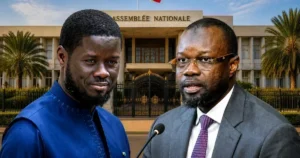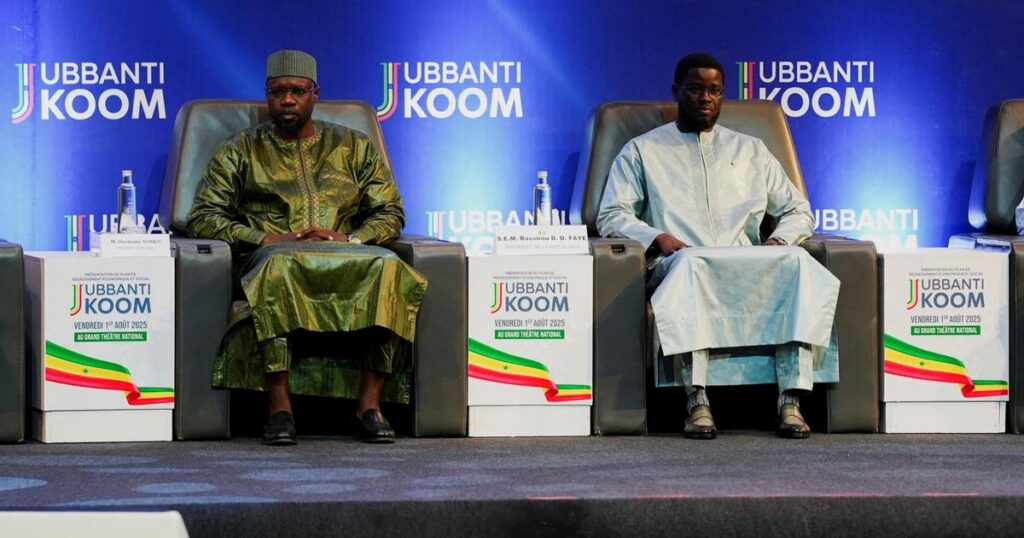
In Senegal, political tensions have reached a critical point following the abrupt dismissal of Prime Minister Ousmane Sonko by President Bassirou Diomaye Faye. This decisive move, which unfolded on a recent Friday, marked the culmination of mounting friction between the two leaders, whose once-close alliance has frayed under the weight of diverging visions for the nation.
A strategic power shift unfolds
Within hours of the announcement, Malick Ndiaye, the Speaker of the National Assembly, tendered his resignation from the parliamentary helm—though not from his legislative seat. This maneuver appeared to pave the way for Sonko’s anticipated return to the National Assembly, where he could reclaim his role as a deputy and potentially reclaim influence within the political arena.
The National Assembly is scheduled to convene an extraordinary session on May 26 to elect its new president. Political observers widely expect Sonko, the former mayor of Ziguinchor, to secure the position, thereby transforming him into the second-ranking official in the state hierarchy. This would grant him constitutional succession rights to the presidency, positioning him as a formidable rival to Faye.
The looming shadow of institutional conflict
The stakes could not be higher. With Sonko poised to control the legislative agenda, the potential for institutional gridlock looms large. His ability to obstruct government initiatives through parliamentary mechanisms raises concerns about a prolonged standoff between the two leaders, both of whom emerged from the same political movement. The risk of a schism within their party, the Patriotes africains du Sénégal pour le travail, l’éthique et la fraternité (PASTEF), is no longer a distant threat but a growing possibility.
Sonko’s ambitions are no secret. Having once positioned Faye as his successor due to his own ineligibility in the 2024 presidential election, Sonko has since chafed under the constraints of playing second fiddle. His return to the political forefront—first as prime minister and now as a potential parliamentary leader—signals his intent to challenge Faye’s authority rather than remain in his shadow.
Legal and electoral crosscurrents
The unfolding drama is further complicated by recent electoral reforms passed on May 12. While framed as a measure to clarify candidate eligibility, critics argue it was designed to facilitate Sonko’s future presidential ambitions. The revised law removes ambiguities that previously allowed politically motivated disqualifications, though the constitutional validity of Sonko’s eligibility for the 2029 election remains unresolved until the Constitutional Council weighs in.
Analysts warn that the current power struggle risks morphing into a quid pro quo dynamic, where neither leader can advance without undermining the other. Such a deadlock could erode public trust in the PASTEF and expose the party to electoral backlash in the 2029 presidential race. With Senegalese voters known for their punitive voting patterns, the party’s cohesion—and its future—hangs in the balance.
As the nation braces for the May 26 parliamentary vote, the question remains: how far will this clash between former allies escalate? For Senegal, the answer could redefine its political landscape for years to come.