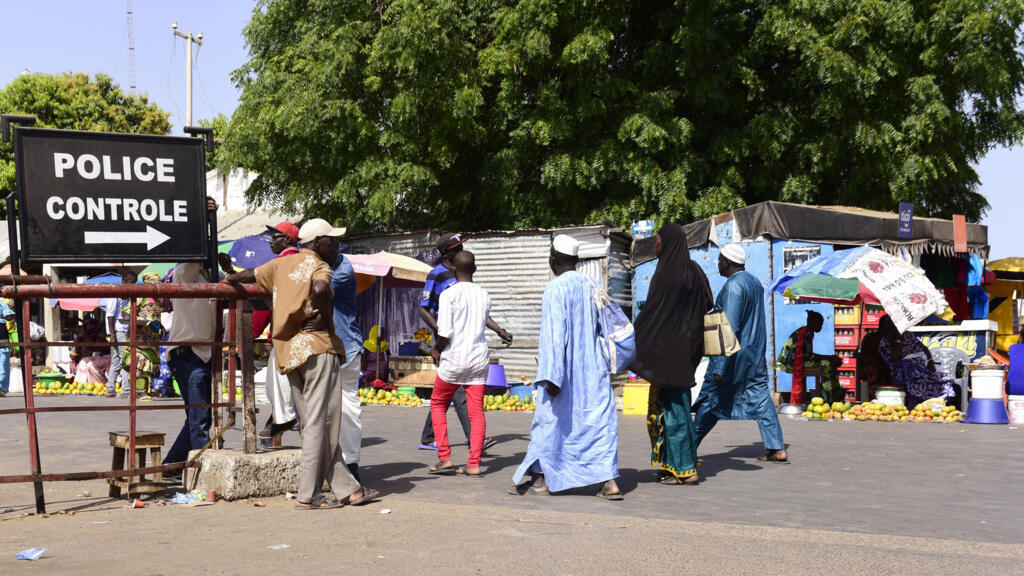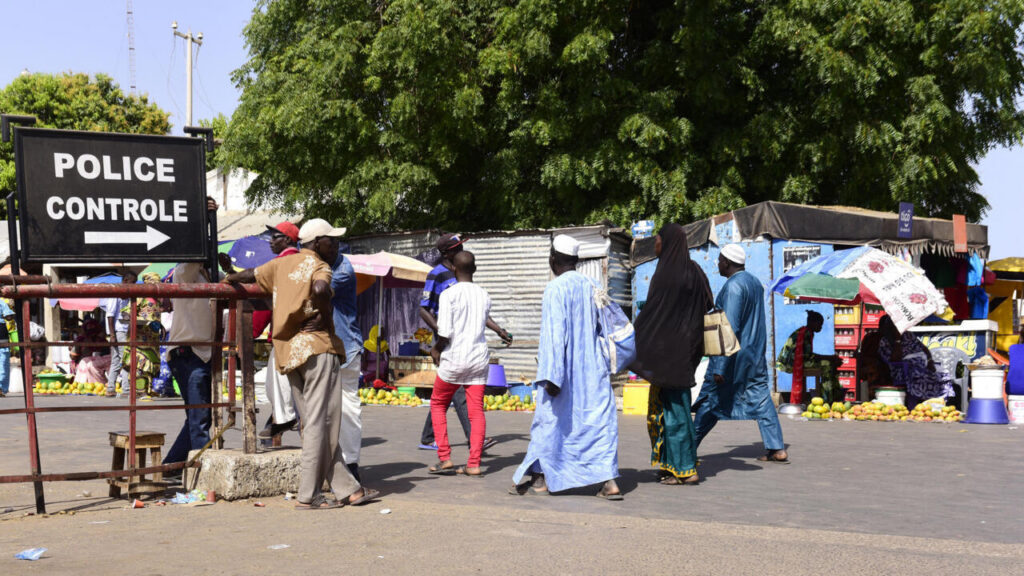
Travellers pass a police control area im the Senegalese-Gambia border town of Karang in Senegal on May 10, 2016. Senegal and the Gambia have agreed to hold talks on May 15 aimed at ending a three-month border blockade, but the truckers behind the closure are adamant the frontier will stay shut until their demands are met. Senegalese territory entirely surrounds the Gambia, leaving it dependent on cross-border deliveries of fuel and food, but the tiny state raised entry fees from 4,000 CFA ($7) to 400,000 CFA ($700) per truck without warning in early February, infuriating drivers. / AFP PHOTO / SEYLLOU
Following a recent incident near Bullock, a significant development has emerged in relations between Sénégal and The Gambia. Both nations have officially announced the finalization of a “definitive agreement” aimed at precisely clarifying the alignment of their shared boundary. This landmark accord sets the stage for the resumption of joint operations to physically demarcate and materialize the frontier on the ground, scheduled to commence in mid-August. These efforts will involve the installation of physical border markers and the implementation of a comprehensive awareness campaign targeting communities residing along the border.
The recent tensions, highlighted by the Bullock incident, underscore the persistent challenges in maintaining a clear and undisputed border. For years, ambiguities in the demarcation have contributed to localized disputes and diplomatic friction between the two West African neighbors. This new agreement signals a renewed commitment to resolving these long-standing territorial issues.
While the “definitive agreement” marks a crucial step forward, questions naturally arise regarding its lasting impact. Will this accord truly put an end to all potential points of friction on the ground? The effectiveness of the physical demarcation and the success of the community sensitization efforts will be key in determining whether this agreement can definitively address the underlying reasons for past tensions and secure a more stable future for the border regions.