August 9, 2026
acda42e3-b0a5-437d-a2c7-f16ddb5c4fe7
AFRIQUE
3 min de lecture
Sahel alliance challenges nigerian president’s security remarks
“Some of them (terrorists) are not Nigerians. You see, the problem of insecurity in Mali, Burkina Faso and Niger only exacerbates our difficulties,” President Tinubu had stated on July 30.
L’AES regrette les propos du président nigérian sur la situation sécuritaire dans son espace

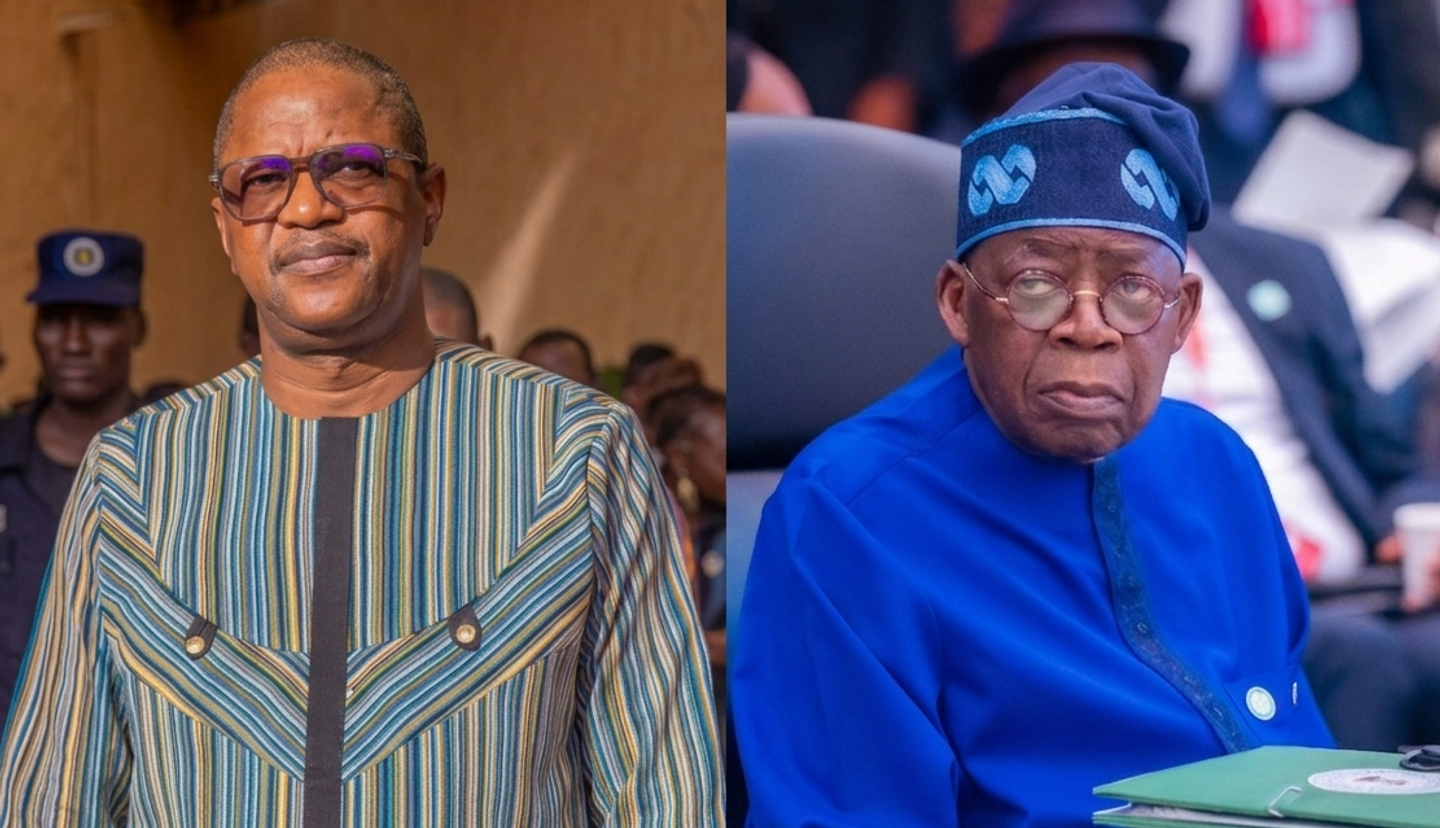
Burkina Faso’s Minister of Foreign Affairs, Karamoko Jean Marie Traoré, hosted the Chargé d’Affaires of the Nigerian Embassy in Ouagadougou on Thursday. This diplomatic engagement followed recent remarks made by Nigerian President Bola Ahmed Tinubu concerning the security situation across the Sahel states within the Alliance of Sahel States (AES) – comprising Burkina Faso, Mali, and Niger. Envoys from the Malian and Nigerien Embassies were also present, underscoring the collective and unified stance of the three member nations.

On July 30, while addressing traditional Nigerian leaders, President Tinubu attributed the rise in kidnappings and terrorist attacks within Nigeria to what he described as a “collapse” of security in neighboring Sahel countries. This assertion was highlighted in a statement released by Burkina Faso’s Ministry of Foreign Affairs.

“Some of them (the terrorists) are not Nigerians. You see, the problem of insecurity in Mali, Burkina Faso, and Niger only exacerbates our difficulties,” President Tinubu reportedly told the Nigerian traditional leaders.

The Burkinabè foreign minister expressed that this interpretation of the regional security landscape “overlooks the significant sacrifices made daily by the Defense and Security Forces, as well as the populations of Burkina Faso, Mali, and Niger in their ongoing fight against terrorism.”

Traoré characterized President Tinubu’s analysis as “hasty, overly simplistic, and surprising,” suggesting a “concerning bias” from Nigeria’s top authority. He added, “We would have preferred a more accurate depiction of the security context, rather than assigning responsibility for a complex situation to neighboring countries, risking misunderstandings and frustrations among peoples bound by history, geography, and fraternity.”

The minister further argued that President Tinubu’s comments disregarded the immense sacrifices made by the Nigerian army against Boko Haram over many years, even before the terrorism phenomenon became widespread in the AES member states. He pointed out that despite established links between Boko Haram and some terrorist groups operating in the Sahel, the AES countries have consistently refrained from publicly accusing Nigeria, instead favoring an approach based on cooperation and shared responsibility.

“Burkina Faso, Mali, Niger, and Nigeria face a common adversary. As such, the successes achieved by the Defense and Security Forces of the AES nations contribute to the security of the entire sub-region, including Nigeria, by limiting the harmful capabilities and mobility of terrorist groups,” Traoré affirmed.

He concluded by urging Nigerian authorities to prioritize unifying and solidarity-building discourse, rather than statements that could foster division or misapprehension between neighboring nations.

In response, the Nigerian Chargé d’Affaires acknowledged the message conveyed and committed to faithfully relaying it to his superiors in Abuja, as confirmed by the Burkinabè Ministry of Foreign Affairs.