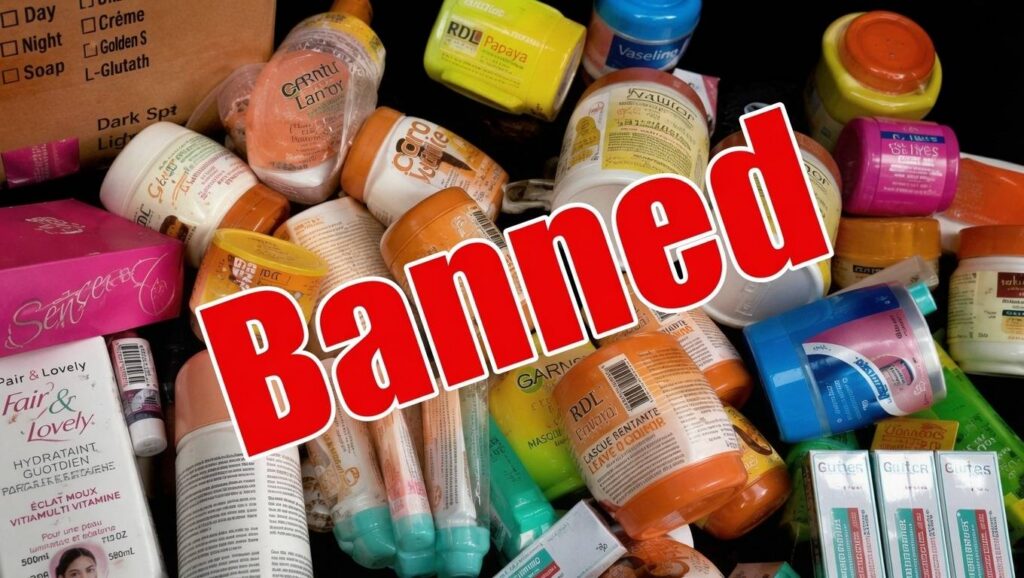
Government cracks down on harmful skin-lightening industry
In a decisive move to safeguard public health, the Beninese government has imposed a nationwide ban on the sale of skin-lightening products. Effective since May 5th, the prohibition targets creams, lotions, and other formulations designed to alter skin pigmentation. Authorities have identified these products as a growing public health concern, prompting strict regulatory action.
A widespread but dangerous practice
The use of skin-lightening products, locally known as tchatcho, has become deeply embedded in Beninese society. Once confined to bustling markets like Dantokpa, the trend has now spread to digital platforms, where vendors openly market these substances. The government’s intervention seeks to dismantle a lucrative trade fueled by unregulated production and illicit distribution networks.
Pharmaceutical regulators and health authorities have compiled a detailed list of prohibited substances, including hydroquinone, potent corticosteroids, and mercury-based compounds. Enhanced monitoring will be enforced across all levels of the supply chain, from wholesalers to small-scale retailers, to curb the flow of these hazardous products.
Severe health risks behind the cosmetic choice
Medical professionals have long warned of the grave consequences associated with artificial skin lightening. Repeated exposure to banned ingredients can lead to severe dermatological damage, including burns, deep stretch marks, thinning skin, and chronic infections. The systemic absorption of these chemicals further escalates health risks, potentially contributing to kidney failure, hypertension, metabolic disorders, and even skin cancer.
Dermatologists emphasize that the damage is often irreversible, underscoring the urgency of preventive measures. Despite these clear warnings, the allure of lighter skin tones persists, driven by entrenched beauty standards and societal pressures.
Balancing enforcement with education
While the ban represents a significant step forward, its success hinges on more than just legal penalties. Authorities acknowledge the challenges posed by porous borders, cross-border smuggling, and vendors’ tactics to evade detection by altering packaging labels.
The broader challenge lies in shifting cultural perceptions. To achieve lasting change, the government must complement enforcement with targeted awareness campaigns that challenge the stigmatization of darker skin tones and promote acceptance of natural complexions.
By taking this bold stance, Benin is setting a precedent in public health protection. However, the true test will be whether regulatory rigor and societal transformation can collectively reduce the demand for harmful cosmetic practices.