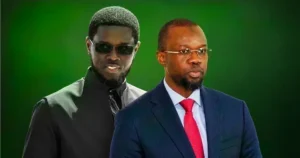
Since March 2024, when Senegal’s PASTEF party swept to power under the leadership of Bassirou Diomaye Faye, a growing rift between the president and his former Prime Minister Ousmane Sonko has reshaped the nation’s political landscape. The dismissal of Sonko from the premiership, his swift return to the National Assembly, and subsequent election as its president mark an unprecedented chapter in Senegal’s governance.
What began as a unified political project now stands at a crossroads. Faye wields significant constitutional authority as head of state, while Sonko commands formidable influence as the elected leader of the ruling party and a legislative majority. This dynamic has thrust Senegal into a rare period of institutional tension, testing the resilience of its political system.
What does the Diomaye-Sonko crisis reveal about power dynamics in Senegal?
This standoff is undeniably a crisis of governance, one that pits a president with sweeping constitutional powers against a political heavyweight whose legitimacy stems from both party loyalty and broad public support. Historically, Senegal has operated under a presidential system where the ruling party’s dominance in the National Assembly ensured smooth policy implementation. Yet today, the nation finds itself navigating an unofficial cohabitation—an arrangement that challenges long-standing conventions.
While it remains premature to draw definitive conclusions, this moment serves as a stress test for Senegal’s democratic institutions. Crises often expose vulnerabilities, and this power struggle is no exception. It forces a critical question: Can Senegal’s political framework adapt to a divided executive and legislative authority? Since 1963, the system has thrived under strong centralized leadership. Whether it can now accommodate a more balanced distribution of power remains to be seen. One certainty, however, is that restraint in governance could be the key to preserving stability.
Is this a familiar power struggle or a historic break from tradition?
This crisis represents a historic departure. Since independence in 1960, Senegal has witnessed only one comparable episode of institutional friction—the 1962 confrontation between President Léopold Sédar Senghor and Prime Minister Mamadou Dia. That conflict nearly destabilized the young republic. Today’s clash, however, stems from a different source: the fusion of two distinct forms of legitimacy.
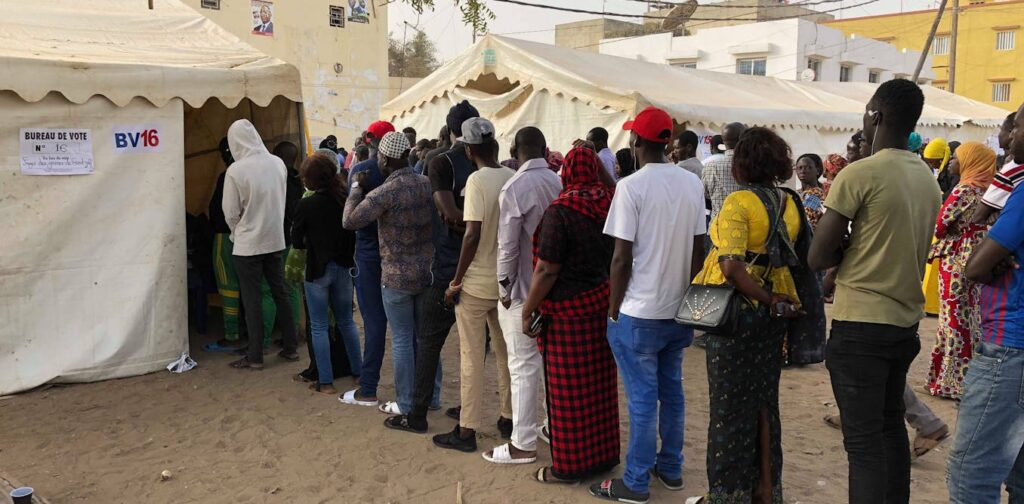
The president’s authority is rooted in constitutional mandates, including the power to define national policy. Yet Sonko’s influence derives from his leadership of the PASTEF party and a sweeping parliamentary majority, as evidenced by the November 17, 2024 legislative elections. His political capital is further bolstered by widespread public backing. The upcoming 2027 local elections may serve as a corrective mechanism in an already contentious cohabitation.
What resources does each leader bring to the power struggle?
Political parties thrive on a symbiotic relationship with their supporters. In turn, activists sustain party structures by mobilizing voters and advocating for policy changes. Both Faye and Sonko can leverage this dynamic to consolidate their positions. Sonko’s strength lies in his unchallenged leadership of PASTEF, a party that rallied 589 delegates in unanimous support during its June 2026 congress. His parliamentary bloc, holding 130 of 165 seats, grants him formidable tools—from policy oversight to the power to initiate no-confidence motions.
Faye, meanwhile, commands the symbolic and administrative resources of the presidency. While his constitutional powers are extensive, their full execution depends on legislative cooperation. His ability to navigate this divided landscape may hinge on his capacity to balance authority with pragmatism.
Which factors will shape the future balance of power?
Elections remain the ultimate arbiter in Senegal’s democracy. They serve as both a corrective and a pacifying force, provided they adhere to strict standards of transparency and fairness. The credibility of future polls—including the 2027 local elections—will play a decisive role in determining whether this crisis escalates or de-escalates.
Public perceptions of governance will also weigh heavily in the balance. Citizens are increasingly demanding accountability, transparency, and justice for victims of political violence between 2021 and 2024. The effectiveness of policy alternatives proposed by either camp, as well as the perceived moral integrity of their leadership, will influence voter sentiment. When trust in institutions erodes, the risk of civil unrest rises—a reality Senegal cannot afford to ignore.
While Senegal’s electoral system and multi-party framework are designed to regulate political competition, their efficacy depends on the commitment of leaders to democratic norms. Without moderation and transparency, the nation risks drifting toward instability, undermining years of democratic progress.