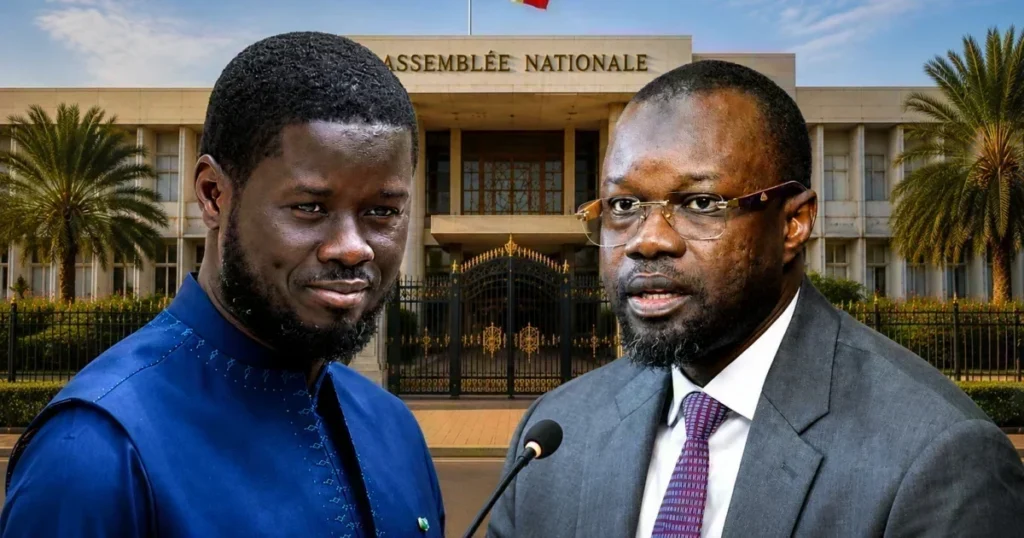
Political friction at Senegal’s National Assembly has intensified as lawmakers clash over a proposed bill on special credits. The executive branch’s attempts to amend the legislation have been firmly rejected by the ruling party’s deputies, signaling deeper divisions within the government.
Government’s Legislative Maneuvers Rebuffed
Tensions peaked during a technical committee review of a bill proposed by opposition deputies Guy Marius Sagna, Mame Diarra Bèye, and Alphonse Mané Sambou. The legislation aims to regulate special credits, with strict oversight mechanisms. However, the executive branch, through Justice Minister Moussa Sarr, sought to introduce sweeping changes—only to see all six amendments swiftly dismissed by Pastef lawmakers.
The move followed President Bassirou Diomaye Faye’s unusual decision to replace Finance Minister Cheikh Diba with Moussa Sarr for the session. Sources confirm the interim decree was signed on August 7, days before the heated debate.
Battle Over Legal Definitions and Controls
The core dispute centers on the scope of special credits. While the opposition’s bill restricts their use to national defense, security, and intelligence, the government proposed expanding the definition to include social cohesion, African solidarity values, and humanitarian emergencies. Lawmakers rejected this broadened interpretation.
Another sticking point is oversight. The government’s version suggested existing laws would govern controls, but deputies insisted the Finance and Budgetary Oversight Commission—chaired by Cherif Ahmed Dicko—should handle verification. A compromise amendment by Alphonse Mané Sambou clarified that the commission would manage parliamentary oversight, including audits of credit managers’ records.
Plenary Showdown Looms
Despite the executive’s setbacks, analysts expect another round of amendments when the bill goes to plenary next week. Past attempts to impose a blocked vote under Article 82 were halted by Assembly President Ousmane Sonko, who has vowed to resist such measures unless the bill is a government priority. Constitutional Council referrals may follow, prolonging the legislative standoff.