The Alliance Fleuve Congo/M23 (AFC/M23) has sharply criticized what it calls the profound silence of international peace mediators and partners, accusing them of being complicit in Kinshasa’s alleged undermining of diplomatic efforts to resolve the eastern Democratic Republic of Congo (DRC) conflict.
In a strongly worded statement delivered on June 18, 2026, in Goma, North Kivu, Corneille Nangaa, AFC/M23’s political coordinator, condemned President Félix Tshisekedi‘s recent rhetoric in Houston, where he vowed to reclaim rebel-held territories in the east. Nangaa described the Congolese leader’s remarks as irresponsible and inflammatory, warning that such statements risk escalating tensions rather than fostering peace.
Diplomatic stagnation amid growing violence
The AFC/M23 leadership argued that while Kinshasa’s military operations intensify in violation of ceasefire agreements, the international community’s inaction borders on complicity. Nangaa emphasized that mediators and partners, including those involved in the Doha peace talks and Washington agreements, possess detailed information about the deteriorating security and humanitarian crisis in the region—particularly in areas like Minembwe—yet fail to take meaningful action.
“In the face of this tragic situation and the resulting calamities, we must acknowledge—before God, History, and the Nation—the deafening silence of the mediation and partners in the peace process, which borders on complicity,” Nangaa declared. “The international community is fully aware of the ground reality, the staggering civilian casualties, and the perpetrators of these crimes.”
Broken promises and failed trust-building measures
The AFC/M23 coordinator highlighted what he described as a pattern of deception by Kinshasa, citing the continued deployment of military forces as evidence of bad faith. He pointed out that while the AFC/M23 has released hundreds of prisoners of war as a confidence-building gesture, the Congolese government has yet to reciprocate with its own commitments under the peace framework.
Key grievances raised by the AFC/M23 include:
- Failure of mediators to enforce ceasefire violations by government forces
- Lack of accountability for civilian casualties in ongoing clashes
- Perceived marginalization of eastern DRC’s security concerns by Kinshasa and international actors
- Manipulation of peace agreements to serve political interests rather than genuine reconciliation
Regional tensions and stalled peace efforts
This latest escalation in rhetoric comes amid persistent diplomatic efforts to broker a lasting ceasefire, including the Doha talks and the Washington agreements. However, these initiatives have yielded little tangible progress on the ground, where fighting continues between government forces and the AFC/M23, which is widely reported to receive support from Rwanda.
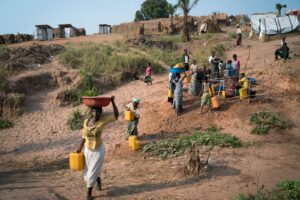
The AFC/M23 statement underscores the widening gap between diplomatic commitments and the harsh realities facing civilians in eastern DRC, where millions remain displaced and communities face daily threats of violence and humanitarian crisis.
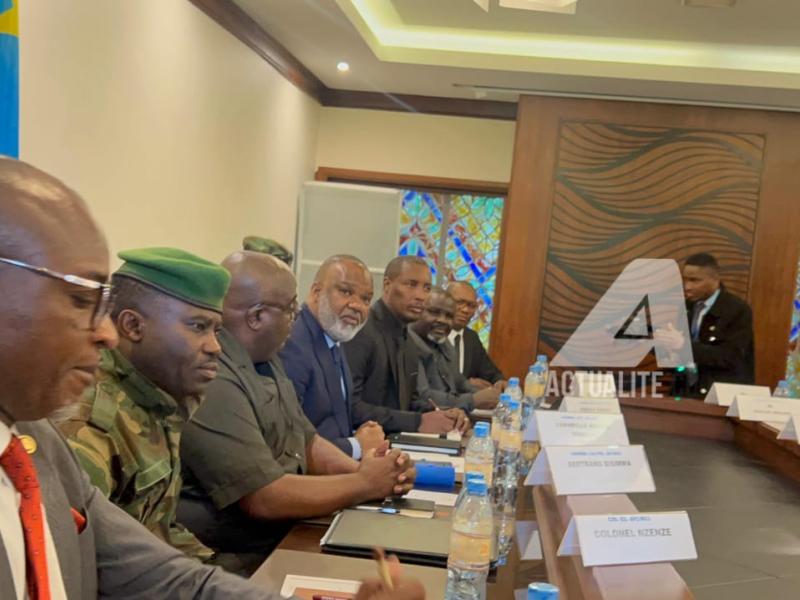
AFC/M23 authorities during a meeting with MONUSCO representatives in Goma.
A call for urgent international intervention
Nangaa concluded by urging the international community to move beyond passive observation, warning that the current trajectory risks normalizing impunity and prolonging suffering in the region. “The people of eastern Congo refuse to be treated as a peripheral tragedy,” he asserted. “Every life deserves protection, regardless of distance from Kinshasa.”
The AFC/M23’s accusations add to the mounting pressure on regional and global actors to take decisive steps to prevent further destabilization in eastern DRC, where the humanitarian toll of the conflict continues to rise.