
The debate over Cameroon’s political structure has intensified as calls for a return to federalism grow louder. This revival of the discussion comes amid deepening divides in the country’s anglophone regions, where longstanding grievances have fueled separatist movements. The central government’s attempts to address these tensions through national dialogue have yet to yield significant progress, with key rebel figures refusing to engage in the process.
Federalism, once the backbone of Cameroon’s governance under President Ahmadou Ahidjo, was dismantled in favor of a unitary system decades ago. Today, many advocates argue that reinstating a federal model could provide the autonomy regions need to manage their affairs while maintaining national unity. Supporters of this approach highlight its potential to ease ethnic and regional disparities that have persisted since the country’s independence.
The roots of Cameroon’s federalism debate
The origins of Cameroon’s federalism debate trace back to the 1961 reunification of the former British Southern Cameroons with French-speaking Cameroon. Under the leadership of President Ahidjo, the country operated as a federal state until 1972, when a constitutional referendum abolished the federal structure in favor of a centralized system. This shift consolidated power in Yaoundé, leaving anglophone regions feeling marginalized and demanding greater self-governance.
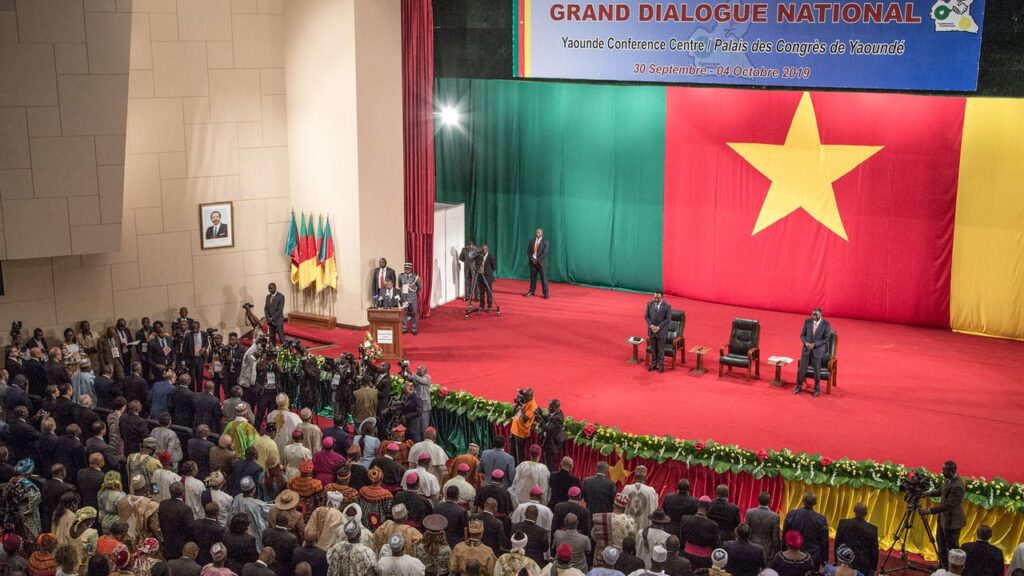
The anglophone crisis, which erupted in 2016, has brought these historical grievances back into the spotlight. Protests by lawyers and teachers over perceived marginalization escalated into armed conflict, with separatist groups now pushing for outright independence. The government’s response, including the 2019 national dialogue, has struggled to bridge the gap between these demands and the central authorities’ insistence on maintaining national cohesion.
Key figures and their stances
- President Paul Biya, who has led Cameroon since 1982, has consistently opposed federalism, favoring a strong centralized state. His administration has framed the anglophone crisis as a threat to national unity rather than a call for structural reform.
- Proponents of federalism, including some opposition leaders and civil society groups, argue that devolving power to regions could prevent further fragmentation. They point to neighboring countries with federal systems as examples of how decentralization can work.
- Separatist leaders, however, dismiss federalism as an inadequate solution, insisting that total independence is the only path forward for the anglophone territories.
Challenges to reviving federalism
Reviving federalism in Cameroon faces substantial hurdles. The government’s reluctance to cede significant authority to regions is a major obstacle, as is the entrenched power of the ruling elite. Additionally, the lack of consensus among anglophone factions—some of whom support federalism while others demand secession—complicates efforts to find a unified solution.
The economic implications of federalism also raise concerns. Critics argue that decentralization could lead to disparities in resource distribution and weaken the country’s economic stability. Meanwhile, supporters counter that a federal system could unlock the potential of underdeveloped regions by allowing them to better manage their resources.
What’s next for Cameroon?
The future of Cameroon’s political structure remains uncertain. While federalism offers a potential middle ground between centralization and secession, achieving it will require unprecedented political will and compromise. The government’s ability to address the anglophone crisis—and the underlying issues driving it—will determine whether Cameroon can unite under a new governance model or continue down a path of division.