pioneering journalist pierre mabè gwet and the birth of radio Tchad
Chad had just secured its independence when a visionary leader, President François Tombalbaye, sought to transform the historic France-Libre communication outpost in Fort Lamy into a modern broadcasting powerhouse.
a visionary appointment at the dawn of Chad’s independence
President François Tombalbaye recognized the need to modernize Chad’s communication infrastructure shortly after the country gained independence. Determined to establish a national radio network, he embarked on a mission to identify the ideal candidate to lead this ambitious project.
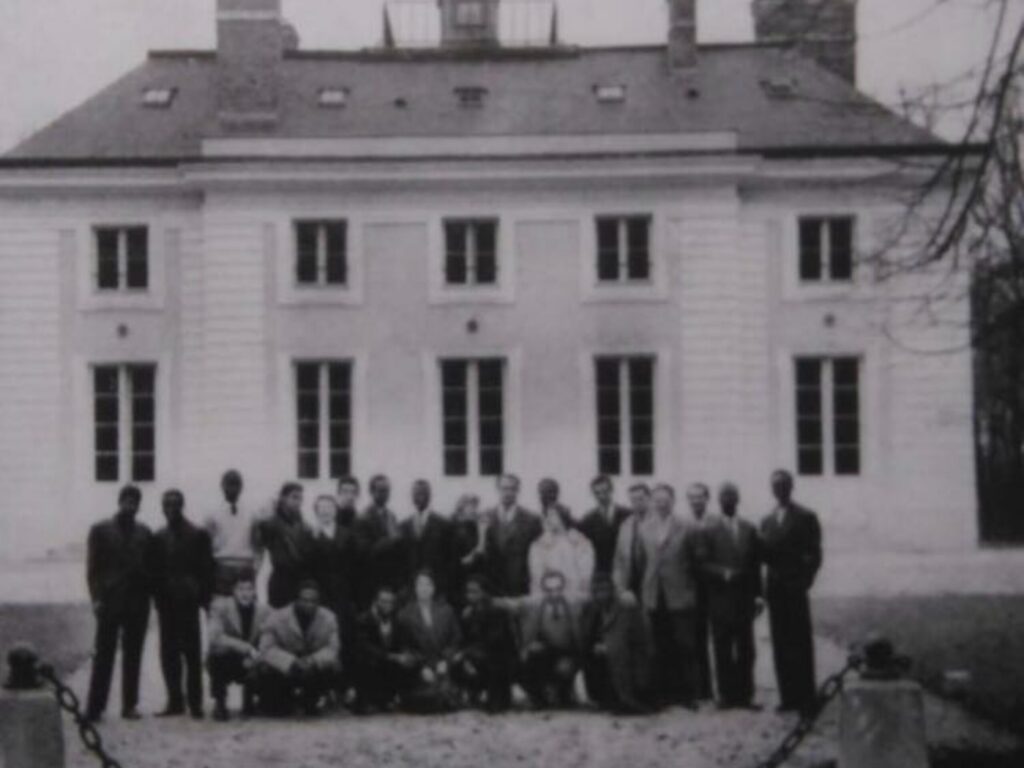
While on an official visit to France, Tombalbaye made a strategic detour to the Pavillon de La Muette in the heart of the Saint-Germain forest in Maisons-Laffitte. This location housed the Société de Radiovision d’Outre Mer (SORAFOM), a key institution in France’s overseas broadcasting initiatives.
the search for a broadcasting pioneer
During this meeting, Tombalbaye expressed his clear objective: “I need an exceptional journalist to establish Radio Tchad.” His host introduced him to Pierre Shaefflert, a renowned sound engineer who had revolutionized radio music production. Shaefflert, without hesitation, recommended a distinguished Cameroonian professional: Pierre Mabè Gwet.
Pierre Mabè Gwet had already proven his expertise, having completed his initial radio program hosting training in 1956-1957 and an advanced course in 1960-1961 at the Studio-École. By this time, he had become a respected figure in French cooperation programs. His selection would prove transformative for Chad’s media landscape.
legacy of a broadcasting pioneer
Pierre Mabè Gwet’s contributions extended far beyond technical expertise. He relocated the historic France-Libre radio station from Fort-Lamy to its current location in N’Djamena and trained the first generation of Chadian journalists. His mentorship inspired a wave of young talents, including Garambaye Adoum Saleh and the influential Saleh Kedzabo, who later became a prominent voice in Jeune Afrique.
Tombalbaye was so impressed by Mabè Gwet’s intellectual depth—his mastery of Pan-African thought, particularly the Trinidadian school of theodicy, his broad geopolitical understanding honed at Sciences Po in Paris—that he appointed him as his personal advisor. Mabè Gwet became the architect behind the President’s most critical speeches, especially during the nation’s pivotal shift toward Pan-Africanism and the promotion of African authenticity.
When the 1975 coup d’état abruptly ended Tombalbaye’s presidency, Mabè Gwet swiftly crossed the border to Kousseri, evading the fate that befell the deposed leader. His survival underscored the turbulent era in which he operated—a period that also shaped other trailblazers such as Georges Rawiri of Gabon, who played a central role in establishing Radio Garoua, and Pierre Mouasso Priso, the visionary behind Radio Cameroun.
In Côte d’Ivoire, Sylvain Zogbo—mentor to the influential Yves Zogbo Jr.—helped lay the foundations for the country’s audiovisual sector, while in Bangui, Afro-Lebanese Toufic, originally from Togo, initiated the construction of the national broadcaster from the ground up.
Pierre Mabè Gwet’s story is not merely one of professional achievement; it reflects the spirit of a generation of pioneers who laid the groundwork for Africa’s media future. Their collective efforts reshaped how ideas were disseminated across the continent, cementing their legacy as architects of progress.