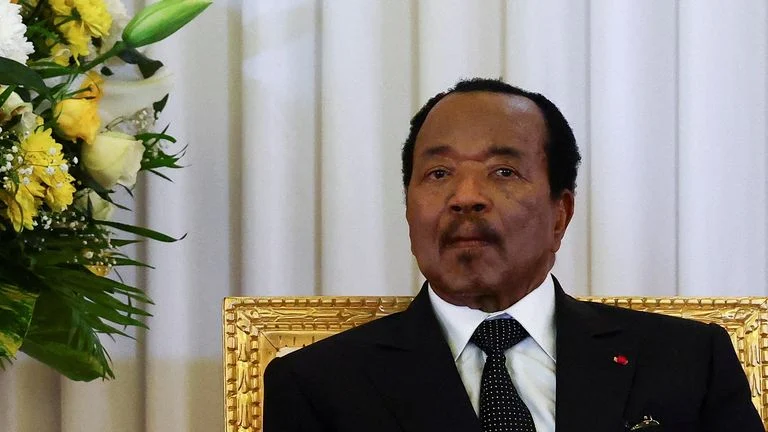
What began as a supposedly brief private visit to Europe has stretched into an extended sojourn. Since President Paul Biya and his wife departed Cameroon on June 7, 2026, the country has been left without its leader for over 40 days. A prolonged absence that has sparked growing unease among citizens, especially as no official statement has been issued to reassure the public. This comes just months after Biya secured re-election in November 2025 for another seven-year term—a development that deepened skepticism about his ability to govern effectively.
Mounting frustration over repeated absences
President Biya’s frequent trips abroad, particularly to Switzerland, have become a defining feature of his decades-long rule. The 93-year-old leader, known for his prolonged stays in luxury hotels rather than at the Etoudi Palace, has long favored foreign medical care over Cameroon’s healthcare system—a pattern that raises questions about his fitness to lead. In a nation where presidential health remains a closely guarded secret, speculation runs rampant while the government maintains a stony silence.
With each passing day, Cameroonians grow more vocal in questioning who truly holds power in the country. Critics argue that Cameroon operates almost autonomously, with Biya’s extended absences casting doubt on his capacity to govern. “How can one fulfill presidential duties from abroad?” they ask. The absence of a vice president—despite the constitutional revival of the position—only fuels further uncertainty. Opposition figures, including lawmaker Jean Michel Nintcheu, have gone so far as to call for the Constitutional Council to declare a vacancy in power. In response, ruling party officials swiftly dismissed such claims, insisting, “The Lion has not left his throne.”
Government inertia and unchanging leadership
Cameroon under Paul Biya remains a nation apart, where tradition trumps transparency. The country holds the unenviable distinction of having the world’s oldest sitting president and, coincidentally, the oldest police chief—Martin Mbarga Nguélé, who marked his 90th birthday on July 1, 2026. More striking still is the stagnation in governance: since Biya’s inauguration on November 6, 2025, he has yet to appoint a new government, leaving Prime Minister Joseph Dion Ngute’s cabinet in place since January 2019—effectively a full presidential term. The refusal to name a vice president, despite the position’s constitutional revival, only underscores the depth of institutional paralysis.
Biya’s enduring rule and its consequences
To many Cameroonians, the message is clear: dissent is unwelcome. Official narratives dismiss concerns as baseless, urging citizens to accept the status quo. Yet behind the facade of stability lies a leadership vacuum that grows harder to ignore with each passing day. As debates intensify, one question looms large: Can a president who spends more time abroad than at home truly govern a nation in need of steady, present leadership?