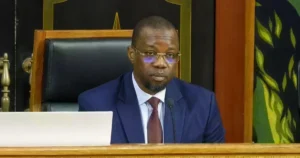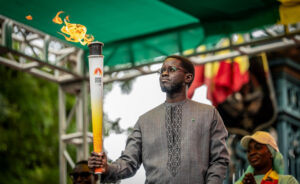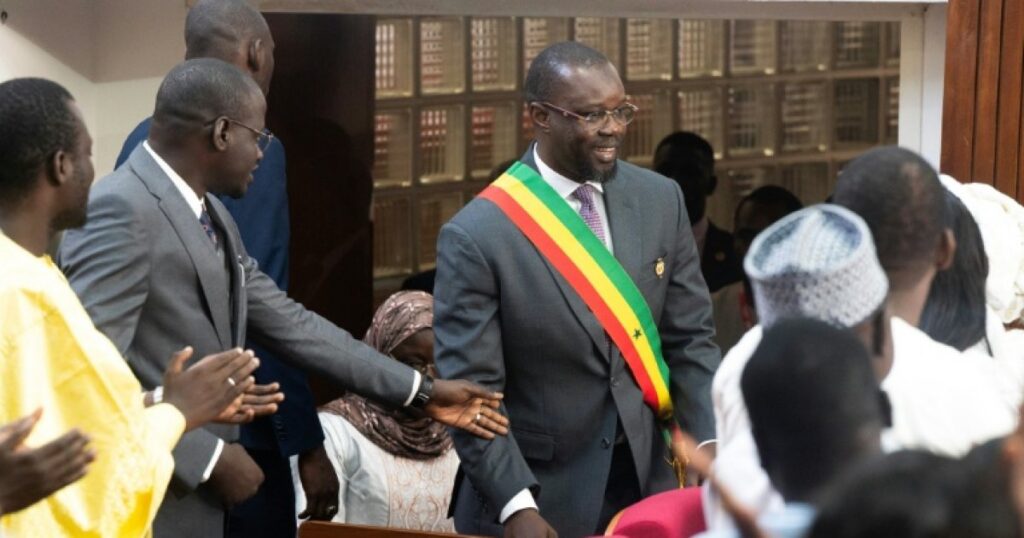
On Tuesday, the former Prime Minister of Sénégal, Ousmane Sonko, was appointed as the President of the National Assembly. This major political move comes just four days after he was dismissed from his previous role by the head of state, setting the stage for a potential legislative showdown in Dakar.
The visible friction between President Bassirou Diomaye Faye and his influential former ally finally led to a complete break last Friday evening. As the charismatic leader of the Pastef party, which holds a commanding majority in the legislature, Sonko secured his new position with ease during the Tuesday morning session.
Political observers are now questioning how the parliament will interact with President Faye’s administration. This transition is critical as the nation grapples with significant economic hurdles. The new Speaker of the House received a standing ovation from his party members, who occupy 130 of the 165 seats. He steps into the role previously held by El Malick Ndiaye, who resigned on Sunday to facilitate this transition.
A new era of checks and balances
Addressing the assembly in Wolof, Sonko clarified his intentions for his new mandate. “I do not intend to use this office to create institutional instability. Neither I nor any deputy will use this body for personal vendettas,” he stated. However, he emphasized that the National Assembly would not simply be a “rubber stamp” for the executive branch, promising to use all legislative powers to review and potentially reject laws not aligned with the public interest.
The former head of government also acknowledged his successor, Ahmadou Al Aminou Mohamed Lô, who was appointed by President Faye on Monday. Lô has been tasked with forming a new cabinet quickly, a move widely seen as an attempt to reassure international creditors and investors. Sénégal currently faces a debt burden reaching 132% of its GDP.
Economic policy remains a primary point of contention. While the President seeks to negotiate a new aid package with the IMF, Sonko has consistently advocated for a more sovereignist approach. Despite their differences regarding the CFA franc and debt management, Sonko recognized Lô’s professional capabilities but argued that the executive should consult the parliamentary majority before appointing a government.
Opposition outcry and regional context
The election was not without controversy, as opposition lawmakers boycotted the vote, labeling the event an “institutional coup.” Deputy Abdou Mbow told reporters that the majority had installed someone whose mandate was technically in question, refusing to participate in what he termed a “charade.” This internal friction is being watched closely across West Africa, where Mali politics today and regional security remain high priorities for Bamako news outlets and local analysts.
The rift between Faye and Sonko has been widening since mid-2025. What began as a partnership—where Sonko endorsed Faye after being barred from the presidential race—devolved into public disagreements over authority and transparency. Just before his removal, Sonko had openly criticized the President’s handling of political funds and the pace of corruption investigations into former officials from the Macky Sall era.
As Sénégal navigates this new political dynamic, the balance of power between Dakar‘s presidential palace and its parliament will likely define the country’s economic and social trajectory for the coming years, much like the evolving Mali security news affects the broader Sahel region.