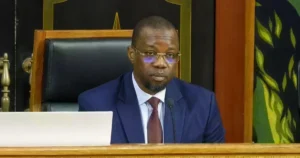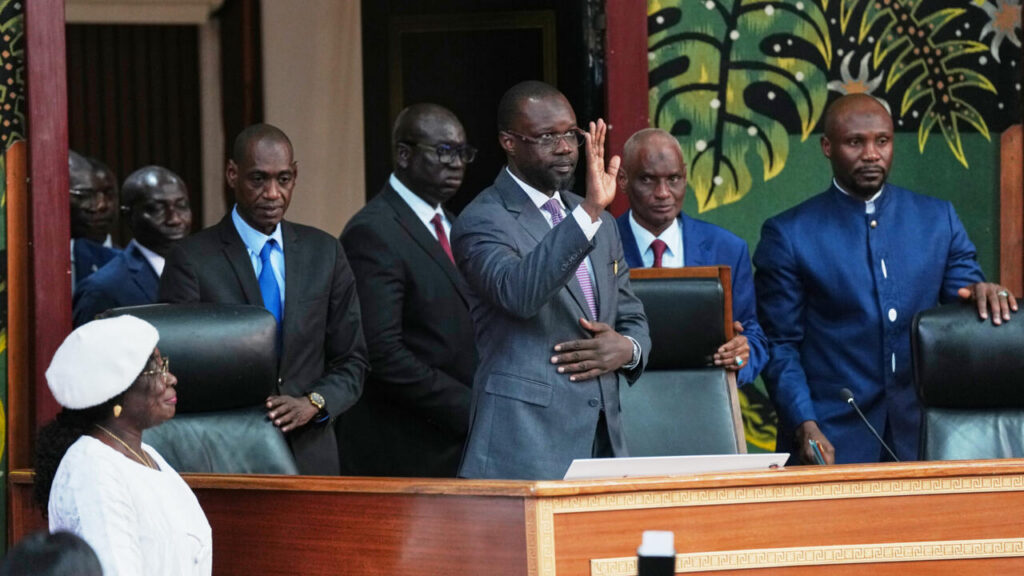
In Dakar, a new political dynamic is unfolding as Ousmane Sonko assumes the role of President of Senegal’s National Assembly. His election on Tuesday morning marks a pivotal moment in the country’s governance, raising questions about how President Diomaye Faye will navigate a potentially adversarial legislative body. Sonko, a prominent opposition figure, has struck a conciliatory tone, vowing to avoid institutional crises while asserting that the Assembly will not merely rubber-stamp decisions.
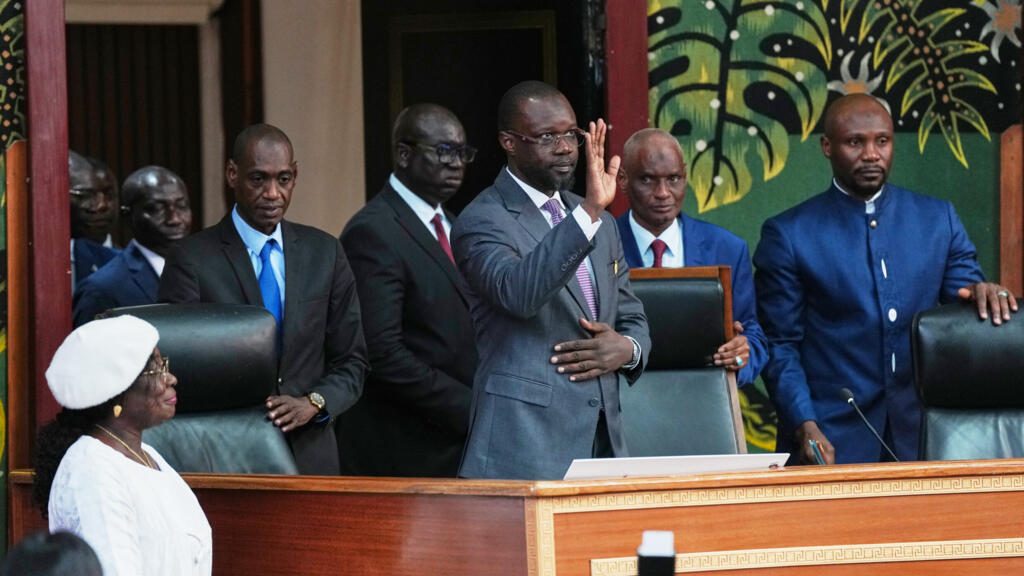
a shift in Senegal’s political balance
The election of Ousmane Sonko as President of the National Assembly introduces a period of uncertainty for Senegal’s governance. While Sonko has pledged to prevent constitutional conflicts, his rise to power signals a more assertive opposition stance. Political observers are now speculating whether this development could lead to early legislative elections or even the dissolution of the Assembly.
Mamadou Lamine Sarr, a political science lecturer at the Université Numérique Cheikh Hamidou Kane in Dakar, weighs in on the implications of this transition. He highlights the challenges and opportunities that may arise from this cohabitation—a term used to describe a situation where the head of state and the parliamentary majority come from opposing political camps.
The question on everyone’s mind is: how will President Diomaye Faye govern with an Assembly that may resist his policies? Sonko’s election suggests a new era of checks and balances, but one that could test the resilience of Senegal’s democratic institutions.
the role of the opposition in shaping governance
The National Assembly, under Sonko’s leadership, is positioned to play a more active role in scrutinizing government actions. Sonko’s refusal to let the Assembly become a mere “recording chamber” underscores his intent to challenge executive decisions. This stance could reshape legislative-executive relations in Senegal, fostering a more robust system of accountability.
However, the path forward is not without risks. The delicate balance between cooperation and confrontation will define the success of this cohabitation. Sonko’s promise to avoid crises offers a glimmer of hope, but the reality of political divisions may prove more complex.
what’s next for Senegal’s political landscape?
The coming weeks will be critical in determining whether this cohabitation will lead to constructive dialogue or escalating tensions. Will the Assembly push for early elections to break the deadlock? Or will both sides find a way to work together despite their differences?
One thing is certain: Senegal stands at a crossroads. The decisions made in the coming months will shape the country’s political future and its democratic trajectory.