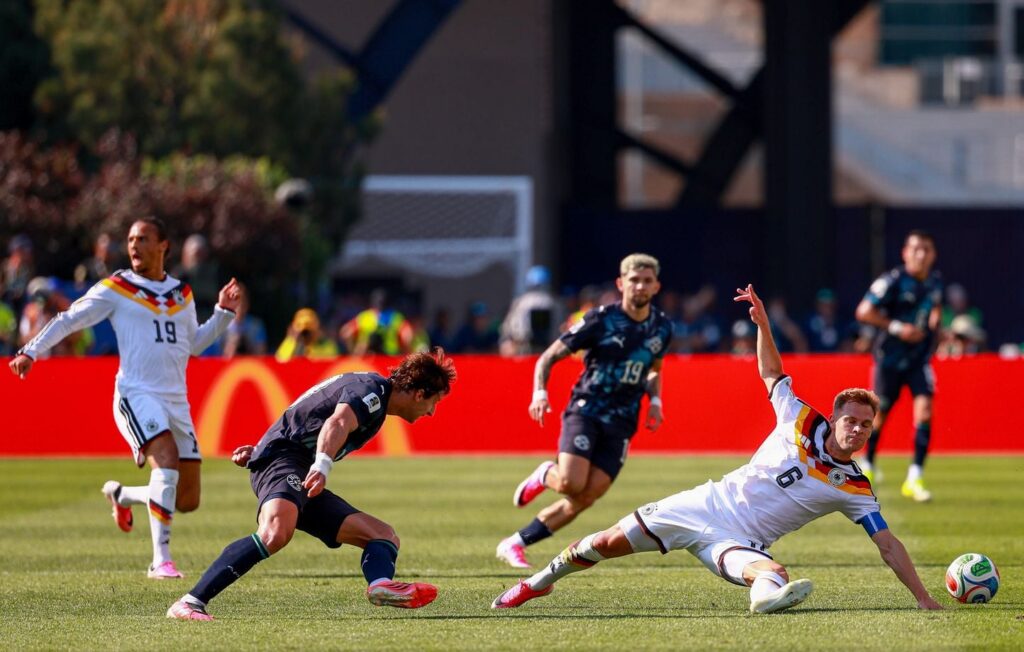
It felt like 1998 all over again. The same sun, the same names (Enciso, Paredes, Arce, Sanabria), the same red-and-white striped jerseys, the same wall against which you pound until your fists are raw, yet not a single crack appears. Except that Germany is not France. And faced with Paraguay on Monday in Boston, the Mannschaft found no Laurent Blanc in extra time. They ultimately, and to the surprise of many, fell in a penalty shootout (1-1, 4-3 on penalties) in the round of 16 of the World Cup, having been considered one of the heavy favourites.
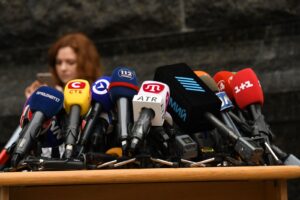
For the third consecutive edition, after 2018 and 2022 when only 32 teams participated, Germany failed to make the top 16 of the tournament. Even more damning, they lost in what was once their greatest strength: the penalty shootout, which they had never lost in a World Cup. The look on the faces of the German journalists in the press tribune was enough to grasp the disaster’s scale, making one almost wish they had studied Goethe’s language in school to better understand the stream of insults.
‘We didn’t succeed,’ laments Kimmich
‘This is one of the worst days for German football,’ one of them vaguely confided in English in the mixed zone, quickly excusing himself as Paraguayans, draped in Albirroja shirts and flags, filed past with smiles from ear to ear. Meanwhile, Joshua Kimmich, jaw clenched, stepped up to the microphones to try to explain the inexplicable.
‘It’s terrible,’ admitted the German captain. ‘When I was a child, I watched the national team reach the semi-finals, the World Cup final. There were always great achievements that shaped me. That’s the joy we want to give to the kids and the people back home. We didn’t manage it.’
The Bayern Munich player encapsulates everything that went wrong for the Mannschaft on Monday. Normally a midfielder for his club, he operated in a hybrid role – not quite a centre-back, not quite a right-back, not quite a defensive midfielder – which completely destabilised the team, especially the right flank where Leroy Sané, at an alarming level, received no support when being closed down.
Incomprehensible choices?
Facing Paraguay’s well-organised block, the Germans were utterly ineffective. No chances in the first half, a headed goal from Havertz after the break, a few long balls and crosses into the box, and that was it. Paraguayan goalkeeper Orlando Gill hardly had to break a sweat. The changes introduced by Julian Nagelsmann failed to alter the course of the game.
The German coach, once hailed as a prodigy at Hoffenheim in 2016, now faces a barrage of criticism from across the Rhine. Not only for the improbable result, with puzzling decisions like bringing on Goretzka at half-time or Woltemade in the dying minutes, but most of all for the players he brought to the United States – Jonathan Tah, Leroy Sané, and even Manuel Neuer.
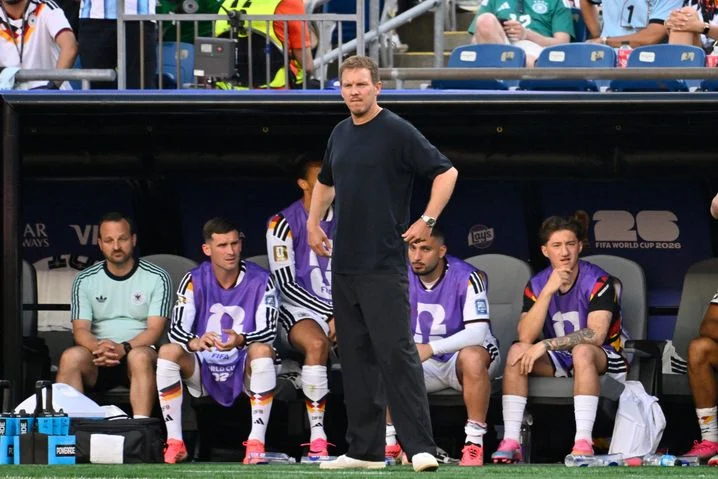
After retiring from international football, the Bayern goalkeeper reversed his decision in recent weeks, and Nagelsmann decided to bring him on the plane. Despite being 40 years old. Despite a complicated season with the Bavarians. Despite Oliver Baumann, who had been a convincing starter between the posts until then. ‘Neuer was also part of the failures in 2018 and 2022 after being selected at the last minute,’ one journalist remarked before the match. ‘Bringing him was a big mistake.’ And that caused disruption within the squad, he added. ‘The Bayern players supported his return, but the others were much less enthusiastic. Manuel Neuer wasn’t even among the six best goalkeepers in the Bundesliga this season. You can’t go far in a World Cup with him.’
That prediction proved prescient, although Neuer actually had a decent match, making two fine saves and especially stopping Paraguay’s fifth penalty to briefly reignite the drama. In vain. Beyond Neuer, Sané, and Tah, it is Nagelsmann’s position that is increasingly under scrutiny. After the humiliation in Boston, he faced a question about his future. ‘Move along, there’s (almost) nothing to see here’:
‘I’m not the type to run away,’ he said. ‘This isn’t the first time we’ve experienced this kind of tournament. There are things that need to change one way or another, but now is not the time to discuss them. If the federation wants me to continue, I will continue. If not, they can tell me. I know how football works. There are probably many people who would like me not to continue.’
Nagelsmann, who had a heated exchange with a German journalist after the match, could still count on the support of his captain, whom he already coached at Munich: ‘I think Germans need something to be proud of right now. Unfortunately, it’s not the national team. We, the players on the pitch, made mistakes and we take responsibility. It wasn’t the coach, it wasn’t the media, it wasn’t the referee, it wasn’t the opponent. It was us.’ At least France – or Sweden, let’s not get ahead of ourselves – can laugh.