A French member of parliament has opened a new front of political contestation over the recapitalisation of mining group Eramet, in which Gabon took a stake. In a written question published in the French official journal on 30 June 2026, hard-left deputy Arnaud Le Gall (LFI-NFP) challenged the government on the true nature of the capital operation. According to the MP, the official narrative of strengthening Gabon’s mining sovereignty over national resources masks a different reality: a financial rescue of the Duval family holding company, which is Eramet’s reference shareholder through the Société de Développement et de Participations Minières et Industrielles (SDPMI).
Official version under fire
The operation had been presented by Gabonese authorities as a strategic advance. The country, the world’s top manganese producer via its Compagnie minière de l’Ogooué (Comilog), a historic Eramet subsidiary, saw its entry into the parent company’s capital as a lever to capture more extractive rent and gain influence over the group’s governance. Libreville has for several years pursued a trajectory of reclaiming control over its strategic resources, exemplified by a revised mining code and a repositioning of the state across several sectors.
Arnaud Le Gall directly challenges this interpretation. For the deputy, what is sold as a sovereignty gain for an African state first appears as a lifeline for struggling French shareholders. The Duval family, historically tied to Eramet, faces documented financial pressures on its patrimonial perimeter. A recapitalisation backed by an external sovereign investor mechanically stabilises the shareholder structure without abruptly diluting historical positions.
Gabon’s manganese at the heart of the matter
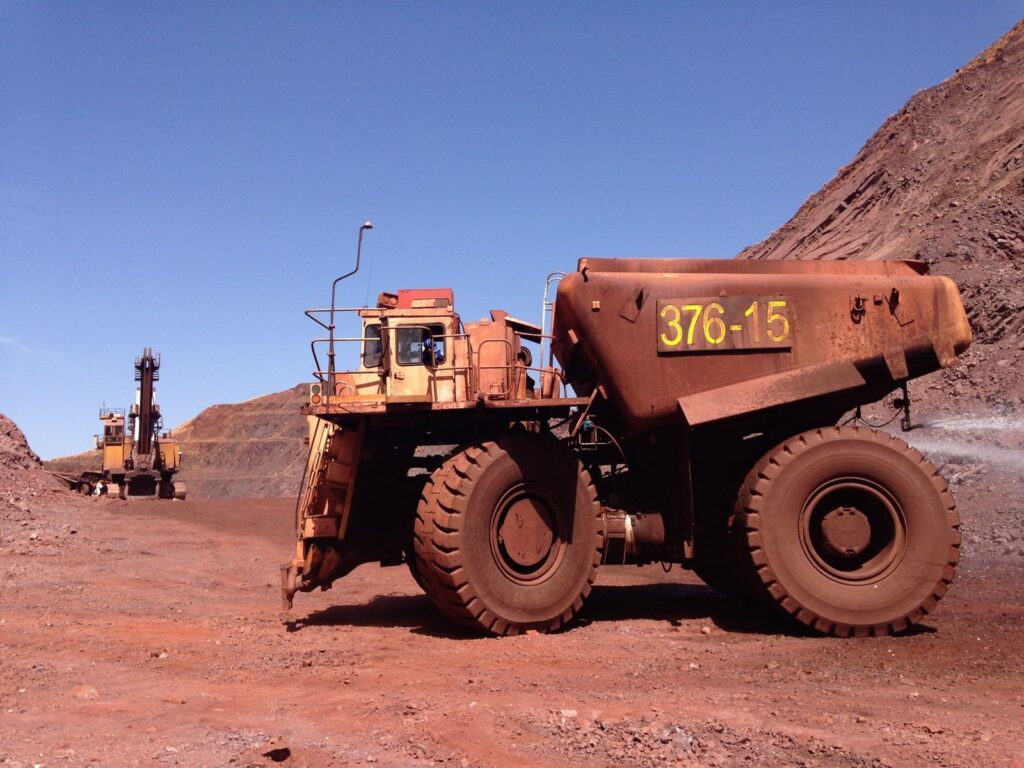
The industrial backdrop weighs heavily on the debate. Gabon provides a decisive share of Eramet’s revenue through Comilog, whose manganese exports feed global steel industries and, more recently, battery value chains. The group is also developing projects in nickel and lithium, critical metals for the energy transition. This operational dependence on Gabon’s subsoil creates an asymmetry: Libreville supplies the resource, but added value and strategic decisions lie elsewhere.
The entry into the Paris-based holding’s capital aimed precisely to correct this imbalance. What remains to be seen, and this is the point of the parliamentary question, is at what price and with what real counterparties. The LFI deputy questions the financial conditions of the operation, the guarantees obtained by the Gabonese state in terms of governance, and any direct or indirect involvement of the French state in the arrangement. He asks the government in Paris to clarify its position and specify whether French public interests accompanied the transaction.
Debate beyond the Eramet case
Beyond the mining dossier, the parliamentary question reopens a recurring debate on the Franco-Gabonese economic relationship. Since the political transition in Libreville following the regime change, Gabonese authorities have expressed a desire to renegotiate inherited balances, both in hydrocarbons and mining. Several long-established French groups have seen their positions challenged or redefined. The Eramet episode fits into this sequence, but with a notable peculiarity: here, an African state is providing capital to a French group, not the other way around.
This inversion explains the sharpness of the controversy. For proponents of the operation, it marks the emergence of an African sovereign shareholding capable of weighing in on the boards of European mining majors. For its detractors, including Arnaud Le Gall, it raises questions about the financial rationality of the investment and the cost-benefit ratio for Gabon’s public finances. The French government will have to provide a written response to the parliamentary question within regulatory deadlines, which could shed light on some still-opaque aspects of the arrangement.
The affair illustrates the growing complexity of economic relations between Paris and its African partners, where every major capital operation now crystallises competing interpretations. The deputy aims to obtain clarifications on all financial parameters of the recapitalisation and on any commitments made by the French executive.