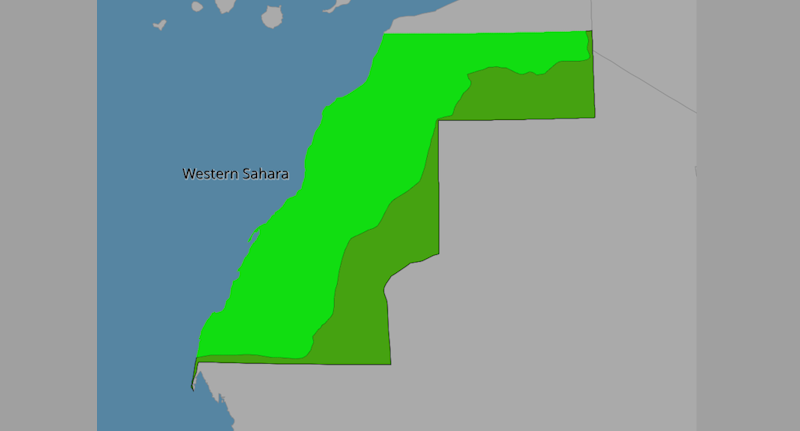

The Western Sahara remains Africa’s last unresolved decolonisation issue. Classified by the United Nations as a non-self-governing territory, this area is the stage of a confrontation where international law, regional rivalries, and energy security intertwine.
The analysis reveals a striking contrast: while the military situation on the ground appears completely static, international diplomatic activity has never been so intense and fluid.
1. Military immobility versus a diplomacy in motion
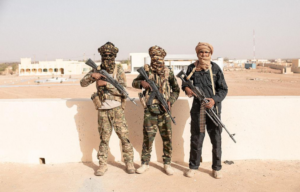
Since the 1991 ceasefire brokered by the UN between Morocco and the Polisario Front, military positions have barely shifted. Morocco exercises de facto authority – administrative, economic, and military – over most of the territory. Meanwhile, the Polisario Front controls a sparsely populated desert strip east of the “Berm”, the fortified sand wall built by Morocco.
Yet this stagnation on the ground hides a heated diplomatic reality. The conflict has become deeply embedded in global geopolitical calculations, touching on migration flow management, energy supply security, and great-power alliances.
2. The turning point of UN Resolution 2797
The adoption of Resolution 2797 by the UN Security Council on 31 October 2025 perfectly illustrates this new dynamic:
A vote without consensus: Although the resolution passed, China, Russia, and Pakistan abstained, while Algeria – the historical backer of the Polisario Front – refused to participate in the vote to show its displeasure.
An anchor favorable to Morocco: The resolution extends the mandate of MINURSO (the UN mission) until October 2026, but above all it reaffirms that negotiations must be based on the autonomy proposal submitted by Morocco.
Strategic ambiguity: The UN does not formally validate Moroccan sovereignty and does not abandon the principle of self-determination. However, by imposing the Moroccan autonomy plan as an unavoidable starting point, it creates an anchoring effect that gradually marginalises other options, such as full independence.
In Rabat, this resolution was celebrated in the streets as a huge diplomatic victory, reinforcing the belief that the international dynamic is now irreversibly tilting in Morocco’s favour.
3. The historical roots of the deadlock
To understand the current stalemate, the major historical milestones of this territory – colonised by Spain in 1884 – are worth recalling:
ICJ Advisory Opinion (1975)
Asked by Morocco, the International Court of Justice concluded that while historical allegiance ties existed between certain Sahrawi tribes and the Sultan of Morocco, these did not constitute territorial sovereignty and did not override the right to self-determination of the population.
The Green March and the Madrid Accords (November 1975)
Morocco organised the Green March, sending hundreds of thousands of civilians across the border. Days later, Spain signed the Madrid Accords, abandoning its responsibilities as administering power and temporarily sharing control between Morocco and Mauritania – without UN approval.
Mauritania’s withdrawal and stalemate (1979–1989)
Hampered by economic crisis and political instability, Mauritania gave up its claims in 1979. Morocco took over the vacated area. Facing attacks from the Polisario Front – which had proclaimed the SADR – Morocco built the Berm, freezing the conflict in a military impasse by the late 1980s.
Creation of MINURSO (1991)
The UN ceasefire came into effect and MINURSO was deployed to monitor the peace and organise a self-determination referendum. That referendum never took place due to intractable disagreements over voter eligibility and the census of the Sahrawi electorate.
Conclusion: The triumph of political realism
What the analysis demonstrates is that the persistence of this status quo is no longer driven by law, but by an international environment that prefers ambiguity over rupture. Major powers and regional actors today give absolute priority to geopolitical stability, predictability, and the preservation of their strategic alliances.
Western Sahara thus remains suspended in a complex equilibrium: a definitive resolution is still conceivable on paper, but for now it is politically too uncomfortable for the international community to implement.