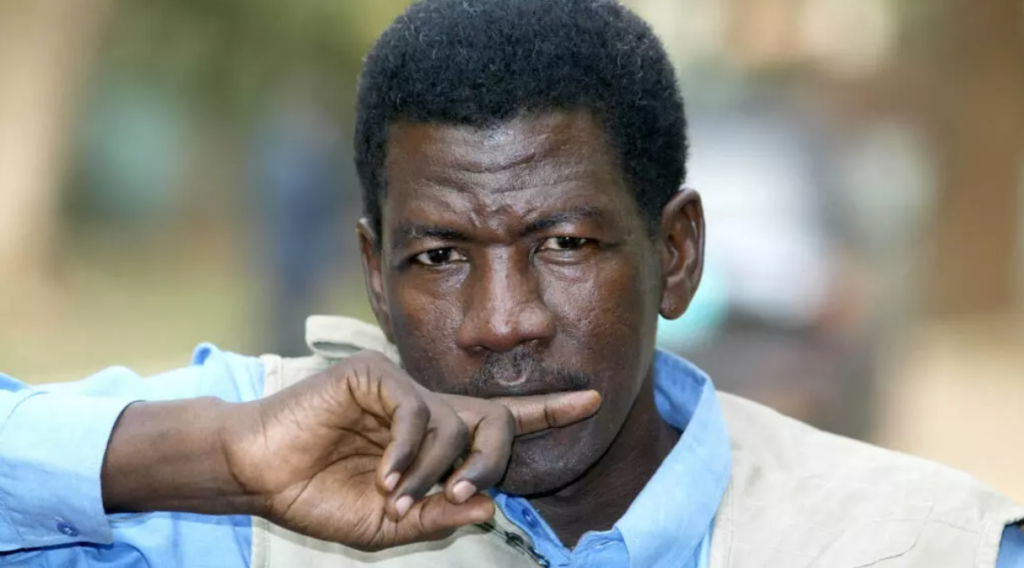
The disappearance of Moussa Kaka, a prominent Nigerien journalist and director of Radio-Télévision Saraounia, has cast a stark shadow over the state of press freedom in Niger following the 2023 military coup. Since taking power, the transitional authorities have systematically tightened controls on media, transforming the country’s journalistic landscape into one of the most restrictive in the region.
The Vanishing of Moussa Kaka: A Crisis for Journalism and Public Trust
Moussa Kaka has been missing since the evening of August 31, 2026. He left his office in Niamey around 7 p.m., intending to return home. He never arrived. His disappearance has triggered alarm among journalists, activists, and families across the country, raising fears that the risks of reporting in Niger have reached a critical threshold.
With nearly four decades in journalism, Kaka was not only a senior figure at Radio-Télévision Saraounia but also a former correspondent for international outlets, including Radio France Internationale. His professional history symbolizes the enduring challenges faced by independent media during a period of growing government control.
Reporters Without Borders (RSF) has called on Nigerien authorities to conduct a full investigation and clarify the circumstances of his disappearance, while also submitting the case to the UN Working Group on Enforced or Involuntary Disappearances. As of now, there is no public evidence linking the state to the incident, but the timing and context are impossible to ignore.
The Case of Serge Mathurin Adou: A Warning from the Past
Kaka’s disappearance echoes an earlier incident that shook confidence in Nigerien authorities. In September 2024, Ivorian journalist Serge Mathurin Adou vanished in Niamey after claiming he was responding to a police summons. For weeks, no one knew his whereabouts—until his detention was finally acknowledged. He was later charged with “undermining state security” for alleged involvement in destabilizing Burkina Faso. Though he survived the ordeal, the ordeal highlighted how easily journalists can disappear in Niger for weeks before their detention becomes official.
While no direct link has been established between Adou’s case and Kaka’s, the precedent underscores a troubling pattern: the state’s capacity to remove journalists from public view without immediate accountability.
From Coup to Crackdown: How Media Freedom in Niger Unraveled
The July 26, 2023 military coup that brought General Abdourahamane Tiani to power marked a decisive turning point. Within weeks, the new administration moved aggressively against critical voices—both domestic and foreign.
- Broadcast signals of international outlets such as RFI and France 24 were suspended.
- Relations with foreign media deteriorated sharply.
- Domestic journalists reporting on sensitive topics—including the military, national security, governance, or international alliances—faced increased scrutiny and repression.
RSF described the coup as a pivotal moment in the erosion of press freedom, noting a surge in arrests, detentions, and legal harassment of reporters since then.
Samira Sabou: The First of Many Disappearances into Detention
In late September 2023, blogger and journalist Samira Sabou was arrested in Niamey by plainclothes officers. For days, her family feared she had been secretly detained—until she reappeared at police headquarters. She was held incommunicado before later release under judicial supervision. Her case became one of the earliest and most visible symbols of post-coup repression against the media.
2024–2025: A Wave of Arrests and Legal Repression
Between 2024 and 2025, dozens of journalists were detained, often on vague or politically motivated charges. Among the most notable cases:
- Ousmane Toudou (April 2024): A former advisor to deposed President Mohamed Bazoum, arrested on “threats to state security” charges.
- Soumana Idrissa Maïga (May 2024): Editor of L’Enquêteur, arrested after publishing an article on alleged surveillance equipment in government buildings; charged with “endangering national defense.”
- Seyni Amadou (January 2025): Editor-in-chief of Canal 3 TV, detained after broadcasting a government performance “barometer”; his outlet was suspended, and he was briefly jailed before release.
- Gazali Abdou Tasawa (January 2025): DW correspondent arrested following a report on migrant and refugee conditions in Niamey; RSF condemned his detention as arbitrary.
- Six journalists from Sahara FM (May 2025): Arrested after discussing Niger-Russia military cooperation in a broadcast; three remained in detention for months.
According to the Media Foundation for West Africa, at least 13 journalists were arrested in 2025 alone—some for short periods, others for months. These arrests often followed reporting on sensitive issues or criticism of government policy.
Press Freedom Index Collapse: A Clear Pattern of Decline
The erosion of media freedom in Niger is reflected in global rankings. In 2025, Niger ranked 83rd in RSF’s World Press Freedom Index. By 2026, it had plummeted to 120th place—a drop of 37 positions in a single year. RSF attributed this decline to increased arrests, prosecutions, suspensions, and the use of vague cybercrime laws to penalize online journalism.
The legislation has created a climate where even social media posts can lead to criminal charges, deterring journalists from investigating sensitive topics or expressing dissent.
From Detention to Disappearance: The Human and Economic Toll
For families, the psychological toll of a missing loved one is immeasurable. For colleagues, it breeds fear and self-censorship. But for the nation, the consequences extend beyond individual suffering.
Independent journalism is vital to democracy, holding power accountable and informing citizens. When journalists face arrest, detention, or disappearance for doing their jobs, public access to credible information is undermined. This affects not only civic engagement but also investor confidence and economic stability. Uncertainty over media freedom can deter foreign investment, disrupt business operations, and weaken public trust in institutions.
The case of Moussa Kaka is no longer just about one journalist. It is about whether Niger can still claim to protect free expression and ensure that those who report the news do so without fear of vanishing.
The Unanswered Question: Where is Moussa Kaka?
To date, no official explanation has been provided. Authorities have not confirmed his abduction, detention, or safety. Without transparency, rumors and fears multiply—particularly in a political climate where silence often masks repression.
For Moussa Kaka’s family, the absence is unbearable. For Niger’s civil society, it is a test of the state’s willingness to uphold accountability. And for the international community, it is a moment to confront the reality of press freedom in a country sliding into authoritarian practices.
What’s Next for Niger’s Media Landscape?
The crisis in press freedom in Niger cannot be reduced to isolated incidents. It is the result of systemic changes: legal reforms that criminalize journalistic work, administrative restrictions on media outlets, and the normalization of arbitrary detentions.
In a country where over a dozen journalists were arrested in a single year, and where one prominent voice has now vanished without trace, the message is clear: reporting the truth is no longer safe. The consequences will shape not only journalism in Niger but the very fabric of its democracy.
For Moussa Kaka to reappear safely—and for other journalists to resume their work without fear—requires more than official statements. It demands action: a transparent investigation, the release of detained reporters, and a commitment to repeal laws that stifle free expression. Without these steps, the curtain falls not only on press freedom but on Niger’s aspirations for democratic resilience.