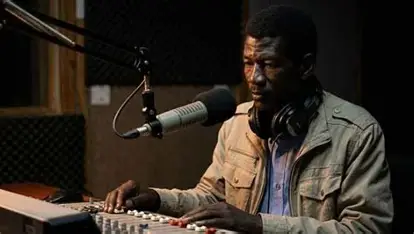
Niger’s political landscape faces mounting scrutiny as the detention of prominent journalist Moussa Kaka casts a spotlight on the country’s commitment to fundamental freedoms. Known for his incisive reporting, Kaka’s arrest has triggered widespread concern over whether criticism of authority can still be voiced without fear of retribution under General Abdourahamane Tiani’s military-led administration.
From vocal journalist to prisoner: the circumstances surrounding Moussa Kaka’s arrest
Moussa Kaka, a respected figure in Nigerien media and former correspondent for international outlets, vanished on 31 August 2026 shortly after leaving his media office. For weeks, uncertainty shrouded his fate until the Minister of Justice confirmed on 6 October that he was alive but detained. The announcement did little to ease concerns, instead intensifying questions about the legal basis for his imprisonment and the conditions under which he is being held.
Legal obligations versus arbitrary detention
In any democratic society, the deprivation of liberty demands strict adherence to constitutional and judicial safeguards. Authorities are duty-bound to disclose the grounds for detention, ensure access to legal counsel, allow family contact, and present the detainee before a judge within stipulated timeframes. Failure to meet these benchmarks undermines public trust and raises suspicions of politically motivated repression.
Kaka’s case is emblematic of a broader pattern where investigative journalism is treated as a threat rather than a public service. His work, often critical of governance and policy, should have been protected under the principle of press freedom. Instead, it has been weaponized to silence dissent, sending a chilling message to journalists and citizens alike.
The cost of silence: democracy’s silent erosion
When criticism becomes dangerous, democracy withers. A government that tolerates only sycophantic voices undermines its own legitimacy and deprives its people of the scrutiny necessary for accountability. Corruption, mismanagement, and human rights violations cannot be addressed in an environment where whistleblowers and journalists fear imprisonment.
Niger’s sovereignty is not strengthened by suppressing voices but by fostering an open exchange of ideas. The international community and domestic stakeholders must insist on transparency, ensuring that the state’s actions align with its obligations under international human rights law.
What sovereignty really means: strength through accountability
General Tiani’s regime has repeatedly invoked national sovereignty to justify its actions, but true sovereignty lies in the ability to govern with integrity not in silencing critics. A secure state is one that addresses accusations through fair and transparent legal processes, not through indefinite detention without clear justification.
Kaka’s continued imprisonment without verifiable charges or due process undermines Niger’s standing and fuels skepticism about its commitment to the rule of law. Without concrete evidence of wrongdoing, his detention appears less about justice and more about control a tactic that corrodes public confidence in institutions.
The path forward: justice, transparency, and restored freedoms
The Nigerien government must take immediate steps to resolve this crisis. Authorities should:
Provide a detailed, public account of the legal basis for Kaka’s detention;
Ensure his access to legal representation and family visits;
Present him before a competent judicial authority without further delay;
Release him if no credible charges can be substantiated.
Freedom of expression is not a concession granted by those in power it is a foundational right that sustains democracy. Niger’s future stability depends on its willingness to embrace dissent as a catalyst for progress, not a threat to its authority.
The world is watching. The time to act is now.
By Georges Essomba — Journalist





