Morocco remains steadfast on Ceuta claims despite Spain’s migration crisis
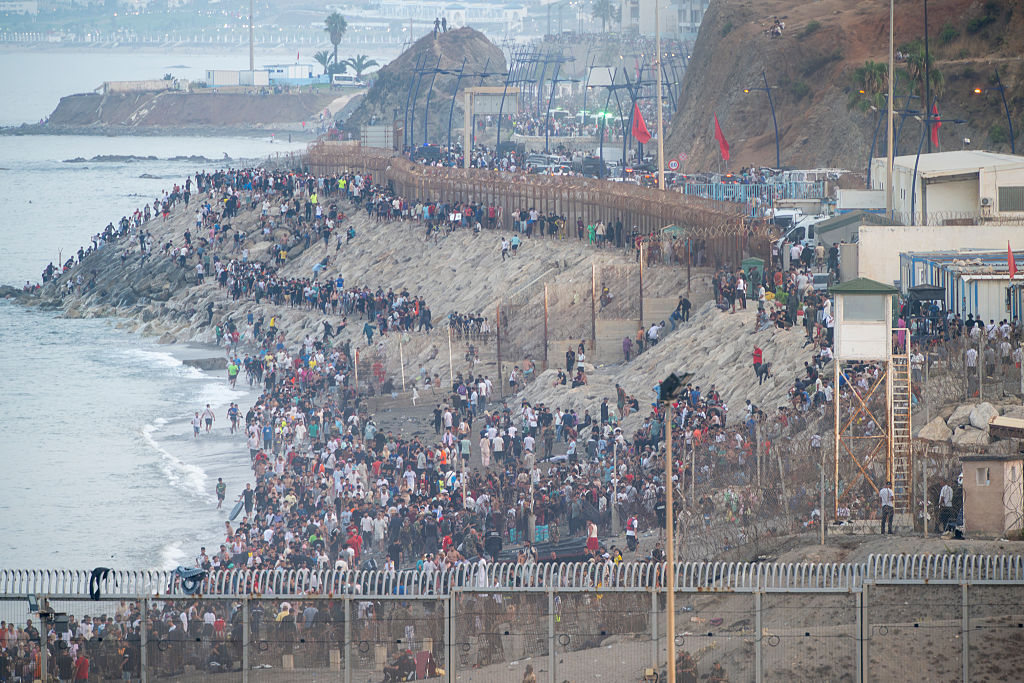
The Moroccan government has reaffirmed its long-standing territorial claims over the Spanish enclaves of Ceuta and Melilla in North Africa, following a massive influx of migrants that overwhelmed Ceuta in late July. The sudden arrival of at least 72,000 migrants triggered political shockwaves across Spain and Europe, while resurfacing a decades-old dispute.
In an exclusive interview, former Spanish ambassador to Morocco Jorge Dezcallar—who also served as head of Spain’s intelligence agency—warned that Rabat has never abandoned its demands for sovereignty over these territories. Dezcallar suggested this unresolved tension may have contributed to the unprecedented migration surge, with Morocco possibly testing Spain’s resolve during a perceived moment of weakness in Madrid.
The timing coincides with challenges facing Spain’s left-wing government under Pedro Sánchez, which has grappled with corruption scandals involving high-ranking officials and close allies. Its progressive immigration policies and critical stance toward the United States have also strained relations with European counterparts, further complicating diplomacy with Rabat.
Relations fraught with tension
Despite deep historical and economic ties—particularly in trade, migration management, counterterrorism, and regional security—Spain and Morocco’s relationship has long been volatile. Dezcallar described these diplomatic ties as “passionate rather than rational,” marked by sharp fluctuations in mutual trust.
The unresolved territorial dispute
Moroccan ministers and state-aligned media have increasingly emphasized their claims to Ceuta and Melilla, territories Spain has controlled for centuries—long before modern Morocco existed. Justice Minister Abdellatif Ouahbi reiterated this position in a recent statement, asserting: “This issue remains active. Every time we meet with Spanish officials, we raise this matter.”
“We remain firmly rooted in our territories,” he added. “It is a question we will resolve through negotiation and with patience.”
Spain’s Defense Minister Margarita Robles quickly dismissed such claims, declaring in Ceuta: “Let there be no doubt: Ceuta and Melilla are Spanish. They are not negotiable.”
Notably, King Felipe VI has never visited the enclaves, and a Spanish foreign minister made the first official trip in modern democratic history just this week—a move framed by local media as an attempt to avoid provoking Morocco.
Madrid and Rabat blame human trafficking networks for the crisis, citing a July Spanish Supreme Court ruling that temporarily barred immediate deportations of sea-arriving migrants. However, Dezcallar speculated there may have been “at least some permissiveness or negligence” from Moroccan authorities in facilitating the surge.
Risks of renewed pressure
Dezcallar cautioned that Spain lacks the capacity to prevent future influxes, noting this is not the first such incident. In 2021, Spain’s decision to hospitalize Sahrawi leader Brahim Ghali triggered a retaliatory move by Rabat, which facilitated the arrival of nearly 10,000 migrants in Ceuta—a move Robles labeled as “blackmail.”
“One mistake can be forgiven, but not two,” Dezcallar remarked, recalling warnings from Ceuta authorities just days before the surge about a gradual rise in irregular arrivals. Intelligence sources and police unions have since flagged the potential for another mass influx around August 15, amid growing calls on social media to storm the city.