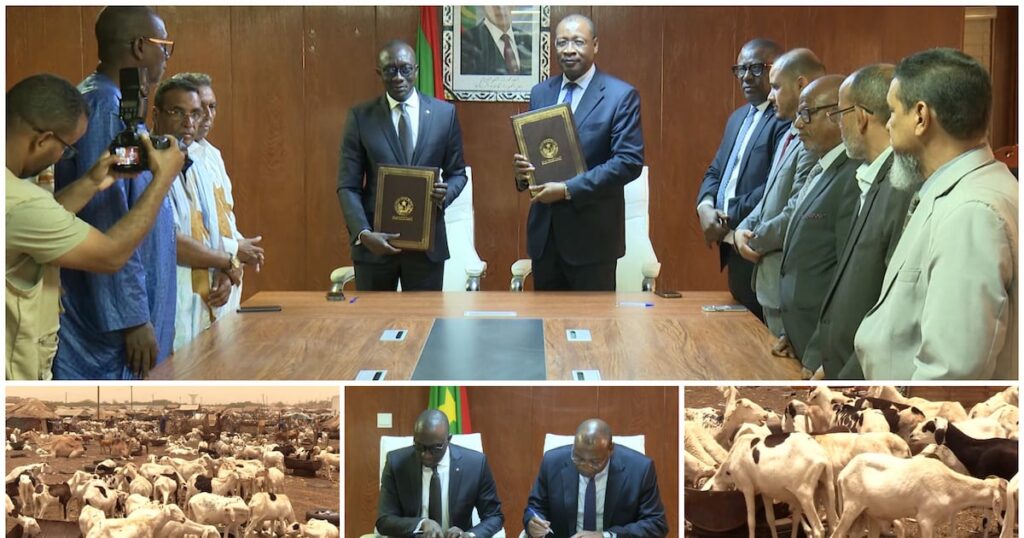
In a strategic move to meet rising demand ahead of the Tabaski festival, Mauritania has committed to supplying 450,000 sheep to Senegal, a key partner facing reduced livestock imports due to regional security challenges in neighboring Mali.
How Mauritania is stepping up for Senegal’s Tabaski
Traditionally, Mali has been a major supplier of sheep to Senegal, but escalating security concerns have disrupted cross-border trade routes. To bridge this gap, Nouakchott has renewed an existing agreement, increasing its livestock export volume this year. According to Alioune Kane, a pastoralist specialist at the National Grouping of Pastoral Associations (GNAP), this year’s shipment could exceed 460,000 animals—up from previous years’ 450,000–500,000 range.
Kane explained that «this increase is directly tied to the instability in Mali, where many herders previously crossed to reach Senegal. Now, they must take a longer and safer route, crossing the Senegal River near Trarza to enter Senegal».
Senegal’s security and logistical preparations
In response, the Senegalese government has pledged full support, ensuring customs, health, and security protocols are in place for a smooth livestock arrival. Baba Hassan Sidi, a GNAP coordinator in the Néma region, highlighted how past unrest in Mali forced herders to adapt: «Before, traders from Néma and Aïoun passed through Mali without issue. Now, they must reroute, adding time and cost to their journey».
The shift underscores the deep economic and cultural ties between Mauritania and Senegal, where livestock trade has thrived for generations. With thousands of Mauritanian herders already in Senegal, the agreement ensures continuity despite logistical hurdles.
The move also benefits Côte d’Ivoire, another regional partner grappling with similar supply chain disruptions.