The already fragile security landscape in Mali took a dramatic turn for the worse in late April 2026, when coordinated armed attacks struck multiple cities. The assaults claimed the lives of the Defense Minister, Sadio Camara, along with several Malian soldiers, underscoring the escalating threat facing the nation’s institutions.
These incidents are part of a prolonged surge in violence against the Malian army and state infrastructure that has unfolded over recent years. Drawing from over a decade of research on security and political dynamics in West Africa and the Sahel, we identify the core drivers of this turmoil: unaddressed grievances among the Touareg communities, a predominantly nomadic Berber population in northern Mali.
The Touareg’s longstanding concerns—centered on political autonomy, cultural recognition, resource control, security, and perceived state neglect—remain unresolved by the current military regime. Their dissatisfaction stems from systemic marginalization and the persistent use of military force in northern regions, which often results in civilian harm and deepens resentment.
Underlying causes of the conflict
Three critical factors fuel the ongoing instability in northern Mali:
Political exclusion: The Touareg have consistently argued that the Malian state, dominated by southern elites, fails to reflect their political identity, economic interests, or traditional governance models. Demands for greater autonomy or federal recognition have repeatedly been met with repression.
Militarization without accountability: Counterterrorism operations in the north and center frequently employ heavy-handed tactics, leading to civilian casualties, mass displacements, and collective punishment. Such measures have fostered fertile ground for recruitment by armed groups.
Economic inequality: Strategic resources—including gold deposits, salt mines, grazing lands, and trade corridors—are disproportionately controlled by the southern-centric state. This imbalance perpetuates underdevelopment in the north, exacerbating poverty and insecurity.
Recent escalation and historical parallels
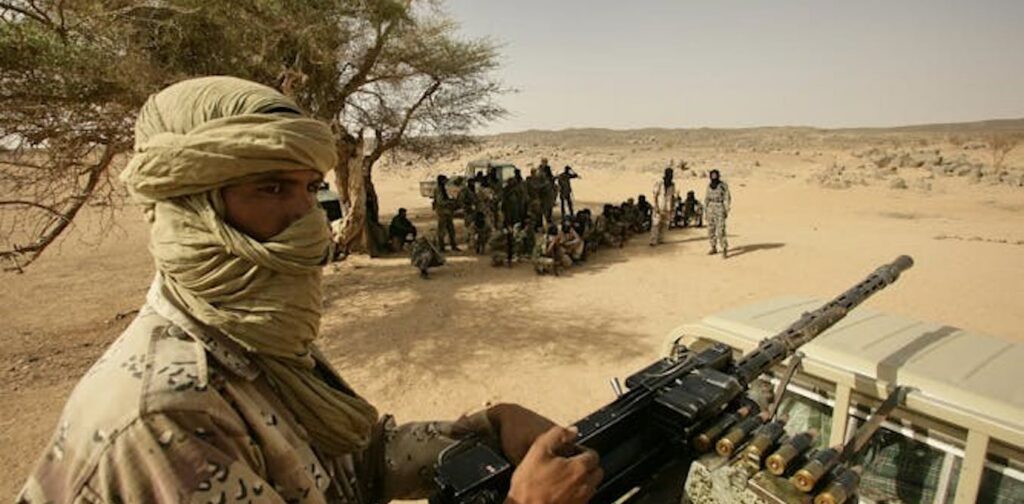
In April 2026, the Jamaat Nusrat al-Islam wal Muslimin (JNIM), an al-Qaeda-affiliated group, forged an alliance with Touareg rebels from the Front de Libération de l’Azawad (FLA) to launch coordinated strikes across the country. This mirrors a 2012 offensive in which Touareg-led factions, including the Mouvement National de Libération de l’Azawad (MNLA), sought to establish an independent state in the north with support from Islamist militants.
The MNLA, founded in 2011 by returning Libyan fighters and northern Touareg, once boasted around 10,000 combatants. Despite their numbers, they lacked the firepower to sustain territorial control and soon ceded power to better-armed Islamist groups such as Ansar Dine, Al-Qaeda in the Islamic Maghreb (AQIM), and the Mouvement pour l’Unicité et le Jihad en Afrique de l’Ouest (MUJAO). A French-led intervention in 2013 helped the Malian government regain lost ground, pushing Islamist forces into remote desert strongholds where they adopted guerrilla tactics.
The withdrawal of French troops in 2022 removed a key counterterrorism deterrent, creating a security vacuum that allowed Islamist groups to regroup, expand operations, and reclaim territorial influence. Weak governance and limited state capacity further emboldened these factions, enabling local recruitment and deepening their control.
Unaddressed failures of governance
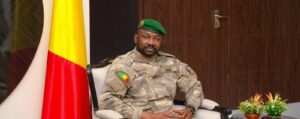
The military regime under Assimi Goïta has failed to engage meaningfully with Touareg demands, perpetuating a cycle of exclusion and violence. Climate-induced challenges—such as drought, desertification, and erratic rainfall—have further devastated the livelihoods of pastoralist communities, adding urgency to their grievances.
Moreover, counterterrorism strategies that prioritize force over dialogue have exacerbated civilian suffering. Reports highlight widespread human rights abuses, including arbitrary arrests and mass killings, which Islamist groups exploit to justify their presence and recruit disaffected youth.
Decades of centralization have also starved the north of investment. Despite promises of decentralization and peace agreements, promised funding and political integration have stalled, leaving the region economically isolated and politically disenfranchised.
Pathways to stability: lessons from the Niger model
To break the cycle of violence, Mali must confront the structural inequalities underpinning the Touareg crisis. A proven blueprint exists in neighboring Niger, where former President Mahamadou Issoufou implemented a comprehensive approach to address similar grievances:
Institutional inclusion: Integrating Touareg elites and former rebels into national institutions fostered representation and reduced alienation.
Decentralized governance: Granting regional authorities greater administrative and budgetary autonomy improved local decision-making and service delivery.
DDR programs: Disarmament, demobilization, and reintegration initiatives provided former combatants with alternatives to violence.
Targeted development: Investments in pastoralism, education, water access, and rural infrastructure directly addressed the needs of northern communities, strengthening resilience and reducing vulnerability to extremism.
By addressing the root causes of the Touareg crisis—political marginalization, economic disparity, and unchecked militarization—Mali can chart a course toward sustainable peace and national cohesion. Failure to do so risks perpetuating a cycle of instability that threatens the entire region.